David Hunter's bereavement and recovery from grief
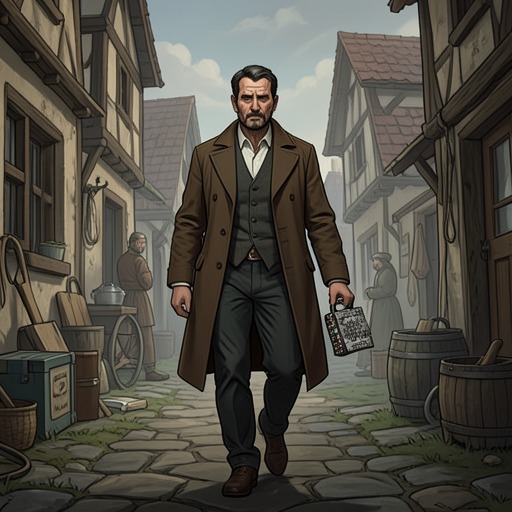
The Chemistry of DeathDavid Hunter’s bereavement shapes his withdrawal from ordinary life and makes the prospect of loving Jenny Hammond feel like a betrayal. Nearly four years after the accident that killed Kara and Alice, he still carries their absence, but a conversation with Henry Maitland and a solitary evening looking across the marshes mark a change: grief remains, while guilt gives way to acceptance and anticipation.
Loss and the persistence of guilt
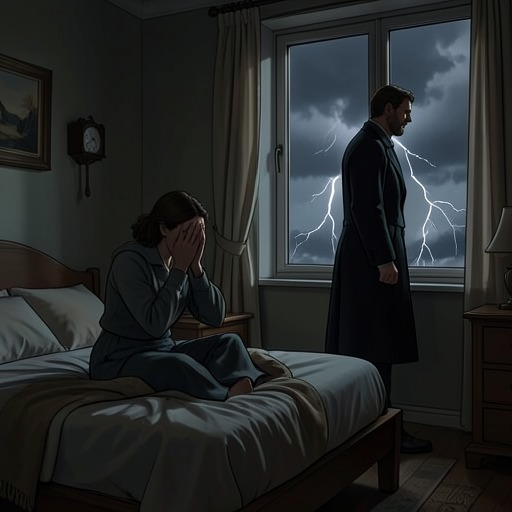
The deaths of Kara and Alice have left David struggling to imagine a life that is not organized around the past. When the possibility of seeing Jenny again begins to unsettle him, he recognizes that the strongest part of his nervousness is guilt. A meal with her seems, emotionally, like preparing to be unfaithful, even though he knows that no one remains to whom he could be unfaithful. His understanding does not immediately quiet the feeling: reason and grief proceed at different speeds.
That contradiction makes his response more than a simple refusal to move on. David knows that Kara and Alice are dead, yet the thought of renewed intimacy still carries the weight of a disloyal act. His loneliness has also become part of his circumstances in Manham: away from London, his social life consists largely of conversations with patients or at the pub. The village’s preoccupation with the murders leaves little room for easy conversation, while rumours about him further unsettle the possibility of belonging. His hesitation about the meal with Jenny therefore sits within a broader life narrowed by bereavement and isolation.
Henry Maitland’s counsel
Henry helps David name the guilt directly. When Henry guesses that David feels guilty about enjoying himself, David nods rather than speaking. Asked how long it has been, he answers that it is nearly four years since his loss. Henry says that it has been almost five years for him since Diana died. He recalls that, after the accident, he could not understand why he had survived when she had not; he breaks off before continuing.
The exchange gives David a form of recognition without suggesting that the two men’s losses are identical or that grief can be settled by advice. Henry speaks from his own bereavement when he tells David that the dead cannot be brought back and that the living must carry on as best they can. His unfinished recollection leaves the pain visible beneath the counsel. For David, the conversation offers permission to consider living again, not an instruction to forget Kara and Alice or a claim that time has erased their absence.
Jenny and the possibility of connection
David’s feelings for Jenny develop against both his fear of betrayal and the suddenness of their changing relationship. After an intense period together, they are surprised by how quickly things have changed and decide to spend time apart. The distance gives each of them room to consider what this unexpected shift might mean; neither wants to rush and spoil what may be developing between them. David’s eventual change of heart therefore does not arise from a declaration that everything is resolved. It follows a pause in which he can look at his feelings more clearly.
Jenny’s own account of leaving the city also makes safety an important part of their connection. After a frightening incident involving a man who drove away before she could identify him, she became afraid to go out, not only because she might see him again but because an apparently arbitrary event might happen again at any time. She left the city for what she hoped would be somewhere pleasant and safe, and came to Manham for the advertised job. David tells her that he is glad she came, then immediately looks away, surprised by his own unguarded response. Their relationship begins amid vulnerability, but the evidence of David’s recovery lies in his willingness to acknowledge attachment rather than to treat it as forbidden.
The evening the future opens
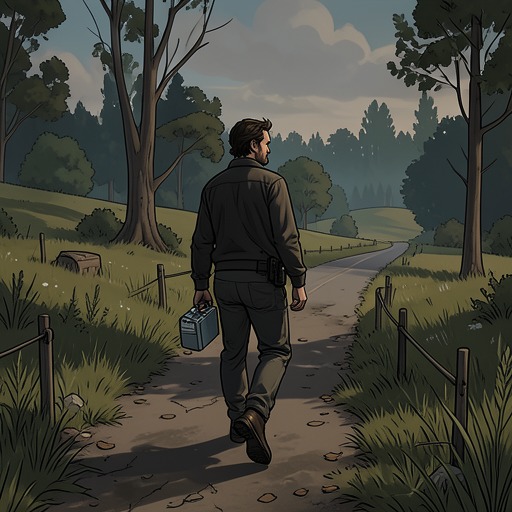
After a conversation with Mackenzie about the investigation, David drives into the countryside without choosing a destination. He sits on a rise overlooking the marshes as evening falls. At first he tries to concentrate on the murders, but they feel increasingly remote from him. The shift is not a resolution of the case; it is a change in what occupies his attention. For the first time since the accident, he feels that the future is open and that he can look ahead rather than remain fixed on what has happened.
Thinking about Jenny, Kara, and Alice, David searches for guilt or a sense of betrayal and finds neither. The pain of absence has not vanished, and he understands it will remain, but he can now hold that pain alongside acceptance: his wife and daughter are dead, and he cannot bring them back. He also recognizes how completely he had withdrawn from life, describing himself as having been dead as well. The evening’s decisive change is not forgetting the dead; it is feeling unexpectedly alive while continuing to remember them.
Choosing to return
By the time David leaves the rise, he no longer needs another day to think and wants to see Jenny again that evening. He considers calling her but discovers that his phone is not with him. He remembers leaving it on his desk when Mackenzie visited and realizes that he walked out distracted. Though he nearly decides not to retrieve it, he does not want to arrive at Jenny’s home without warning or assume that she has reached the same certainty he has.
His return to the surgery also reflects the responsibility he continues to feel as Manham’s doctor. The village may have reservations about him, but he cannot bring himself to be out of contact. The choice holds together the two sides of his renewed life: he moves toward Jenny, while remaining attentive to his work and community. His recovery is therefore presented as a beginning rather than a cure. Kara and Alice remain irretrievably lost, and the grief remains; what changes is David’s ability to accept that loss without treating every future attachment as betrayal.