James Nolan
The Chemistry of DeathJames Nolan is a Manham shop worker and patient of David Hunter whose private isolation becomes a public vulnerability as suspicion spreads through the village. After Sally Palmer’s murder, Nolan is attacked at home by men who are never identified; his assault shows how fear can create a second kind of victim, separate from the killer’s direct crimes, while neighbors watch or look away.
Identity and Background
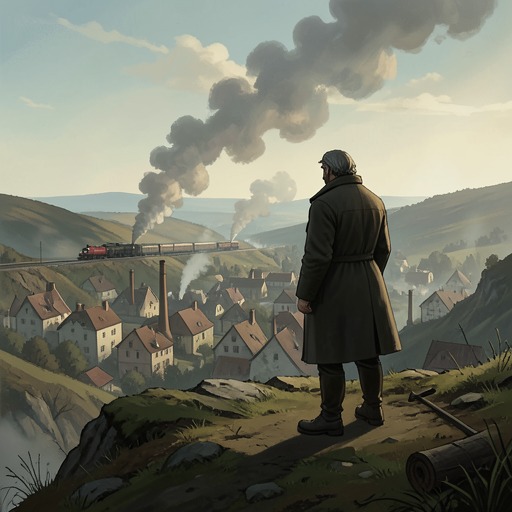
Nolan lives alone in a small cottage in a cul-de-sac behind the garage. In his fifties, single, and working in a shop in a neighboring village, he is described as quiet, gentle, and deeply unhappy. His reserve is not presented as menace: it is part of a life spent trying not to attract notice.
He is homosexual and ashamed of it in a community where same-sex attraction is regarded as unnatural. As a young man, an encounter with an undercover police officer led to a suspended sentence. The details of the offense were neither openly discussed nor necessarily known in Manham, but the rumor was enough to shape his reputation. People treated him as an object of ridicule and warned children away from him; Nolan responded by withdrawing further, moving through village life almost unseen. The account makes clear that this isolation was socially produced as well as personal: Manham largely complied with his wish not to be noticed, but that apparent tolerance left him with few visible allies.
A Target of the Village’s Fear
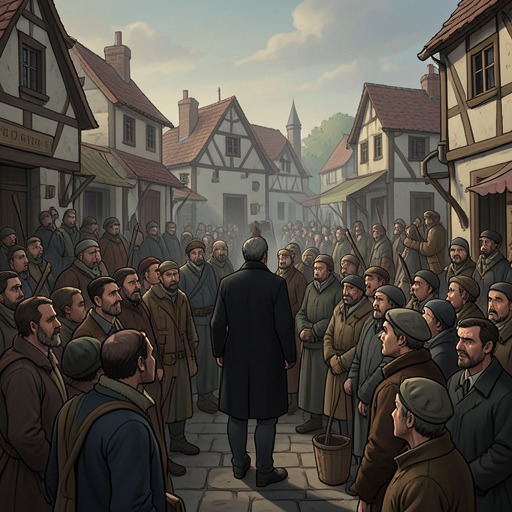
The murders of Sally Palmer and the disappearance of Lyn Metcalf alter the meaning of Nolan’s marginal position. During the search for Lyn, villagers recognize that the two victims came from Manham and that the killer may be someone they know. Their shared search briefly looks like communal solidarity, but suspicion is already changing how people regard one another. In that atmosphere, Nolan understands that reason is not what determines who becomes a scapegoat. Since Sally Palmer’s body was found, he has feared that his existing reputation could make him a convenient target.
On the Saturday night of the attack, Nolan returns from work and tries to make himself invisible behind the closed curtains of his cottage. After eleven, several men arrive, first calling to him in a mocking manner and then becoming more threatening. He considers calling the police, but a lifetime of avoiding attention holds him back. When the men threaten to force their way inside unless he opens the door, he complies. The chain on the door does not protect him: the door and frame give way, and the attackers enter.
Assault and Rescue
The men beat Nolan, damage his home, and leave him unconscious. Later, he says he did not recognize them. David Hunter doubts that he could have failed to know at least some of the men, who may have been people he had encountered before, but the attackers’ identities remain unconfirmed. Nolan does not provide David with an account of what happened. When David asks him about the attack, Nolan closes his eyes rather than answer, keeping that knowledge to himself.
After the men have left, an unidentified caller contacts David, gives him Nolan’s address, and hangs up. David calls for an ambulance and stops at the police trailer for an officer to accompany him, losing time because the emergency call has not been relayed there. He and the officer find Nolan amid the wreckage of his home. David places him in the recovery position and stays with him, talking while Nolan drifts in and out of consciousness, until the paramedics arrive.
The caller’s choice to contact David rather than the emergency services becomes part of the episode’s portrait of Manham. David suspects that the caller wanted help to reach Nolan but did not want to involve outsiders. The call was made from the village’s only public phone box, so its source cannot be traced. No neighbors come out, though David believes people are watching from their houses. He concludes that someone may have felt enough concern to summon help, but not enough to stop the attack or identify themselves afterward. Nolan is taken away by ambulance and remains in hospital for a week or two. When Henry asks about him, David reports that he is in poor condition and still hospitalized.
Place in the Wider Crisis
Nolan is explicitly a casualty of the suspicion and hostility gripping the village, not a victim directly attacked by the man responsible for Sally Palmer and Lyn Metcalf. His assault therefore broadens the consequences of the murders: violence spreads beyond the original crimes, directed at a man already marked as an outsider within his own community. It also contrasts the public search for Lyn, in which many villagers take part, with the private assault on Nolan, which people nearby appear not to interrupt or openly acknowledge.
As the crisis intensifies, Scarsdale becomes Manham’s public voice, condemning the police and urging villagers to protect themselves. Carl Brenner, fired up by Scarsdale’s call, later seeks recruits for patrols with Dale Brenner and others, saying the group must act because the police are doing nothing. These developments establish the climate in which suspicion can become organized action, but the account does not identify Nolan’s attackers as members of those patrols or connect them to the later call to arms. Nolan’s case remains a distinct instance of what the village’s fear has already enabled: a vulnerable resident is attacked, and the community’s response is largely silence.
By the time David leaves Manham, he recognizes that many former patients still regard him with suspicion, remembering that he too had once been considered a suspect. Nolan’s treatment gives that suspicion a harsher local context: belonging and safety are unevenly distributed, and being known by the community does not guarantee its protection. His survival and hospitalization are recorded, but the available account gives no further details about his recovery or what becomes of him afterward.