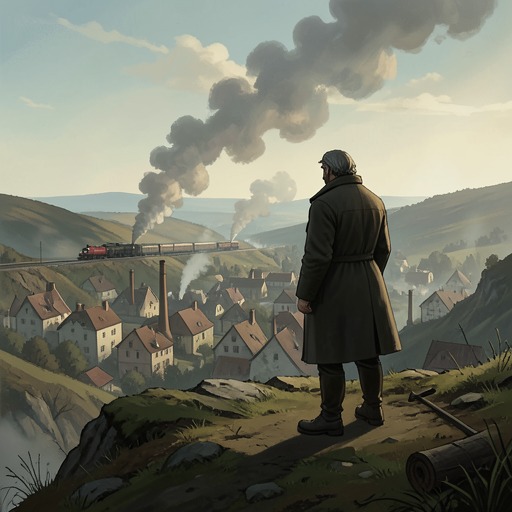
Mannham Church and Cemetery
The Chemistry of DeathManham’s church and churchyard bring private grief, public authority, and criminal investigation into close proximity. The church hosts a memorial for Lyn Metcalf, while the churchyard becomes a setting where David Hunter, Reverend Scarsdale, and Tom Mason briefly meet amid mounting fear over Jenny Hammond. Its quiet grounds also hold a clue David initially fails to recognize: the faint smell of bitumen that later directs his attention toward Tom.
A place of mourning and village business
The church is the setting for a memorial service for Lyn Metcalf. On the day after the service, Reverend Scarsdale holds a public meeting elsewhere, in the village hall; he had excluded the media from the church service, a decision David regards with suspicion. The distinction matters: the church provides a setting for communal mourning, while Scarsdale’s campaign for action takes its public form in the hall.
The churchyard is also part of the village’s ordinary working landscape. When David stops there, Scarsdale is speaking with Tom Mason and directing him in his work as gardener. Tom is trimming the grass around a flowerbed, and the sound of his garden clippers reaches David while he waits. The church grounds are not presented as a secluded or remote place: they are a familiar setting where gardening, parish business, and village encounters overlap.
David’s visit and the people in the grounds
David pulls over when he sees Scarsdale in the graveyard and asks him for help. He wants Scarsdale to accompany him to see Carl Brenner, believing Brenner may be more receptive to the man who helped set the village patrols in motion. Scarsdale initially makes David wait, going inside the church office to answer a telephone. While David waits, Tom continues trimming the flowerbed and appears to avoid acknowledging the tense exchange.
The interruption draws David’s attention briefly to George Mason’s absence. Tom says that his grandfather is still in bed but expects him to recover in a few days. David feels guilty: George and Tom are Henry Maitland’s patients, but home visits are David’s responsibility, and Henry is again covering the surgery in his place. The churchyard thus catches David between two obligations, his work as a village doctor and his urgent effort to help Jenny. His fear for her soon overwhelms his concern that he has neglected his patients.
When Scarsdale returns, David explains that he is going to Carl Brenner’s house and asks him to come along. Asked whether he knew the third victim, David nods. Scarsdale briefly shows compassion before his habitual hauteur returns, then agrees to accompany him. The exchange makes the churchyard a meeting point between the village’s religious spokesman and a doctor acting under personal as well as investigative pressure.
The overlooked trace of bitumen
The grounds acquire a different significance when David later recognizes what he had smelled there. During his earlier wait, among the scents of flowers and cut grass, there had been a faint odor he could not place. At the time his attention was fixed on Jenny and on persuading Scarsdale to help; the clue remained below the threshold of conscious recognition.
Later, David finds bitumen around the edges of a door and on newspaper used to seal it. That discovery recalls the faint smell in the churchyard. He connects it with Tom Mason or Tom’s tools, which may have carried bitumen after Tom used it while trying to seal his grandfather’s bedroom. David also recognizes the material as the same substance found in a cut in one of Sally Palmer’s vertebrae. The connection makes an ordinary act of gardening and an incidental odor newly significant to the investigation.
Narrative significance
The churchyard’s role turns on the contrast between what David notices and what he misses. He registers the clippers, the flowerbed, George’s illness, and the strain of relying on Scarsdale, yet his immediate fear for Jenny prevents him from identifying the odor as evidence. Only later, in a different setting, does the smell return to his attention and become legible as a possible link between Tom’s work and a forensic trace.
That association is a clue, not by itself a complete demonstration of guilt. Its force comes from the way the location joins separate strands of the story: the church’s memorial function, Scarsdale’s influence over village affairs, Tom’s routine work in the grounds, and David’s investigation of Sally Palmer’s murder. The churchyard’s apparent ordinariness gives the remembered odor its importance; what seemed merely part of a garden becomes evidence David can no longer dismiss.