Public search for Lyn Metcalf
The Chemistry of DeathThe public search for Lyn Metcalf is the moment when Manham’s response to her disappearance became a village-wide effort—and when cooperation began to coexist with suspicion. Coordinated by the police and joined by residents, the search gave people practical work to do, but could not make the countryside yield Lyn or restore the community’s sense of safety.
Background and urgency
The search followed the disappearance of Lyn Metcalf, whose stopwatch had been found by her husband, Marcus Metcalf, near the woods where she had gone running. The timing made the disappearance especially alarming: Sally Palmer had recently been murdered, and residents could no longer readily treat Lyn’s absence as an ordinary decision to leave. Although people had previously agreed that Lyn and Marcus seemed happy, the earlier killing changed how they understood the new case. A woman from their own village had vanished in circumstances that seemed connected to a murder; the possibility of another attack shaped the search from its outset.
The contrast with Sally’s disappearance sharpened that unease. Mackenzie reported that no one he had spoken to had seen Sally since the pub barbecue. She had failed to collect a grocery order the next day and had stopped her usual morning visits to the newsagent for the Guardian. Yet nobody had reported her missing: neighbours supposed she had gone away or was occupied with writing. Sally lived alone on a small farm outside Manham and, as a writer who had moved to the village, remained somewhat apart from its social centre. Her absence had gone unnoticed until the investigation gave it meaning. Lyn’s disappearance, by contrast, immediately drew a crowd.
Organization and participation
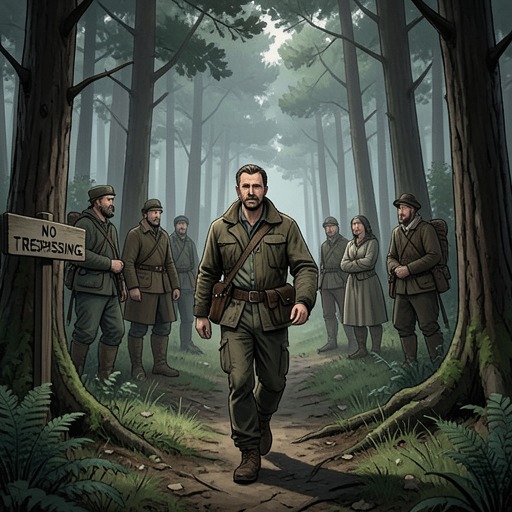
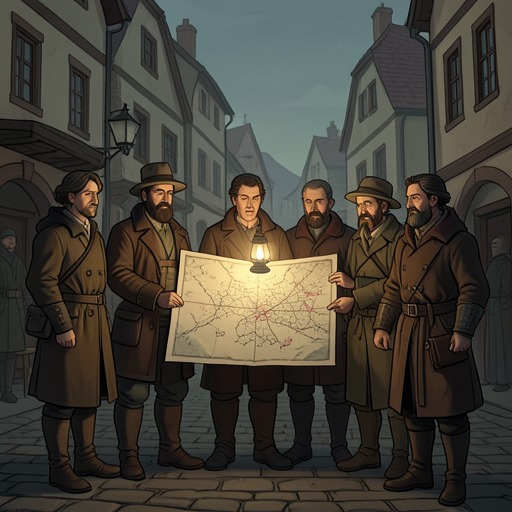
The police established a mobile incident room near the woods, as close as the road allowed to the place where Marcus had found the stopwatch. Cars filled the hedgerows for roughly a quarter of a mile on either side. Some volunteers set out independently, while most gathered at the police base, where a table was used to coordinate the public search. The arrangement both organized residents and kept them from interfering with professional teams. It also served a public-relations purpose, giving the community a role even though the police recognized that volunteer effort could not cover all the surrounding terrain.
David Hunter joined after finishing evening surgery and went to the table for an assignment rather than approaching Marcus. Marcus stood with a group of men, apart from them, visibly changed by worry. Scarsdale was with him. David hesitated to offer condolences, uncertain that anything from a near-stranger would help, and chose to join the search instead. He later regretted that decision, though at the time the table offered a clear way to contribute.
David spent several unproductive hours crossing a boggy field with a group that included Rupert Sutton. Uneven ground and wet patches slowed the volunteers; Rupert slipped to his knees, and David helped him up. Conversation was sparse. As dusk made the work impractical, the group abandoned the search and returned. The effort had produced no trace of Lyn, and its end left the participants with little to do but seek company. Many were expected to stop at the Black Lamb; David went there rather than spend the evening alone.
Solidarity and suspicion
For a time, the scale of participation suggested a rare unity. On a fine summer evening, residents searched together, kicking through long grass and looking under bushes. Yet the shared task had a darker implication: the killer was increasingly thought to be someone from Manham, or at least someone with a reason to attack women from the village. The possibility that a familiar neighbour could be responsible altered the meaning of the volunteers’ presence. A person searching for Lyn might be acting from concern—or might be performing concern while concealing knowledge of the crime.
That suspicion did not immediately prevent people from helping. Instead, it began to work beneath the display of cooperation, changing the distance between neighbours even as they followed the same search effort. David’s account presents the gathering as both practical and unsettling: the police could direct people across particular ground, but could not determine what each volunteer knew or how others should interpret their willingness to take part. The search could therefore demonstrate communal resolve without proving communal trust.
Danger and consequences
The terrain itself limited what the search could accomplish. Mackenzie eventually called a temporary halt to the search for Lyn and established a first-aid station outside the mobile incident room. He also warned residents to stay out of the woods and fields around Manham. The warning changed the public understanding of the countryside: it was no longer merely difficult ground through which a missing person might be found, but a place where searchers themselves could be at risk. Some residents resisted the instruction, including a man who had objected after drinking at the Lamb; when he stepped into a concealed hole and broke his ankle, the danger became harder to dismiss.
The halt could not resolve the uncertainty or satisfy those who wanted to help. More police arrived, and national media began coming to the village with cameras and microphones. Manham’s relative anonymity gave way to the feeling of being under siege. Later, after Lyn’s body had been found, Scarsdale used the two women’s deaths to argue publicly that the police had failed and that villagers should protect themselves. His call helped prompt groups of residents, including Carl Brenner and Dale Brenner, to patrol the village. Those patrols were a later response rather than part of the organized search, but they grew from the same fear the search had exposed: that the threat might be among people the community already knew.
The search’s investigative meaning also remained unsettled. Mackenzie later reported a witness’s account that Sally had been upset by a dead stoat left on her doorstep. In light of the birds associated with the cases, he considered whether the animal might have been a marker or warning, while acknowledging that other explanations were possible. The detail did not establish who was responsible; it showed how the investigation was beginning to connect separate signs without treating an interpretation as proof. The public search likewise produced no answer about Lyn’s whereabouts, but it transformed the village’s understanding of the danger: the searchers were looking not only across the countryside, but increasingly at one another.