Sam Yates
The Chemistry of DeathSam Yates is the younger brother of Neil Yates and the first of the two to notice the trail that leads them to Sally Palmer’s body at the edge of Farnham Wood. His discovery begins the chain of events that brings the murder to the attention of David Hunter and the police, but it also leaves Sam shaken and struggling to put what he saw into words.
Identity and Introduction
In the second week of July, Sam is on his way with Neil to Willow Hole, a reed pond used as a local swimming spot. The brothers expect to meet friends and spend the afternoon in the water. Their ordinary plans are interrupted by the heat and by the strange trail they encounter at the edge of Farnham Wood, where the wood borders the marsh.
Sam is three years younger than Neil, who is eleven, making Sam eight. The brothers walk together, but not side by side: Neil is slightly ahead, while Sam follows with his head down. Sam has hay fever, which makes him sniff through the summer and reddens his eyes. Those physical details matter to the discovery. Because he is looking down, Sam—not his older brother—spots the line of maggots crossing the ground.
The Discovery in Farnham Wood
Sam stops to examine the trail and calls Neil back. Neil initially appears reluctant, but the moving line catches both boys’ attention. They crouch to look more closely, then follow the larvae toward the yellowed marsh grass from which they are emerging. Neil sets off first, with Sam behind him; although Sam notices the clue, Neil takes the lead in following it to its source.
There they find Sally Palmer, whose exposed remains have been altered by the heat and decomposition. The boys had expected an animal carcass, not a human body. They are unable at first to identify the dead person’s sex, and their descriptions falter as they try to recall what they encountered. At one point Sam says the body had wings, then becomes uncertain and falls silent. His account conveys not a reliable physical description but the difficulty of fitting an overwhelming sight into familiar language.
The brothers break away and run first home, then to the police station. The narrative leaves uncertain which boy runs first, while suggesting Neil may have led the flight as he had led the approach. Sam’s role is different but decisive: he sees the trail, calls his brother back, and makes the discovery possible.
Distress and the Telling of the Story
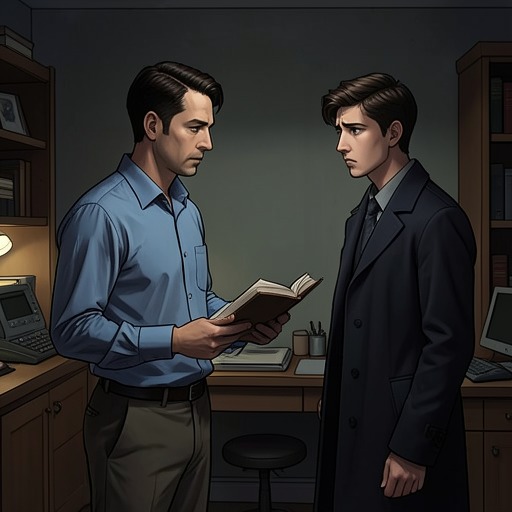
After the boys return, their mother, Linda Yates, calls David Hunter. The police have not yet arrived, and David stays with the family. Sam is subdued; David gives him a mild sedative and antihistamine for his hay fever. Neil, still shaken but beginning to recover his composure, tells David what happened. Sam does not take over the account. He remains quiet while his brother turns the raw experience into a story that can be told again.
The discovery’s public circulation brings another strain. In a later scene, Sam sits in a small sick bay, head down, his feet dangling from the couch, looking pale and close to tears. A young woman stays beside him and shows him a book. She explains to David that Sam had become unusually hysterical earlier because the other children kept wanting to hear about the discovery. The attention has made an already distressing experience harder to bear. When she steps into the corridor, she leaves the door ajar as promised, so Sam is not abruptly left alone.
Relationships and Narrative Significance
Sam’s relationship with Neil shapes both the discovery and its aftermath. He follows his older brother along the path, but his downward gaze gives him the first view of the maggot trail. Once he calls Neil back, Neil’s reluctance gives way to shared curiosity, and then Neil again assumes the leading position. Afterward, Sam takes his cue from his brother as they flee, and Neil becomes the one who recounts what happened to David. Their roles are complementary: Sam notices, while Neil leads and tells.
Sam’s experience also reveals the limits of what witnesses can initially report. At first the boys agree only that they found something human and dead; the body’s condition has overwhelmed their ability to describe it. Sam’s uncertain reference to wings and subsequent silence stand in contrast to Neil’s emerging account. The difference does not make Sam’s discovery less important. It shows how the event reaches the adults through children whose memories are still unsettled, even as the investigation must begin before they can offer a clear explanation.
Sam is therefore the quiet point of origin for the case rather than its continuing investigator. His hay fever, lowered gaze, and instinct to call Neil back place him at the precise moment when an ordinary walk to Willow Hole becomes the discovery of Sally Palmer. The later distress and unwanted questions from other children show that the event continues to affect him after he has left Farnham Wood, while Neil’s retelling makes the brothers’ discovery the beginning of a story the village will keep revisiting.