The Black Lamb
The Chemistry of DeathThe Black Lamb is Manham’s only pub: an old, slowly decaying building that serves as more than a place to drink. Its worn exterior distinguishes it from a polished country inn, while its rooms draw villagers together in ordinary conversation and, during the search for a missing woman, in shared anxiety. David Hunter’s changing decisions about whether to enter make the pub a measure of his relation to the village: sometimes he avoids the talk waiting inside; later, he seeks the company gathered there.
Setting and Appearance
Apart from the church, The Black Lamb is the oldest building in the village. It is also one of the few places in Manham to retain a traditional thatched roof. The reeds are mouldering, and the unpainted plaster walls are cracked and stained. These details present the pub not as a carefully preserved attraction but as a structure whose deterioration has been allowed to continue.
The contrast with other places in the Norfolk Broads is explicit: there, the building would have been made smart and quaint, while in Manham little effort has been made to arrest its decline. The pub’s appearance is therefore tied to the local community’s preferences rather than to an outside visitor’s expectation of picturesque rural life. Its age and neglect give it a distinct place among village buildings, without making it separate from everyday use: on the evening of the search, it is doing good business.
A Local Gathering Place
The pub is a familiar part of David Hunter’s life in Manham; he often goes there. Yet knowing the building and its regular social role does not mean that he always wants to join the conversation. On one evening, he declines an invitation and chooses to remain at his cottage instead, aware that the pub’s main topic will be one he does not want to discuss. The choice marks a boundary between public village life and the privacy he values at home.
David’s cottage is on the outskirts of the village. Although Henry Maitland has offered him a place at Bank House, David has bought his own home because he expects to stay in Manham and wants to put down permanent roots. He also wants to be able to close the door on his work and be away from it for a while. The contrast gives The Black Lamb a particular social function: it is one of the places where village life continues beyond David’s professional duties, but its talk can also make it a place he chooses to avoid.
The Search and the Pub
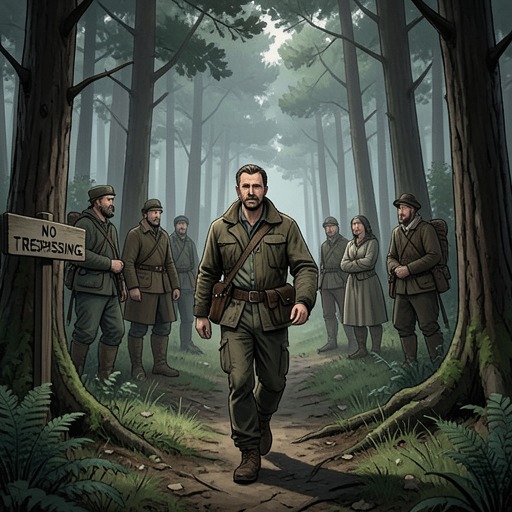
After an unproductive search across a boggy field, the searchers return as dusk makes it impractical to continue. The mood is sombre, and David expects that many of those involved will stop at The Black Lamb for company more than for alcohol. He nearly drives straight home, but decides that he does not want to be alone any more than the others do. His entrance follows directly from the failed search and the shared need to be among people.
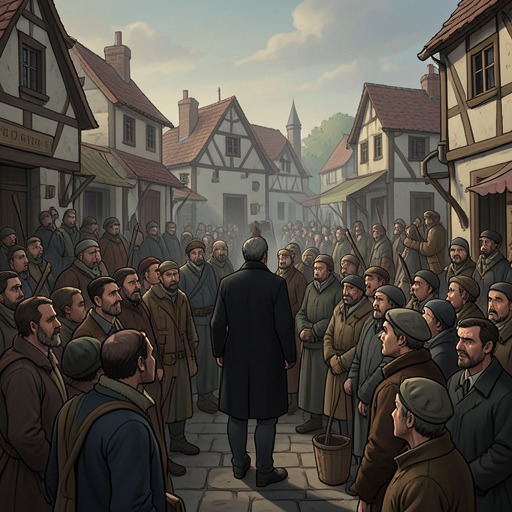
The pub is busy, but the atmosphere is subdued rather than celebratory. Villagers greet David with solemn nods, and conversation stays low. The landlord, whose blind eye has a milky cast, silently acknowledges David at the bar; when he learns David has been out searching, he gives him his drink without charge. The small gesture makes the pub’s social solidarity tangible. It does not end the uncertainty outside, but it recognizes participation in the communal effort and offers a modest welcome to someone returning from it.
Jenny Hammond and the Village’s Fear
At the pub, David takes drinks over to Jenny Hammond, who raises her bottle in a small toast and drinks from it. She knows the landlord disapproves of that habit, but says beer tastes different from a glass; David answers that it also saves washing up. Their brief exchange is light in form, set against the seriousness of the conversation that follows.
Jenny says she cannot believe what has happened and draws attention to the fact that two victims are from Manham. She had thought places like this were supposed to be safe. Her remark makes the pub more than a backdrop: within its familiar local setting, the village’s confidence in its own safety is being unsettled. The worn, unpretentious room gathers people seeking company, but it cannot keep fear outside. The Black Lamb’s significance lies in that tension between refuge and exposure: it brings the community together precisely when the events under discussion have made the idea of a safe, close-knit village harder to trust.