
The Crisis of Information
The ClimbThis flow follows how poor communications turn separate emergencies into a fragmented rescue effort.
increasing Bearing strength in each event
 decreasing
Bearing strength in each eventdecreasingA Weak Radio System
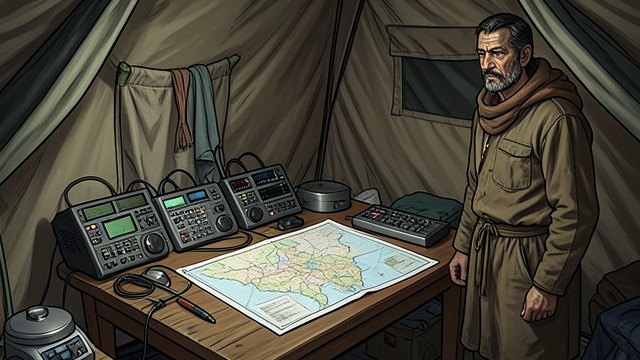
A Weak Radio System
Limited Devices
The expedition has old radios, and not every guide or client carries one.
Dependence on Relays
Messages often pass through Sherpas and multiple camps, making accuracy and timing vulnerable to translation and delay.
No Guide-to-Guide Link
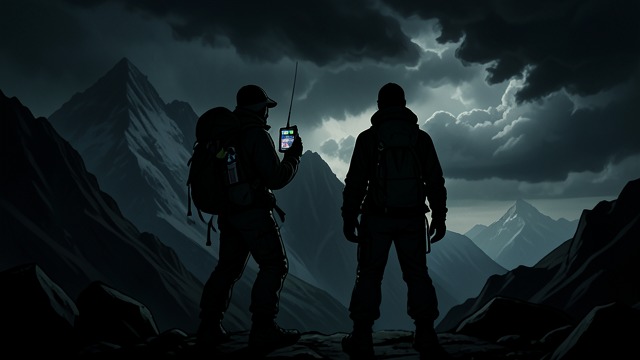
No Guide-to-Guide Link
Separation
Anatoli Boukreev and Neal Beidleman climb without radios, while Scott Fischer and Lopsang Jangbu Sherpa are expected to carry communication devices.
Lost Coordination
The guides cannot easily share changing plans or locate one another when the ascent falls behind schedule.
Reports Through the Storm

Reports Through the Storm
Contradictions
Ingrid Hunt receives incomplete and sometimes inaccurate updates about who is near camp and who remains on the mountain.
Delayed Response
The unclear chain makes it difficult to identify the emergency, communicate medical advice, or organize a timely rescue.
Requests Go Unanswered

Requests Go Unanswered
Seeking Assistance
Anatoli Boukreev goes tent to tent asking other teams and Sherpas to help rescue climbers.
No Available Support
People are asleep, exhausted, or unwilling to risk the storm, leaving him to make repeated trips alone.
A Lesson in Preparation
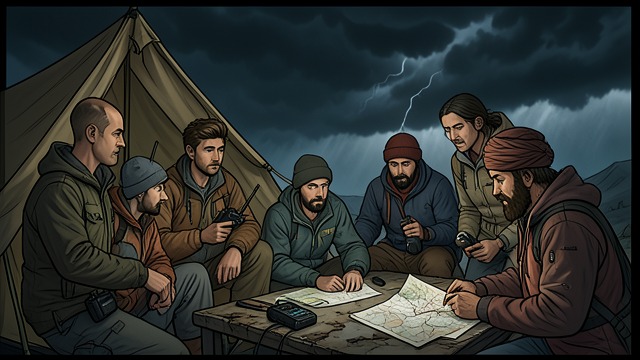
A Lesson in Preparation
Changed Procedures
For a later Everest expedition, Anatoli Boukreev insists on radios, direct links, weather reports, and a common language.
Learning from Failure
Communication is treated as a safety system rather than a convenience, though preparation still cannot guarantee a successful rescue.
April 1996 at Base Camp
May 10, 1996, during the ascent
evening of May 10, 1996
early morning of May 11, 1996
1997 expedition planning
