
The Meaning of Turning Back
The ClimbThis flow develops retreat as a skill and moral choice rather than a denial of achievement.
increasing Bearing strength in each event
 decreasing
Bearing strength in each eventdecreasingA Dangerous Objective
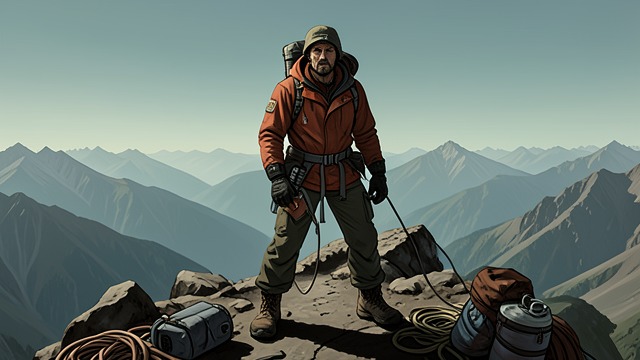
A Dangerous Objective
The Goal
Climbers arrive at Everest with a summit ambition shaped by years of training, money, and personal meaning.
Hidden Cost
The goal can become so dominant that warning signs are treated as temporary obstacles instead of reasons to stop.
Warnings on the Route
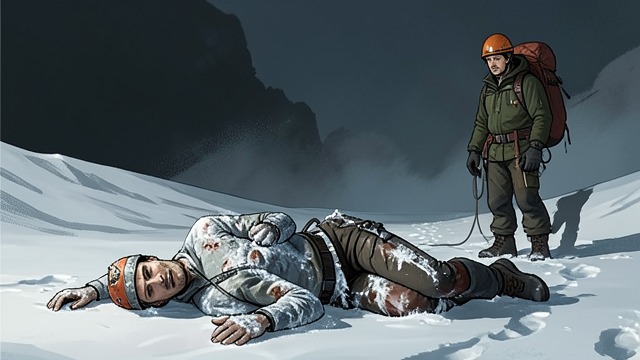
Warnings on the Route
Visible Mortality
A dead climber’s remains and serious altitude illnesses confront the team with the physical cost of ascent.
Individual Interpretation
Some see the evidence as a reason for caution; others continue to believe that preparation and effort will carry them through.
A Client’s Turnaround
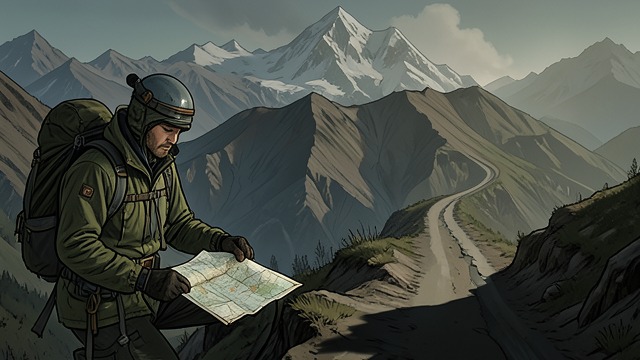
A Client’s Turnaround
Risk Assessment
Lou Kasischke weighs the summit against frostbite, dehydration, poor visibility, and the difficulty of getting down.
Chosen Retreat
He turns around after recognizing that the descent, not merely the summit, determines whether the climb is a success.
The Cost of Continuing
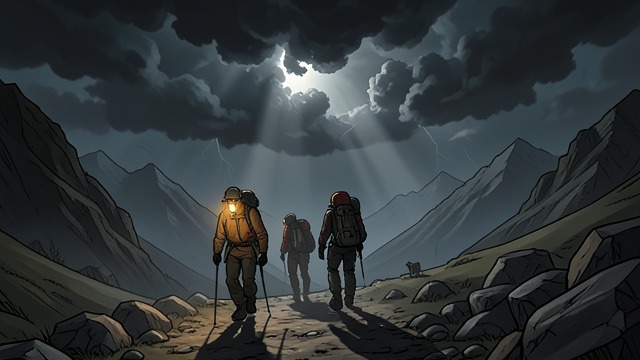
The Cost of Continuing
Late Success
Some climbers reach the summit after the safer window has narrowed, then encounter a storm on descent.
Reframed Achievement
The disaster questions a culture that treats reaching the top as success even when return becomes doubtful.
A Life-Before-Summit Ethic

A Life-Before-Summit Ethic
Boukreev’s Standard
Anatoli Boukreev later insists that a team member’s death outweighs summit success.
A Different Measure
The book frames retreat and survival as evidence of judgment, challenging the belief that a summit is worth any sacrifice.
approach to Everest in March 1996
April 1996 on the upper mountain
May 10, 1996, late morning
May 10–11, 1996
after the 1996 disaster
