Boukreev’s 1997 return to Everest to bury Fischer and Namba
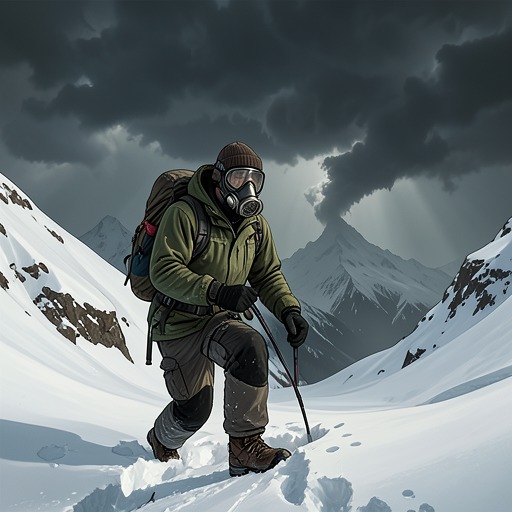
The ClimbBoukreev’s 1997 return to Everest to bury Fischer and Namba joined a successful expedition’s descent to a private reckoning with the climbers left on the mountain. He covered Scott Fischer with snow and rocks, marked the place with an ice-axe shaft, and later covered Yasuko Namba with stones, leaving two ice axes as markers. The gestures were limited, practical acts of respect, and the account presents them alongside Boukreev’s unresolved grief and unease about commercial guiding.
Return and the descent
After a night at high altitude, the Indonesian climbers began descending in the morning. Boukreev described the team as psychologically gathered and moving slowly but able to continue; they had run out of oxygen, but their acclimatization and the gradual transition away from bottled oxygen had helped them descend. At the South Col, he and Evgeny Vinogradsky met the team’s progress and settled in for the night. Boukreev’s account makes the safety of the living a condition of what followed: he waited until he felt the situation was stable enough to turn to his personal commitment on the mountain.
Fischer’s burial
Boukreev had passed within thirty meters of Fischer’s body during the ascent in darkness and searched for him then without finding him. He had carried a farewell flag inscribed by Fischer’s wife and friends, intending to cover Fischer, but left the flag at the summit when he could not be sure he could locate the body on the descent. Once the team’s situation was secure, he returned to the search at 8,400 meters and found Fischer almost completely covered by snow.
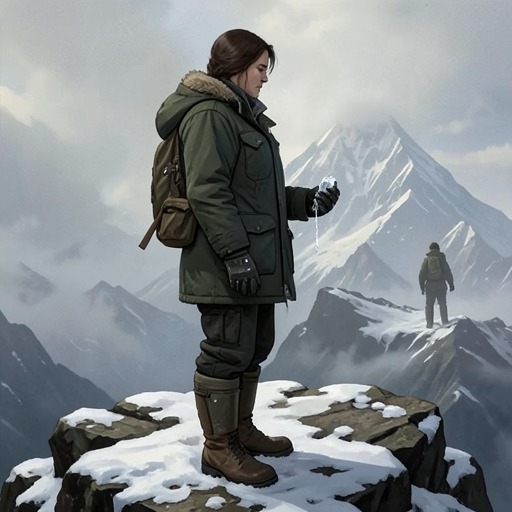
With Vinogradsky’s help, Boukreev covered Fischer with snow and rocks and marked the place with the shaft of an ice axe found nearby. He remembered Fischer as, in his view, a brilliant expression of the American persona, recalling his smile and positive manner. Boukreev framed the burial as a last respect and as a commitment fulfilled; the farewell flag remained flying from the summit, a separate memorial to the friend whose body he had covered.
Namba and the previous season’s loss
On the morning of April 28, Boukreev crossed the South Col toward the edge near the Kangshung Face, where he had left Yasuko Namba during the previous year’s storm. He found her partially covered by snow and ice. Her pack was missing, and its contents lay scattered among the rocks and ice. Boukreev gathered small items for her family, moved stones over her body, and left two ice axes found nearby as markers.
The account connects this return to Namba with Boukreev’s sorrow for both families. He describes these small actions as all he could offer them. Unlike Fischer’s farewell flag, which he had left at the summit before finding Fischer, Namba’s belongings were collected for her family at the site itself; the two burials are related acts of care, but not identical ones.
Guiding, risk, and remembrance
The acts of burial sit within Boukreev’s broader reflection on the costs of bringing inexperienced climbers into high mountains. He recalled how ready the Indonesian climbers had been to die, and thought of families coping with the loss of loved ones. He also recognized that the expedition’s success might encourage other inexperienced people to attempt the mountains, a prospect that troubled him even as he wished to pursue his own climbing objectives and needed guiding work to finance them.
Boukreev resisted the promise of guaranteed success or safety. He said he could serve as a coach, adviser, or rescue agent, but not guarantee protection from natural conditions and physical debility at altitude. His return to bury Fischer and Namba therefore carries two connected meanings: a personal duty to the dead and a sober recognition that neither skill nor guidance can erase the risks that made such losses possible.