G. Weston DeWalt
The ClimbG. Weston DeWalt is Anatoli Boukreev’s coauthor and posthumous advocate, whose account of their work together becomes inseparable from his challenge to Jon Krakauer’s portrayal of Boukreev. In the book, authorship is not a quiet frame around the Everest story: it is a working partnership, a promise made over tea, and a sustained argument about whether Boukreev had descended on his own initiative or as part of Scott Fischer’s plan.
Identity and Role
DeWalt’s role is both collaborative and evidentiary. He works with Boukreev on the book that will tell Boukreev’s personal story, and he also pursues testimony relevant to the interpretation of the 1996 disaster. The narrative presents him not simply as a recorder of another climber’s memories but as someone who assembles interviews and documentary material to contest an account he believes has omitted crucial context.
That advocacy is personal as well as public. DeWalt describes the honor of collaborating with Boukreev and his grief at Boukreev’s absence, naming the friends, fellow climbers, and loved ones who would miss him. The book’s defense of Boukreev therefore carries the weight of a working relationship and a bereavement, even as it makes claims that can be tested against interviews and other records.
Collaboration and a Promise
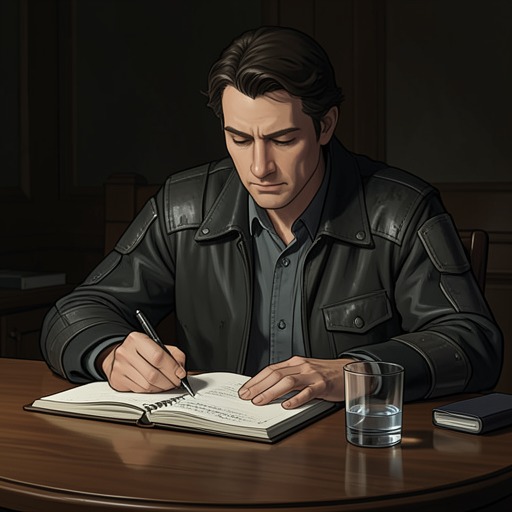
In the months after the Everest tragedy, DeWalt and Boukreev met almost every day to discuss the book they planned to write. Their routine gave their collaboration a specific rhythm: they often began early so Boukreev could spend his afternoons training and running in the Sangre de Cristo Mountains of northern New Mexico. At Boukreev’s kitchen table, with Nepalese honey and freshly baked bread between them, they drank dark Russian tea and went over the work ahead.
One morning, Boukreev was preparing to leave Santa Fe for attempts on Cho Oyu and Shisha Pangma. DeWalt read aloud a list of book-related tasks Boukreev had agreed to undertake while away. When DeWalt finished, Boukreev sat rigidly and silently, watching him over his mug. DeWalt thought he might have spoken too quickly or that Boukreev had not understood his English, so he read the list again more slowly. Boukreev then relaxed, lowered the mug, leaned across the table, and said, “If I come back, you will have this. If I don’t, you must to do it.”
The exchange gives the collaboration a practical and emotional consequence. Three times during their work, Boukreev left Santa Fe on expeditions; each time, the two agreed that DeWalt would finish any unfinished work if Boukreev did not return. The book’s eventual completion thus follows a contingency they had explicitly discussed, rather than an arrangement invented after the fact.
Evidence and the Descent Dispute
A central dispute concerns Boukreev’s descent ahead of the Mountain Madness clients during the Everest crisis. DeWalt’s account emphasizes that Boukreev was surprised by Krakauer’s characterization of the descent as an independent decision made for his own safety. Boukreev’s explanation, as reproduced in the book, was that he had discussed the descent with Fischer, who considered it a good plan and agreed that support would be needed below.
DeWalt adds a second source: an interview he conducted in March 1997 with Jane Bromet, Fischer’s publicist at the time of the disaster. Bromet said Fischer had told her at Base Camp, several days before she left, that one possible plan for trouble on the descent was for Boukreev to descend rapidly and return up the mountain with oxygen or other supplies. When DeWalt clarified that this meant Fischer might send Boukreev down to prepare to resupply descending climbers, Bromet confirmed it. She also told DeWalt that she had given Krakauer the same information when he interviewed her.
The significance of this testimony, in DeWalt’s presentation, is not merely that it supports Boukreev’s version. It changes the meaning of the early descent: what could appear to be unilateral self-preservation becomes an action consistent with a contingency Fischer had discussed in advance. DeWalt argues that Krakauer’s account left out both Boukreev’s explanation and Bromet’s recollection, depriving readers of evidence needed to assess the decision for themselves.
Public Rebuttal and Aftermath
When allegations against his work arose while Boukreev was in Nepal at Annapurna I Base Camp and out of communication, DeWalt took responsibility for answering them. On December 16, 1997, he prepared and mailed a point-by-point response to the charges, sending Krakauer a copy. Among the claims he challenged was that he had failed to try to interview Neal Beidleman. DeWalt said he possessed documentary proof and described Krakauer’s claim as “patently and provably” untrue; he cited a fax in which he had sent Beidleman a quotation from the Everest Base Camp debriefing tape supporting Boukreev’s descent ahead of the Mountain Madness clients.
DeWalt’s later judgment of Krakauer’s treatment is uncompromising. In a November 1998 statement, he called the omission of Boukreev’s explanation and Fischer’s conversation with Bromet indefensible. He argued that if Krakauer had reason to doubt Boukreev, he could have made and supported that case in his book while Boukreev was alive. Instead, DeWalt believed, Krakauer had withheld information critical to understanding the disaster and foregrounded his own judgments rather than letting readers consider the available evidence.
This dispute defines DeWalt’s narrative role. His account asks readers to distinguish between a climber’s action and the interpretation attached to it, and between an advocate’s claim and the testimony and records offered in its support. The same book that commemorates a lost collaborator therefore remains an argument about authorship, omission, and responsibility: who gets to explain a decision, which witnesses are heard, and what a reader can know when competing accounts do not agree.