Island Peak
The ClimbIsland Peak, also known as Imja Tse, was the site of a severe winter training exercise undertaken by the Indonesian National Everest Expedition before its 1997 attempt on Mount Everest. The climb tested the team’s ability to move at altitude and in extreme cold; its results informed the selection of climbers for the south-side expedition, even as the narrator later judged the training sequence—from Paldor to Island Peak to Everest—so punishing that he would not recommend it to others.
Setting and role
Island Peak stands 6,189 meters high. In January and February, the expedition’s entire thirty-four-member team went there for its second training exercise, following an earlier climb of Paldor Peak. The location thus served not simply as a summit objective but as part of a compressed progression of increasingly consequential tests before the team moved toward Everest.
The winter training exercise
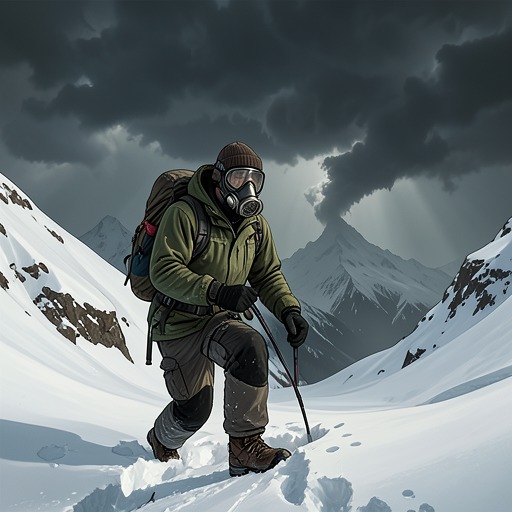
The conditions were exceptionally demanding: team members spent twenty days in temperatures of forty below zero, enduring strong winter winds. For three days and nights above 6,000 meters, they were required to ascend and descend 1,000 meters each day in less than five hours. The regimen combined cold exposure, sustained effort at altitude, and repeated rapid changes in elevation rather than concentrating only on reaching the summit.
Sixteen team members summited Island Peak. All sixteen had also summited Paldor, linking performance on the earlier climb with success in the second exercise. The count supplied the expedition organizers with a concrete measure of who had managed both stages, though it did not by itself determine the final composition of the Everest teams.
Selection and consequences
After the exercise, Vladimir Bashkirov and Evgeny Vinogradski rated the climbers for speed, adjustment to altitude, general health, and attitude, then ranked sixteen prospective summiters in order of preference. The account notes a distinction in the results: although the military participants had less experience, they were more focused and disciplined and showed greater motivation in difficult situations. Ten soldiers and six civilians formed the final group under consideration.
The organizers recommended attempting Everest from the south only, but the Indonesian organizers rejected that proposal after hiring Richard Pavlowski to lead a north-side team. The expedition was consequently divided: ten members were to go to Everest Base Camp on the south side with the narrator’s group, while six were to travel to Tibet with Pavlowski. Island Peak therefore fed into both a physical test and a consequential selection process, while the choice of route and division of personnel remained matters of expedition policy.
Retrospective significance
After the Island Peak exercise, the teams rested for twenty-six days. The narrator recalls looking back on the sequence—Paldor, Island Peak, then Everest—with disbelief, and explicitly says he would not recommend such a training program. That retrospective judgment sets the climb’s achievement against its cost: sixteen people summited, but the preparation as a whole was remembered as an extreme schedule, not as a model to reproduce.
The expedition then flew from Kathmandu toward Lukla on March 12. Ten members, three Russian climbing advisers, and sixteen Sherpas stepped onto the landing pad at 2,850 meters, beginning the journey toward Base Camp. Island Peak had been a stage on the way to Everest, but its demanding exercise had already helped shape which climbers would make that next journey and on which side of the mountain.