MacGillivray Freeman IMAX·IWERKS Expedition
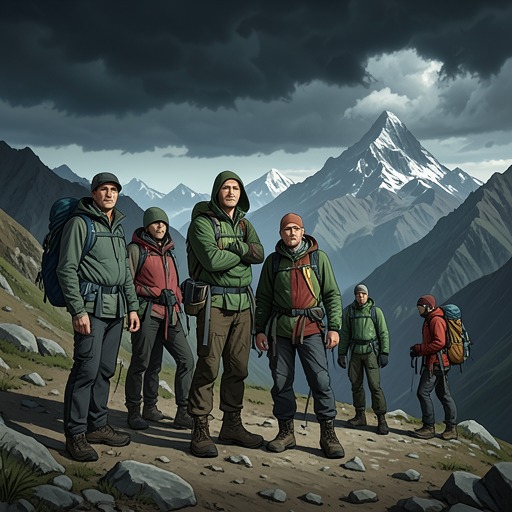
The ClimbThe MacGillivray Freeman IMAX/IWERKS Expedition was a film-making and mountaineering team led by David Breashears, created to bring Everest to theater audiences while climbing in the crowded 1996 season. Its documentary ambition depended on the same mountain routes, Sherpa labor, communications, and oxygen logistics that governed the other expeditions; the camera crew was not outside the practical conditions of the climb.
Project and Leadership
The expedition was headed by American climber and filmmaker David Breashears. More than a decade earlier, in 1985, he had guided Texas businessman Dick Bass to Everest’s summit. Bass, then fifty-five, became the oldest climber to reach the top, an achievement that helped persuade wealthy and adventurous clients that Everest might be attainable and encouraged the growth of commercial expedition companies. Breashears had, in turn, built a substantial part of his income around the mountain.
In 1996, Breashears’s team came to Everest with one of the largest budgets ever committed to an Everest documentary. The planned film, intended for release in 1998, was designed for theaters with wraparound screens and advanced sound systems, offering audiences a virtual Everest experience. Ed Viesturs, a veteran climber then thirty-seven, worked both as a guide and as on-camera talent. His remark that many people on the mountain did not belong there registered the season’s unease even as his own expedition prepared to make the mountain visible to a mass audience.
The Expedition on the Trail
The crew’s approach to base camp gave it a conspicuous presence. At a teahouse near Kami Noru Sherpa’s home in Pangboche, several members occupied tables, ordered tea, and declined local food in favor of snacks brought in their expedition bags. A veteran at base camp, struck by the team’s polished appearance, called them the “Gucci guys.” The nickname captured a friction between the crew’s well-resourced, camera-facing profile and the local working landscape through which the expedition was passing.
The contrast unfolded amid a rapid expansion in Everest traffic. In the early 1980s, the climbers and support staff at base camp could have fitted into a single Paris metro car; in 1996, more than four hundred people would arrive and pitch tents. Sherpas from Pangboche, including Kami Noru Sherpa, were preparing to leave home to establish camps, carry loads, and cook for and serve the growing number of climbers, for daily wages ranging from $2.50 to $50. The film expedition’s passage and production were thus part of a wider commercial system sustained by local labor.
Climbing and Expedition Infrastructure
Boukreev encountered Breashears, Viesturs, and the IMAX crew at a waterfall on the Dudh Kosi while trekking toward base camp. He had to maneuver out of their panoramic shot so as not to spoil the filming. The moment makes the crew’s work concrete: the route was at once a way toward altitude and a camera frame being composed, with other climbers sometimes required to move around the production’s view.
The expedition’s documentary role did not remove it from the operational difficulties of the season. Mountain Madness’s two-way radios, for example, were criticized by Martin Adams as antiquated, limited-channel equipment, a serious concern because radios linked base camp with climbers and carried information about emergencies, weather, equipment, and medical needs. The account describes the communications problem within the broader expedition setting rather than attributing the radios to the film crew; its relevance is that all teams’ movement and safety depended on the reliability of such shared expedition systems.
The same shared conditions shaped the summit route. Clients of the Fischer and Hall expeditions expected the climbing sirdars, Lopsang Jangbu Sherpa and Ang Dorje Sherpa, to fix ropes before the clients set out. Instead, no Sherpas had departed early to install them. The ensuing delay and disagreement concerned the commercial teams directly, but the film expedition was among the other groups moving through a mountain where route preparation affected climbers across expedition boundaries.
Place in the 1996 Everest Season
The expedition’s defining dual purpose was to climb and to make a spectacle of climbing accessible at a distance. Its planned large-format film promised a carefully produced, immersive view of Everest, while the crew’s actual progress took place amid crowded trails, commercial rivalries, Sherpa work, equipment constraints, and shared bottlenecks. The distance between the theater’s controlled image and the mountain’s collective logistics is part of the expedition’s significance: Everest could be packaged as a virtual experience, but reaching and filming it still depended on people and systems exposed to the mountain’s hazards.