NBC
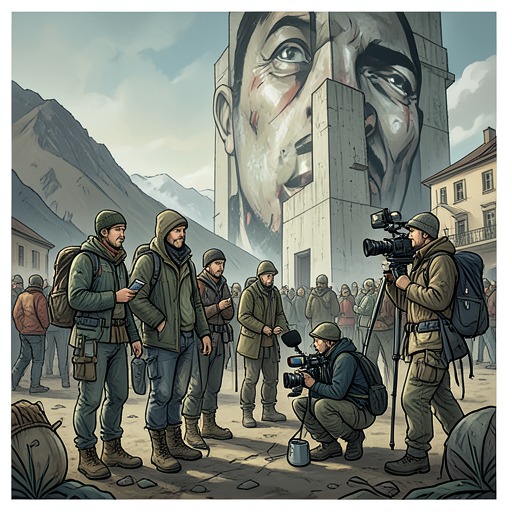
The ClimbNBC’s role in the Everest narrative was both journalistic and infrastructural: its online coverage gave Sandy Hill Pittman a platform to report from the expedition, while the practical means of transmitting those reports—and later the radio links used to convey urgent information—depended on people and equipment scattered across the mountain. The result was a contrast between the immediacy promised by online reporting and the uncertainty of communication in the expedition itself.
Online reporting and expedition publicity
Pittman, a contributing editor to Allure and Condé Nast Traveler, had climbed the highest mountain on six of the seven continents, but Everest had eluded her. Her agreement with NBC Interactive Media called for a daily feed to a World Wide Web site. For Scott Fischer, the prospect of getting her to the summit carried significant publicity value; the book describes her as a prominent addition to Mountain Madness and notes that her experience exceeded Jon Krakauer’s. The arrangement thus made her reporting part of the expedition’s public profile as well as her own climb.
NBC’s presence was not limited to the client’s dispatches. Jane Bromet, Fischer’s close friend and publicity agent, had arranged to work as a correspondent for Outside Online. She saw that job as an opportunity to establish herself in adventure media and as a way to support Fischer’s public objectives. Yet she lacked Pittman’s resources, including a satellite telephone, and would have been unable to report from beyond Kathmandu without access to one. Bromet said she had arranged before leaving Seattle to use Pittman’s NBC-provided satellite phone and had been assured that doing so would not be a problem. The arrangement tied two reporters’ ability to transmit from the expedition to a single communications resource.
Field dispatches and the image of the climb
Fischer participated directly in Pittman’s NBC site. During an online conversation from her communications tent, he spoke with Pittman and Sir Edmund Hillary, who was in Kathmandu. Hillary offered advice about respecting the mountain, descending to recover when altitude affected a climber, and the physical fitness required for success. The scene connected a live online feature to practical judgments about risk and acclimatization.
The reporting also made the expedition’s routine public. In one message, Pittman described the team as having food, supplies, and a Sherpa staff. On another occasion, Fischer relayed her journal entry by satellite phone to NBC offices in New York; her voice was nearly inaudible, while his came through clearly. Staff in New York then typed and digitized the message for the website. The chain—from a climber’s dictated account in the Himalaya, through a satellite call, to an online dispatch—made the report feel immediate to readers while depending on several technical and human steps.
The content did not always convey the mountain’s immediate demands. After returning to Base Camp on May 5, Pittman was reporting to NBC early the next morning. Her dispatch described a yak steak, french fries, a visit with friends, and a walk to Lobuche for lunch. Within two hours, she would leave to attempt the summit. The account’s focus on familiar meals and social visits sat beside the approaching climb, a contrast the narrative uses to show how an upbeat remote report could diverge from the serious undertaking facing its correspondent.
Communications and expedition conditions
NBC’s reporting operated amid broader organizational and equipment constraints. Martin Adams criticized the expedition’s two-way radios as old models with ten channels, arguing that the expedition should have equipped climbers with lightweight, easy-to-use radios. Those radios were intended to link Base Camp with climbers and carry information about emergencies, equipment, weather, and medical matters. The criticism identifies a communications weakness separate from Pittman’s satellite reporting: online dispatches could reach the public, but coordination among the climbers still relied on expedition radios.
The pressure on expedition resources also appears in the oxygen figures for the summit attempt. At Camp IV, Mountain Madness had 62 canisters: nine heavier Zvesda canisters reserved for sleeping and 53 lighter Poisk canisters set aside for the climb. The Sherpas took 21 bottles uphill, while the guides and clients carried 17; after 38 Poisk canisters left Camp IV, only 15 full ones remained, along with whatever oxygen was left in the Zvesda canisters. The book presents this as a narrow margin that did not allow for an overnight delay and a second attempt. These details place the expedition’s public communications beside the physical limits governing its summit plan.
The limits of relayed information
On summit day, urgent radio messages moved through a relay rather than directly from Base Camp to the climbers. Dr. Ingrid Hunt said that messages passed from her to the Base Camp sirdar, then in Nepali to a Sherpa at Camp II, and onward to Pemba at Camp IV; messages coming down followed the same chain in reverse. Hunt believed she was not receiving complete or accurate information and said messages seemed to be altered to present events more favorably. Communication with Pemba was also sporadic, leaving her uncertain about what was happening higher on the mountain.
Hunt sought another route to information by moving between Mountain Madness’s camp and Rob Hall’s camp, which she considered to have better communications. She continued asking over the radio for news. Meanwhile, after reaching Camp IV, Anatoli Boukreev asked Pemba to prepare more tea, unaware that Hunt believed emergency information had already been relayed through the system. The episode shows the difference between transmitting a public journal entry and passing operational information in a crisis: a working chain existed, but its relays, completeness, and reach were contested.
Coverage and later disputes
The book returns to NBC’s online coverage as one strand in a wider account of how the expedition was represented. Pittman’s reports made the climb accessible to remote readers, but the narrative juxtaposes that publicity with the physical work of acclimatization, the limited equipment, and the difficulty of establishing reliable communications. NBC’s role is therefore not simply that of an outside broadcaster: its phone and reporting agreement became part of the expedition’s media arrangements, while the expedition’s own radio network shaped how danger and response could be understood by those at Base Camp.
Later disputes about the account of the disaster concerned the wider press record rather than NBC alone. In a response to Jon Krakauer’s criticism of his decision to descend, Boukreev argued that Krakauer had access to an interview in which Boukreev explained that Fischer approved the plan, and questioned why Krakauer had not contacted him to clarify it. The book also describes disagreement over whether Outside had fact-checked details with Boukreev before publication. These controversies underscore a distinction between the reports sent from Everest during the expedition and the later reconstruction of what happened: both depended on information moving between people, but they served different audiences and became subject to different disputes.