Neal Beidleman
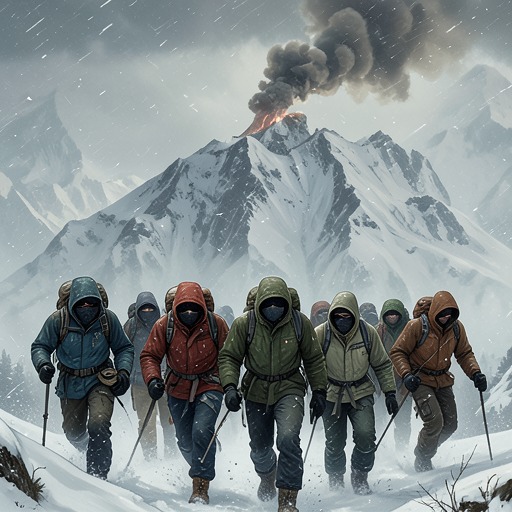
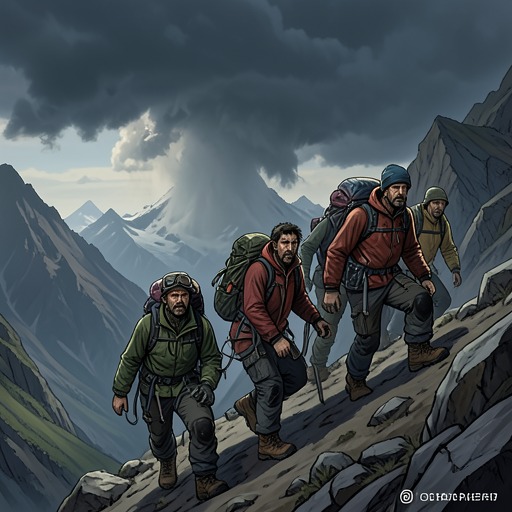
The ClimbNeal Beidleman was an Aspen climber, guide, and ultra-marathon runner whose work on Scott Fischer’s 1996 Mountain Madness expedition extended from recruiting clients to fixing summit-route ropes and helping lead the descent through the storm. On the mountain he was at once a guide expected to organize others and a participant confronting decisions made in worsening conditions; his account of the climbers’ descent preserves that tension rather than resolving it into a simple story of command.
Identity and Place on the Expedition
Fischer’s promotional material presented Beidleman as one of three guides engaged to help take clients to the summit, alongside Nazir Sabir and Anatoli Boukreev. The stated credentials emphasized a combination of climbing and athletic ability: Beidleman was an aerospace engineer, a climber, and an ultra-marathon runner from Aspen, Colorado. But his experience as a guide had limits. An associate described him as untested in that role, noting that he had not guided on Everest or other genuinely large mountains. In place of a salary, his expedition expenses were covered, and he could earn a commission from clients he recruited.
Beidleman used that arrangement to recruit the Colorado climbers Martin Adams, Charlotte Fox, and Tim Madsen. Adams remembered that Beidleman pitched the climb to him several times. Recruitment thus formed part of Beidleman’s practical contribution to the commercial expedition: he was not only a guide placed in the group by Fischer, but also a link between the expedition and some of its paying clients.
The book places this work within a broader change in expedition organization. As sponsorship from national and corporate sources gave way to pooled payments from climbers with experience and money, commercial expeditions increasingly brought together the professional alpinist and the serious amateur. Beidleman’s position embodied that arrangement: he supplied climbing and guiding labor, while his client-recruitment commission tied his work to the expedition’s commercial structure.
Early Difficulties and Client Relationships
Beidleman’s capacity to guide was a concern early in the expedition. Soon after arriving at Base Camp he developed a Khumbu cough so persistent that he could not sleep. Treatment from the expedition doctor, Ingrid Hunt, including steroids and bronchodilators, did not initially help. His illness mattered beyond his own health because Mountain Madness already had one fewer guide than planned. If Beidleman did not recover, Fischer, Boukreev, and the climbing Sherpas might have had to shoulder the clients’ needs without him.
He nevertheless took part in the team’s acclimatization work. During the third excursion through the Khumbu Icefall, Fischer and Beidleman judged that the clients could make the passage without close supervision. Sandy Hill Pittman stayed behind to work in her communications tent, while Madsen, suffering acute mountain-sickness symptoms, had descended to Pheriche with Hunt, who was also having difficulties. The episode shows the expedition’s uneven progress: the guides had to assess who could move independently while some members were already struggling with altitude.
Beidleman’s manner did not suit every client. Lene Gammelgaard remembered him as soft-spoken, measured, and solicitous, but felt that he was too eager to establish himself as a respected guide. She was determined to climb on her own terms and did not want his guidance; she recalled confronting him sharply when she felt he was not giving her the distance she wanted. Beidleman generally kept a professional edge in difficult encounters, although he occasionally answered criticism publicly. The contrast between his restrained manner and Gammelgaard’s forceful independence presents guiding not as automatic authority, but as a relationship that had to be negotiated.
Route Work and Decisions on Summit Day
Beidleman’s role changed as the summit attempt fell behind schedule. At about 8,600 meters, climbers faced a series of rock steps on the way to the South Summit, and fixed ropes were needed beyond that point. After waiting for more than an hour, Beidleman told Boukreev he intended to move ahead of the tiring climbers and help with the ropes. Boukreev agreed and offered him an oxygen canister, judging that Beidleman would be doing strenuous work and that he himself was acclimatized enough to continue without it.
Following Lopsang Jangbu Sherpa and Ang Dorje Sherpa over a rise, Beidleman found Lopsang unable to take on the rope-fixing work. With Ang Dorje’s assistance, he took rope from Lopsang’s pack and began extending the route toward the South Summit. They used old ropes where they appeared reliable and added new ones where necessary. In his later account, Beidleman explained that he had not understood his assignment to be specifically fixing lines. He believed Fischer had asked him to stay in the middle of the group, help organize as many people as possible, and continue upward. Looking at his watch and seeing that the climbers were moving slowly against the recommended cutoff times, he chose to move forward because he perceived disorganization at the front.
The rope work was substantial. Beidleman recalled taking a long white polypropylene rope and a length of seven-millimeter Perlon from Lopsang, then helping extend the route with Ang Dorje. He reached the South Summit at 9:58 a.m., close to the time he remembered as Rob Hall’s cutoff there. He waited for roughly an hour, then spent about forty-five minutes below the South Summit while climbers watched the traverse. Seeing that the route still needed to be fixed, he enlisted Andy Harris, a guide with Hall’s expedition, and set out across the ridge with Boukreev, using the Perlon rope.
Beidleman’s account also clarifies how he understood the guides’ responsibilities. He expected Boukreev to be forward fixing ropes and Fischer to act as sweep, making the difficult decisions about who could continue and who should turn around. Beidleman did not feel comfortable turning a client back when that climber might believe a summit remained possible. He therefore saw his own task as pushing the route forward rather than serving as a checkpoint. That division of labor left him working to advance the group while expecting Fischer, as expedition leader, to make the decisive calls about clients’ progress.
Descent and the Stranded Group
After reaching the summit, Beidleman was anxious to begin descending, but more climbers continued to arrive. He did not think it was right to leave while members of the group were still so close to the top. He passed Fischer with a brief greeting and a slap on the back, focused on getting the others moving; he expected Fischer to catch up. He later supported Boukreev’s decision to descend ahead, saying it made sense and that Boukreev’s work at the bottom would not have been possible had he stayed with the clients.
At the Hillary Step, Beidleman was immediately behind Pittman, who was having difficulty choosing which of the old, tangled ropes to use. The group could not safely lower her by the tangled cords, so she descended with assistance. Beidleman initially thought the next slumped climber he encountered on the fixed ropes was Gammelgaard. When the person did not respond, he tried to adjust her oxygen mask and urge her down, then recognized her as Yasuko Namba, a client with Hall’s expedition. He helped move Namba down the ropes, with Madsen assisting at crevasses that the route crossed. This encounter widened Beidleman’s responsibility beyond his own clients: in the confusion of the descent, he and the others were also trying to get a climber from another expedition down the mountain.
Below the fixed ropes, climbers gathered in what Beidleman later called a dogpile, with the wind buffeting them and people following whichever headlamp happened to be ahead. He tried to call for a single leader and light to follow, warning that otherwise they would wander without direction. He had previously studied the terrain and believed the safest approach in a storm was to avoid the Lhotse Face and its precipice. His intended route was to traverse along a slight slope toward a recognizable band of rock, then descend through the rocks toward camp or the nearby route features.
That plan did not give him continuous control of the group. Gammelgaard later recalled fearing that Beidleman was lost and believing Klev Schoening was the person most likely to get them back to camp. During a break in the storm, Schoening oriented himself and insisted he knew which way the camp lay. Beidleman remembered trying to get the group upright, with Namba still holding his arm, and repeatedly asking Schoening whether he was certain of the direction. The group began moving uphill, but it divided between those who could continue and those who could not. Beidleman’s account presents leadership under these conditions as improvised and shared: he had a route plan and was supporting Namba, while Schoening’s confidence supplied the direction the others needed.
Later, Beidleman explained why his chosen traverse became unreliable. Because the wind and the movement of people pushed the group around, and because he could not get to the front while supporting Namba, the climbers traversed too far. They lost the side slope that had been their terrain reference; once it disappeared, Beidleman said he lost his own sense of direction. In a brief clearing, the group faced the choice of trying to move on and summon help or huddling again. They decided to go. After stumbling and moving over a rise, they saw a distant headlamp and ran toward it, finding Boukreev and another person near the tents. They collapsed in front of the tents, where Boukreev helped remove crampons and directed them into shelters.
Aftermath and Narrative Significance
The Mountain Madness clients and Beidleman reached Base Camp as the Adventure Consultants team descended. By May 12, hope for Hall, Doug Hansen, and Harris had been abandoned. Beidleman and the surviving clients planned to rest and recover before trekking to Syangboche for a helicopter journey to Kathmandu. In a report to Outside Online on May 16, Beidleman said the team was hurting and healing and needed to continue down the mountain. His account closes the summit episode not with a return to normality, but with the practical next step of leaving the mountain to recover.
Beidleman participated in the Mountain Madness debriefing recorded on May 15, alongside Boukreev, Lopsang, Hunt, and six of the expedition’s clients. Fox was absent after being flown to Kathmandu for medical care. The debrief brought participants together to reconstruct a disaster from different positions and imperfect memories. Beidleman’s recollections repeatedly distinguish what he intended from what he could know or control: he believed Fischer would decide who turned around, sought to keep the group oriented, and later acknowledged losing his own orientation when the terrain reference vanished.
His narrative significance lies in that combination of responsibility and uncertainty. He recruited clients, performed difficult route work, helped guide Pittman and Namba during descent, and tried to direct a storm-scattered group. Yet the narrative does not make him an all-knowing leader: his account records disagreement over who understood the plan, Schoening’s crucial orientation, and the moment when Beidleman himself could no longer tell where the group was going. The result is a portrait of guiding as consequential labor under pressure, shaped by prior judgment but never insulated from the mountain’s conditions.