Ngawang Topche Sherpa
The ClimbNgawang Topche Sherpa was a Sherpa worker on Scott Fischer’s 1996 Everest expedition and the uncle of Lopsang Jangbu Sherpa. His descent from a supply-carrying climb became one of the expedition’s first grave medical emergencies: after Fischer told him to go down, he continued upward, became disoriented, and developed symptoms diagnosed as high-altitude pulmonary edema. His evacuation through the Khumbu Icefall and subsequent coma brought the dangers borne by expedition staff into sharp focus, as well as the financial and organizational pressures surrounding a commercial summit attempt.
Identity and Expedition Role
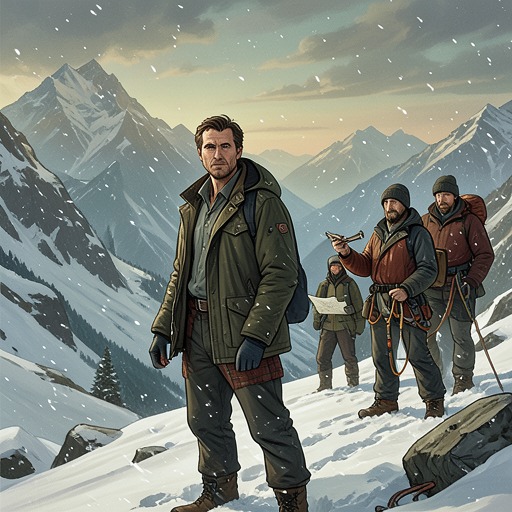
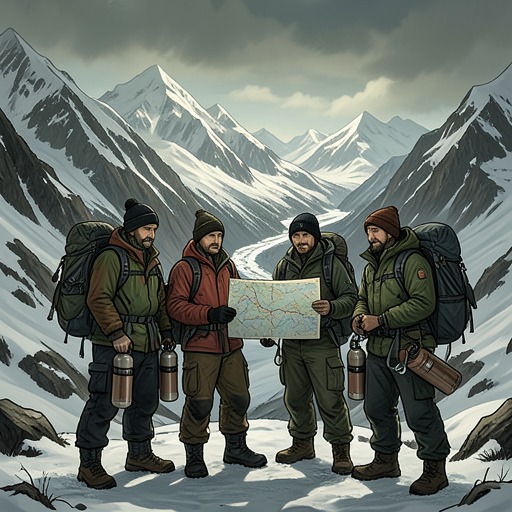
Ngawang Topche Sherpa appears in the book not as a summit aspirant whose private history is fully recounted, but as a member of the Sherpa workforce supporting the 1996 expedition. In the weeks before the incident, he was among the Sherpas carrying supplies from Camp I toward Camp II as they helped advance the route. He was also Lopsang Jangbu Sherpa’s uncle, a family connection that became immediate and consequential when Lopsang was called to accompany him for medical evacuation.
The work of establishing camps and carrying loads took place within a commercial expedition economy. Sherpas could be paid anywhere from $2.50 to $50 a day for work that included carrying supplies, building camps, and serving climbers. By 1996, more than four hundred people would make their way to Everest Base Camp during the season, a dramatic expansion from the much smaller groups of the early 1980s. Ngawang’s story gives that growth a specific human dimension: the staff who made the climbing enterprise possible were themselves exposed to the mountain’s medical dangers.
Illness Above Camp I
On April 22, Fischer was descending from Camp II after a storm had passed and tents had been restored when he encountered Ngawang, who seemed confused and unwell. Fischer told him to descend, then continued down himself, expecting Ngawang to follow. Instead, Ngawang kept climbing. The account leaves open why: pride, a misunderstanding of the instruction, or confusion caused by his deteriorating condition may have contributed. The uncertainty matters; the narrative does not settle on a single explanation for his decision.
A radio message from Camp II alerted the expedition to the emergency. Ngawang was found disoriented and coughing up frothy sputum and blood, symptoms that led to a diagnosis of high-altitude pulmonary edema. The immediate response considered essential was descent by roughly 610 to 1,220 meters. But Camp II stood only about 400 meters above Camp I, so reaching a lower elevation where his symptoms might improve meant taking him down through the Khumbu Icefall. The route turned a medical evacuation into a hazardous movement across a major obstacle on the mountain.
Rescue and Evacuation
There were no Mountain Madness guides at Camp II when the crisis unfolded. Fischer had already descended; Anatoli Boukreev and Neal Beidleman were resting at Base Camp after an earlier acclimatization outing. The rescue effort therefore initially fell to Klev Schoening and Tim Madsen, who were at Camp II to acclimatize. When consulted, Boukreev advised that the priority was to get Ngawang down quickly and give him oxygen.
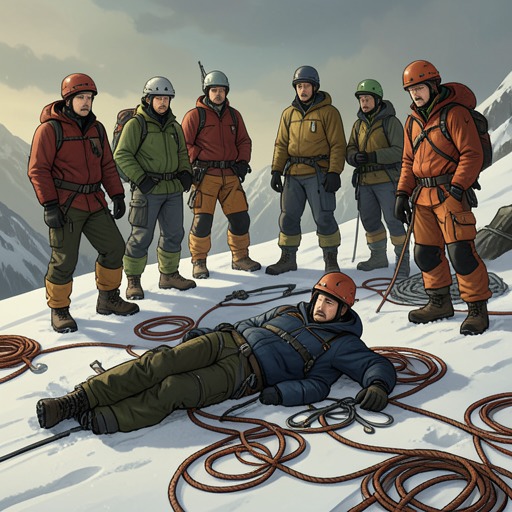
When Ngawang did not respond to treatment, Klev Schoening and Madsen made a makeshift sled and began lowering him. Beidleman and several Mountain Madness Sherpas left Base Camp and entered the Icefall to meet the descending group. Just before dark, Beidleman and the Sherpas took over the evacuation, while Madsen and Klev Schoening remained on the mountain to continue their acclimatization. The account thus records a handoff rather than a single rescuer’s effort: climbers and Sherpas shared the work as the patient was moved through the Icefall.
Ngawang was later airlifted from Pheriche to Kathmandu. Lopsang flew with him and Ingrid Hunt, the expedition doctor, to the city. The rescue brought a direct financial burden as well as an urgent medical one. Fischer estimated that the costs could reach $10,000, and worried that Ngawang might require prolonged hospital care. Six days after the airlift, Boukreev learned from Hunt that Ngawang had lapsed into a coma and appeared to have suffered brain damage. If he survived, she reported, he would probably need extended medical care. The account provides no later medical outcome.
Consequences for the Expedition
Ngawang’s condition became one element in a gathering set of pressures on Fischer. The expedition’s oxygen supply was dwindling, with some clients using bottles charged at $325 each; the prospect of paying for Ngawang’s helicopter evacuation and hospital care added to the strain. Fischer was also physically exhausted, Camp III had not yet been established, and fixed ropes between Camp III and Camp IV were not in place. The medical emergency therefore arrived amid operational delays and financial uncertainty, rather than as an isolated interruption.
The incident also sharpened questions about the expedition’s staffing and responsibilities. Boukreev noted that Sherpas at Base Camp did not immediately go up after hearing of Ngawang’s distress. He did not claim to know the exact reason, and questioned the expectation that Sherpas would automatically accept dangerous work outside their assigned duties. He recognized their capacity and experience while emphasizing that ability did not erase the risks or make every emergency task an assumed obligation.
Later, while descending with Fischer and Dale Kruse, Boukreev heard that Ngawang remained in grave condition and that the rescue might cost as much as $10,000. Fischer was also concerned that the Sherpas had not prepared Camp IV or carried the oxygen supply to that altitude. He and Boukreev discussed the team’s performance and agreed that, after the expedition, they should assess which Sherpas might join future expeditions. Ngawang’s emergency thus became entangled with decisions about staffing, work, and the expedition’s capacity to carry out its plan.
Commercial Risk and Narrative Significance
The book places Ngawang’s illness beside a wider account of commercial mountaineering. Fischer had built Mountain Madness since the early 1980s, but the business had not consistently given him a stable income; a successful Everest expedition, with clients paying as much as $65,000, might change its prospects. The expedition’s commercial ambitions depended on labor that was far less highly paid: Sherpas carried loads, established camps, and supported the climbers’ movement up the mountain. Ngawang’s emergency makes the unequal distribution of price and physical exposure visible without reducing his experience to a business calculation.
The larger account also questions who controls the labor and benefits of route preparation. In a later expedition narrative, the narrator describes competition over payment for fixing the Icefall route and imagines a future in which Sherpas would prepare the route as contractors and Nepalese workers would control access and receive fairer compensation. He cautions that building a strong Sherpa team requires years of repeated ascents and consistent financial support. These reflections do not establish Ngawang’s own views, but they illuminate the institutional setting in which his work and rescue took place.
Ngawang’s episode interrupts the expedition’s forward drive toward the summit with a more immediate test: whether a seriously ill worker can be brought down quickly, and who will take on the risks of doing so. Its account moves from Fischer’s instruction to descend, through the improvised sled and the handoff in the Icefall, to the grim report from Kathmandu. The unresolved medical outcome and the continuing costs leave the crisis open in the narrative, while its consequences remain present in the expedition’s concerns about money, staffing, safety, and responsibility.