Oxygen cylinder and Nanfeng oxygen reserve
The ClimbOxygen bottles and the South Summit cache were not merely equipment in the Mountain Madness expedition: their number, allocation, and uncertain location shaped the summit plan and the options available when climbers were delayed. The intended reserve was specific, but accounts of how much oxygen was carried and whether the cached bottles remained available diverged. In the storm, oxygen became both an immediate resource and an enduring question about the expedition’s preparations and communications.
Supply and summit plan
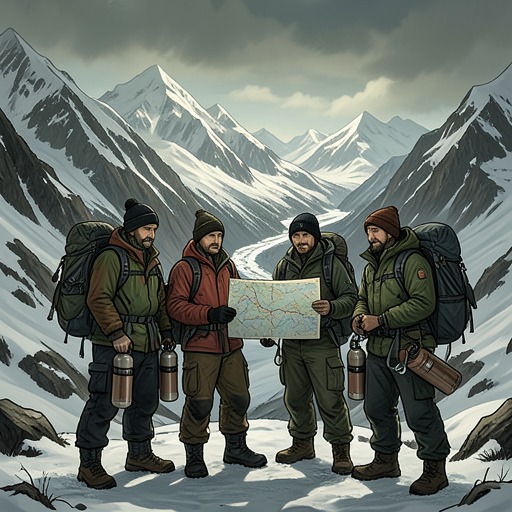
At Camp IV, Mountain Madness had sixty-two canisters: nine heavier Zvesda canisters and fifty-three lighter Poisk canisters. The Zvesdas were reserved for sleeping before the climb; the Poisk bottles were allocated to the May 10 summit attempt. This was only 51 percent, by volume, of the oxygen the expedition had purchased from Henry Todd. Much of the remainder had already been used, especially by Pete Schoening and Ngawang Topche Sherpa, while a small amount was kept at Base Camp for medical emergencies.
The distribution left a narrow margin. Six Sherpas were climbing with the expedition, five planning to use oxygen and climbing sirdar Lopsang Jangbu Sherpa climbing without it. Lopsang carried one bottle for emergencies; each of the other five Sherpas carried two bottles for personal use and two more for clients and guides. Altogether, the Sherpas took twenty-one bottles up from Camp IV. The six clients, Scott Fischer, and Neal Beidleman each carried two bottles, while Anatoli Boukreev carried one, making seventeen bottles among the guides and clients.
Together, the climbers carried thirty-eight Poisk canisters, leaving fifteen full Poisk bottles at Camp IV, in addition to whatever remained of the Zvesdas used overnight. That reserve was not enough to support an overnight delay and a second summit attempt on May 11. The plan therefore left the team with a single opportunity: May 10, or no second bid.
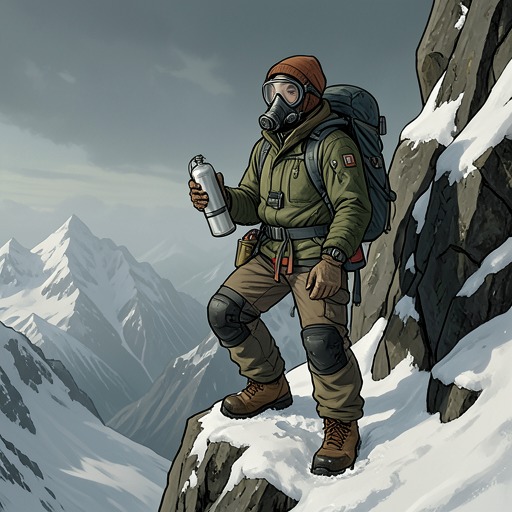
The planned descent depended on another supply point. Fischer’s calculations, partly based on Todd’s advice, assumed that each Poisk canister would last six hours at a flow rate of two to two and a half liters per minute. Two bottles were expected to cover the ascent to the summit and the descent as far as the South Summit, where climbers were meant to collect a third. With three bottles, the plan allowed eighteen hours of oxygen and, if the weather and timing held, enough supply to return to Camp IV. The climbers were expected to reach the summit in ten to eleven hours after leaving at midnight, then descend to the South Summit and retrieve the cached bottle for the return.
What was meant to be cached
The plan called for ten bottles to be deposited at the South Summit by the Mountain Madness Sherpas. Six clients, Beidleman, and Fischer were each supposed to take one bottle from that cache during their descent. The two remaining bottles were understood to be reserves for Boukreev, should he need them on summit day. Boukreev knew a bottle was to be carried for each client and that some oxygen was reserved for him, but he was unsure how many bottles had actually reached the mountain.
The later debriefing did not settle the accounting. Beidleman recalled an original expectation of about sixty-nine bottles at Camp IV, though he noted that this number included the oxygen supplies of Pete Schoening and Dale Kruse. He also remembered a contingency in which climbers might wait overnight at the South Col, sleeping on half a bottle per person each night. The figure communicated by Lopsang—somewhere between sixty-two and sixty-five, Beidleman recalled—had seemed sufficient in comparison with that original estimate. Lopsang confirmed that Sherpas carried twenty-one bottles and said that the reserve was given to the South Summit; in a separate exchange, he identified ten bottles as extra oxygen and said they were put at the South Summit.
Those recollections did not establish what remained in the cache as the climbers descended. Several Mountain Madness clients may have retrieved a bottle on their way up, rather than on the descent as planned. Boukreev later reasoned that at least three full Mountain Madness bottles should nevertheless have remained: Beidleman did not need his planned third bottle because Boukreev had given him one near the Balcony during the ascent, while the other two were presumed to be Boukreev’s reserve. What happened to those bottles remained a mystery.
The broader summit route depended on more than oxygen. Mountain Madness and Adventure Consultants clients expected the fixed ropes between Camp IV and the summit to be in place before they reached the Balcony. Instead, the Sherpas had not departed early to fix them. The resulting wait occurred in the Death Zone, where the teams had planned to pause and change from their first oxygen canister to their second. Thus a carefully apportioned supply was tied to assumptions about timing and route preparation; a delay could consume the margin the oxygen plan was intended to preserve.
Oxygen during the storm
The intended cache became especially consequential when the descent and rescue plans broke down. Boukreev reached Camp IV at about five o’clock, received tea from Pemba Sherpa, and waited for other climbers to come down. As the snowstorm began and no Sherpas appeared, he asked about oxygen, took three bottles, and climbed again in an attempt to find the fixed line and locate people above camp. Strong wind, darkness, and poor visibility thwarted the search; after several hours he returned to his tent.
At the summit, Lopsang’s account also describes oxygen being offered amid the decisions about who would continue and who would turn back. He recalled checking Fischer’s oxygen pressure and said it registered five pounds, but Fischer removed his mask and did not use it. Lopsang described giving drinks to tired climbers and said that, when he was asked to carry oxygen to Rob Hall, he refused because Fischer was ill and he remained with him. His testimony links the bottles to competing immediate needs: a request to carry oxygen onward, concern for Fischer, and the effort to descend together.
When Fischer became unable to continue down, Lopsang said he tried to help him descend slowly, then stayed with him as darkness, wind, and snow made the route impossible to see. Lopsang told him that Sherpas would be sent with oxygen, tea, and other supplies. The next morning, two Sherpas went up with oxygen and refreshments, but Fischer was already dead. The account makes clear that oxygen was expected as part of the response, but it does not establish that an available bottle could have changed the outcome.
Disputed accounting and significance
The accounts of the Adventure Consultants cache provide a comparison, not a resolution of Mountain Madness’s missing supply. Jon Krakauer reported that at least six bottles remained when he, Andy Harris, Mike Groom, and Yasuko Namba reached the South Col. Groom said he distributed full bottles to Harris, Namba, and Krakauer, took one for himself, and that two Sherpas had taken two more. If there had been only six bottles, that accounting would leave none for Hall when he arrived at the South Summit, although Krakauer later wrote that Hall had two full canisters. The conflicting figures show how the cache’s contents became difficult to reconstruct even for the other expedition.
For Mountain Madness, the mismatch was particularly stark: a plan that depended on a third bottle for the descent and reserved oxygen for a guide’s rescue role, but whose remaining cache could not later be accounted for with certainty. The bottles connected individual endurance to shared logistics. Their planned distribution offered a limited buffer; route delays, early retrievals, relayed information, and the demands of rescue made that buffer hard to track. The surviving accounts preserve both the original arithmetic and its failure to provide a definitive answer about what oxygen was actually available when it mattered most.