Pete Athans
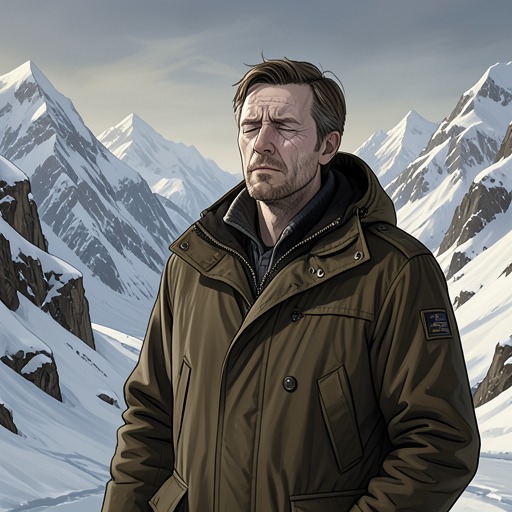
The ClimbPete Athans is presented as a guide with Alpine Ascents and a Nepali speaker whose role in the aftermath of the 1996 Everest storm hinged on communication and judgment. At Camp IV, he helped interpret the Sherpas’ assessment of Scott Fischer’s condition for Anatoli Boukreev, then tried to stop Boukreev from making a dangerous return up the mountain. The account later places Athans among the guides honored for their actions on Everest, linking an immediate, contested rescue decision to the longer public recognition of the response.
Identity and Role
Athans appears in the account as a professional guide with Alpine Ascents, the commercial expedition whose guides had come to Camp IV to assist with getting climbers down after the storm. His ability to speak Nepali mattered in the tense exchanges surrounding Fischer: he could communicate with the Sherpas and convey what they had observed to Boukreev. The evidence does not give a broader biography, but it defines his contribution through this practical role—moving between groups when conditions, language, and the urgency of the situation made reliable information essential.
Assessing Fischer’s Condition
After hearing that Sherpas had returned with Makalu Gau, Boukreev went to the Taiwanese tents and learned from Gau that he and Fischer had been together the previous night. Boukreev hoped Fischer might still survive, but sought further information from the Sherpas who had gone up. In their tent, Lopsang’s father was crying and said that Fischer had died, though he had still been breathing. Boukreev asked whether the Sherpas had given him oxygen and medicine. They said they had administered oxygen but no medicine; one account of the attempt specifies that they had opened a single bottle and put a mask on him.
Boukreev returned to Athans and asked whether he could help him go up to Fischer, who was reportedly still alive at about 8,350 meters. Athans understood the situation through his conversation with the Sherpas and answered that helping Fischer was impossible. He explained that the storm had not ended and bad weather was coming; oxygen had not helped Fischer. Though Fischer could breathe, he could not swallow tea, which others had put into his mouth. Athans’s assessment was not presented as indifference: it was a conclusion drawn from the reported severity of Fischer’s condition and the danger of going higher. Boukreev nevertheless held open the possibility that oxygen might improve Fischer’s breathing and returned to gather more information.
The Attempt to Turn Boukreev Back
Boukreev also radioed Base Camp and asked Ingrid Hunt for advice. She urged him to try every possibility and asked whether he had a small packet of injections; he said he did and promised to make the attempt. He then requested three oxygen bottles and a thermal bottle of tea from the Sherpas. When they questioned why he needed them, he said he intended to go up; those present called the idea stupid.
Lopsang’s father spoke in Nepali with Athans, who then asked Boukreev what he wanted to do. Boukreev repeated that he was going up and needed oxygen and tea. Athans tried to dissuade him: the storm had eased a little, he said, but Boukreev would encounter it again if he climbed. Boukreev answered that the attempt was what he needed to do. He explained that Fischer was just before the Balcony and, in his estimate, might have enough oxygen until seven o’clock. The two men thus faced the same evidence but reached different practical conclusions: Athans emphasized the likely return of the storm and Fischer’s grave incapacity, while Boukreev focused on the remaining possibility of revival and the time he believed was available.
Boukreev obtained only two oxygen bottles, not the three he had requested, and believed they might have come from David Breashears’s expedition, though he was not sure. As he prepared to leave, the wind began to rise again. Around four or four-fifteen, he saw Athans outside the tent and asked whether he would go up. Athans simply refused. Boukreev then asked how many people would try to help; Athans became sad and cried a little, convinced there was no chance. The brief exchange makes visible the cost of their disagreement without resolving it: Athans’s refusal was a judgment about the futility and danger of the climb, while Boukreev proceeded despite that judgment.
Recognition and Aftermath
Athans’s role continued beyond this immediate exchange. By the morning of May 12, hope for Rob Hall, Doug Hansen, and Andy Harris had been abandoned, and the remaining Adventure Consultants members began descending toward Base Camp. Beck Weathers and Makalu Gau were evacuated to Camp I and then flown by helicopter to Kathmandu through the efforts of Athans, Todd Burleson, Ed Viesturs, David Breashears, and members of other expeditions. The account includes Athans among a wider group of rescuers and evacuation helpers, rather than attributing those outcomes to him alone.
On December 6, 1997, the American Alpine Club named Athans, Burleson, and Boukreev recipients of the David A. Sowles Memorial Award for their actions on Everest in May 1996. Jim Wickwire, who had chaired the five-member award committee, said the recipients were professional mountain guides and had therefore been held to an even higher standard for the rare honor. The award’s recognition of Athans alongside Boukreev is a significant counterpoint to their disagreement at Camp IV: Athans had argued that a renewed attempt to reach Fischer was impossible, yet his actions as a guide and his contribution to the wider rescue effort were also publicly honored. The account’s focus remains on his concrete decisions and work, not on a final verdict about the choice to climb or not climb.