Sandy Hill Pittman
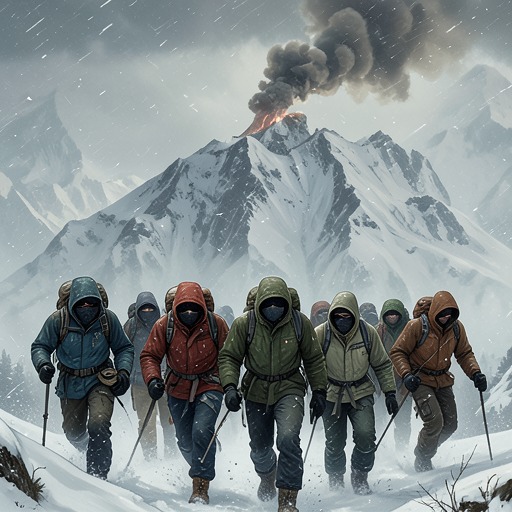
The ClimbSandy Hill Pittman entered the Mountain Madness Everest expedition as both an experienced climber and a high-profile correspondent: she had climbed the highest mountain on six of the seven continents, had twice turned back before reaching Everest’s summit, and planned daily online reports for NBC. The expedition gave that media presence unusual prominence, but her climb became a test of the difference between the story projected from Base Camp and the exposed, uncertain work of moving safely at altitude. She reached Everest’s summit on May 10, 1996, became gravely weakened during the descent, and survived the storm with help from fellow climbers and Anatoli Boukreev.## Identity and Expedition Role At forty, Pittman was a Contributing Editor to Allure and Condé Nast Traveler. Her previous high-altitude experience made her an attractive client for Mountain Madness, but Everest remained an unfinished goal: on two earlier attempts she had turned back short of the summit, including one climb with David Breashears of the IMAX/IWERKS Expedition. Her agreement with NBC Interactive Media to provide daily updates for a World Wide Web site gave the expedition a second audience beyond the climbers themselves.
Scott Fischer understood the publicity value of getting Pittman to the top. A friend recalled Fischer viewing her as a valuable addition who might write and speak about him if she summited; the same possibility carried reputational risk if she failed and attributed that failure to his leadership. Pittman’s coverage was not under Fischer’s control, however. Jane Bromet, Fischer’s publicity agent, arranged a separate Outside Online correspondent role and made a deal to use Pittman’s NBC satellite phone, since Bromet otherwise lacked a reliable way to file reports after leaving Kathmandu. Pittman’s communications equipment thus became part of the expedition’s media infrastructure as well as her own reporting arrangement.
The online dispatches often made the expedition accessible to distant readers, but their focus could sit uneasily beside the immediate demands of climbing. At Camp II, when bad weather kept clients in their tents, Pittman’s report used their musical preferences as human-interest detail: Neal Beidleman liked the Chipmunks’ “Lollipop, Lollipop,” while Lene Gammelgaard favored Nick Cave’s “Murder Ballads.” The contrast became a shorthand in the account for a team whose members differed not only in taste but in temperament and approach to the mountain.
Acclimatization and Tensions on the Mountain
Fischer initially planned to take clients to Lukla at 2,850 meters and continue upward gradually, following the common recommendation to begin below 3,040 meters. He changed the plan just before the expedition began, flying the clients and remaining gear to Syangboche instead. Pittman reported that nearly everyone felt the effects of the sudden gain in elevation: even walking left the team short of breath, and two people were in bed with stomach problems. Gammelgaard was among those affected. The team then trekked to Namche Bazaar for two days of rest and short hikes, while some climbers continued to experience symptoms associated with acclimatization.
The team also had to adjust to one another. A Base Camp resident described a growing competition between Pittman and Gammelgaard. In that account, Pittman talked about her writing, influence, and prominent acquaintances, while Gammelgaard emphasized detachment and self-sufficiency. The source interpreted their drive as partly a struggle to establish identity, rather than simply an expression of love for climbing. Beidleman, one of the guides, was reportedly increasingly frustrated by their contrasting personalities. Pittman’s unfamiliarity with some of her communications equipment added to his workload: one account estimated that he spent more than twenty-five hours helping her with it, while NBC had not sent a technician.
Fischer tried to keep apart from the friction, but privately acknowledged the risk that Pittman might blame him if she did not summit and fail to credit him if she did. Her climbing history and public role therefore had two sides: they helped make her a prominent client, while intensifying scrutiny of the expedition’s decisions and the account she might later give. The book presents that tension through reported judgments by Fischer’s associates and other team members, not through a single settled verdict on Pittman.
On May 4, after hearing that three friends had gone to Pheriche to see her, Pittman descended from Base Camp with three Sherpas, one carrying her satellite phone. She returned the following night. Boukreev later questioned the timing: in his view, the quick descent and return shortly before the summit push may have cost her energy, while a longer rest would have been more useful. Pittman was back at work in her communications tent at five the next morning, reporting cheerfully about the visit, including a meal of yak steak and french fries and a walk to Lobuche for lunch. The report’s upbeat detail stood in sharp contrast to the imminent summit attempt. Gammelgaard later said that Pittman’s behavior in the mountains did not fit what she expected from her climbing history.
Summit Bid and Descent
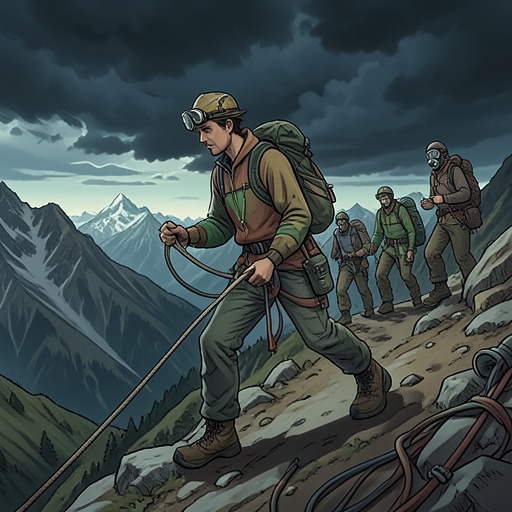
The Mountain Madness oxygen plan rested on Henry Todd’s estimate that a Poisk canister used at a flow rate of two to two and a half liters per minute would last six hours. The planned two canisters were expected to cover the climb from Camp IV to the summit and the descent to the South Summit, where clients would collect a third bottle cached by Sherpas. The calculations assumed favorable weather and no complications. Near midnight, as clients loaded their two oxygen tanks, Fischer invited anyone ready to leave with Lopsang Jangbu Sherpa. Pittman stepped forward. Lopsang attached her to a short rope connected to her harness, and she began the climb on a towline behind him. Charlotte Fox left about ten minutes later, on her thirty-ninth birthday.
Pittman reached the summit between 2:15 and 2:30 p.m., among the four Mountain Madness clients who had been passed on the descent by Boukreev and Martin Adams. The final stretch was difficult: as she approached the aluminum tripod marking the summit, the oxygen in the third bottle she had collected at the South Summit ran out. Lopsang noticed her distress, took an additional bottle he had carried from Camp IV, and connected it to her system. The moment shows how her summit depended not only on the written oxygen calculations but also on a guide carrying a spare and recognizing when she needed it.
The group remained on the summit until 3:10 p.m. The forty minutes of celebration and photographs also used up oxygen and daylight. Pittman’s challenge then shifted from reaching the top to descending in deteriorating conditions. When Beidleman encountered her above the South Col, Fox had just given her a dexamethasone injection and reported that she appeared seriously impaired. Beidleman checked Pittman’s oxygen gauge and found less than an hour of supply. He asked Gammelgaard, who had collected a new bottle at the South Summit, to exchange cylinders with her.
During the attempt to get moving, Beidleman struggled to help Pittman stand. She said she could not walk; he urged her to crawl, and she did. A break in the weather seemed to offer a narrow opportunity to move, but Pittman lost sight of the headlamp ahead as the group went over a small rise. She called out, recognizing that staying with someone else was her best chance, and found Tim Madsen. This episode reverses the summit scene: where a towline had helped her upward behind Lopsang, on the descent she had to crawl and keep contact with another climber to continue.
Storm, Rescue, and Survival
Pittman reached the storm-bound group on the South Col, where she was among the climbers who could stand but could not walk without support. Pete Schoening recalled trying different combinations to help people move, while Beidleman worked to get Pittman to her feet. As the weather briefly allowed movement, she crawled after the others and then called out when she could no longer see the light ahead. She found Madsen, who became a crucial companion in the effort to stay with the group.
Boukreev later went out again to find the stranded climbers. He had to search tents for supplies, took an oxygen mask and oxygen from another Sherpa, and set out before dawn with little energy left. When he found Madsen and Pittman, they had already been using oxygen for about an hour. Pittman was able to speak with him and said she was okay; Boukreev judged her condition to be much improved. He gave the tea he had brought to her and helped bring her back toward Camp IV. His account stresses the narrowness of the margin: one bottle was shared among three people, and he described himself as close to having no strength remaining.
The storm’s aftermath did not make Pittman’s survival a simple story of individual endurance. Her progress depended at different points on Lopsang’s towline and spare oxygen, Fox’s injection, Gammelgaard’s cylinder, Beidleman’s effort to get her moving, Madsen’s presence when she lost sight of the group, and Boukreev’s return with oxygen and tea. In the account of the rescue, the help is distributed across the team, while each person’s remaining strength and supplies set firm limits on what could be done.
Aftermath, Testimony, and Public Memory
Pittman survived the expedition and later took part in the team’s May 15 debriefing, five days after the disaster. She recorded the discussion and made a copy of the tape available to Boukreev. The partial transcript identifies her as one of six Mountain Madness clients present, alongside Martin Adams, Lene Gammelgaard, Tim Madsen, Klev Schoening, and Pete Schoening. Dale Kruse had already left Base Camp, while Fox had been flown to Kathmandu for frostbite treatment. Pittman’s role thus extended from reporting the climb as it unfolded to preserving a record in which participants discussed the tragedy and its aftermath.
She later publicly defended Boukreev. In a statement quoted in Salon, Pittman said that, in her view, his actions had been in the best interests of his clients and that different choices by him would have changed the outcome. She also emphasized the danger of relying on oxygen without accounting for what happens when it runs out. Her endorsement came from a client who had experienced his rescue firsthand, but it formed part of a wider public argument over the decisions made on summit day and during the storm.
The book also traces how Pittman’s experience was mediated and contested. Boukreev gave Jon Krakauer a photocopy of his answers to questions about his meeting with Fischer above the Hillary Step, in part because he felt the interview had been limited by his English. In a later response to criticism, Boukreev argued that Krakauer had already had access to an interview in which he explained that Fischer approved his descent, and challenged claims about his clothing and oxygen use. A fact-checking dispute similarly turned on photographs that Boukreev said showed he was adequately dressed. These arguments do not establish Pittman’s view on every point, but they place her recorded debriefing and public defense within the book’s larger concern with how evidence from the mountain became media narrative.
When Boukreev watched a television dramatization of the disaster, Pittman herself did not appear in the scene described, but he recognized another climber on screen as Yasuko Namba and was distressed by the film’s portrayal of the events. His reaction and Pittman’s support of him frame the story’s recurring divide between the people who survived the mountain and the versions of the disaster produced for distant audiences. Pittman’s own trajectory crosses that divide: she arrived with a public platform, reported from the expedition, depended on collective rescue in the storm, and afterward helped preserve testimony while taking a position in the debate over Boukreev’s conduct.