Shisha Pangma
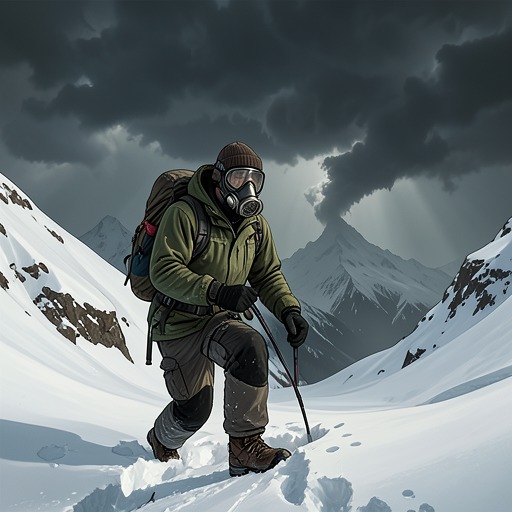
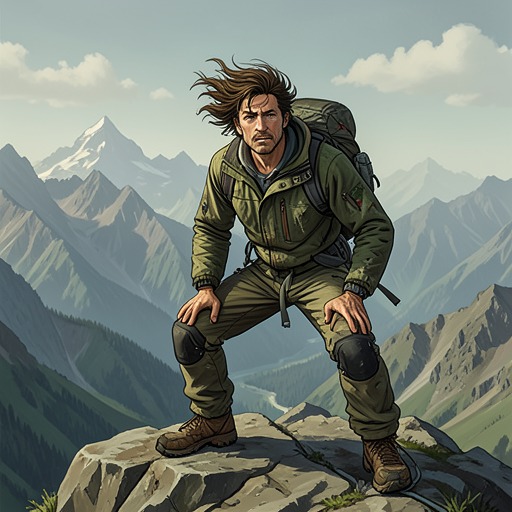
The ClimbShisha Pangma enters the narrative as one of two major peaks Anatoli Boukreev climbed in the autumn of 1996, after leaving the United States to grieve and make his peace at home. His ascent of its North Summit, completed alone and without supplemental oxygen, was at once a concrete mountaineering achievement and part of his return to a life organized around the mountains.
The autumn ascent
On September 25, 1996, Boukreev summited Cho Oyu, at 8,201 meters. On October 9 he climbed the North Summit of Shisha Pangma, at 8,008 meters, again alone and without supplemental oxygen. The book presents the two climbs in succession, emphasizing both the high-altitude scale of the undertaking and the fact that Boukreev made them without oxygen.
The summit was not the end of the autumn’s consequential events. In late October, after climbing Shisha Pangma, Boukreev accepted a ride on a Kazakh climbing team’s bus traveling from Tashkent toward his home in Almaty. The bus collided with a transport truck after its driver was presumed to have fallen asleep. The side of the bus where Boukreev was sitting sheared away; a young climber seated directly in front of him was decapitated, and the driver lost his left arm. The account thus places the peak within a season that moved abruptly from solitary achievement to a violent road accident.
Return after Everest
Boukreev had left the United States in August to return to his family home in the Urals. His mother had died earlier in the summer, shortly after he attended memorial services for Scott Fischer. He wanted to visit his brothers and sisters and mourn, but described himself as unsuited to life elsewhere: he had committed himself to the 8,000-meter peaks still left to climb, and considered the mountains his home and his work.
By the time he returned to Nepal, the 1996 Everest ordeal remained an unresolved burden. Boukreev later accepted a lead consulting role for an Indonesian team planning a spring ascent of Mount Everest by the Southeast Ridge. He said that returning to Everest appealed partly because he had unfinished emotional business there and wanted to arrange respectful burials for Fischer and Yasuko Namba. Shisha Pangma therefore belongs to a turning point between mourning and renewed commitment: it records the continuation of his climbing after loss, before his attention returned to Everest.
Significance in the narrative
The account of Shisha Pangma is brief and exact: a date, a summit, an altitude, and the absence of supplemental oxygen. Its significance comes from that placement in the larger sequence. Boukreev had come home to grieve, then resumed climbing the highest peaks; after Shisha Pangma, the narrative records both the bus crash and his subsequent decision to return to Everest. The mountain is not presented as a resolution of his grief, but as part of the demanding work and chosen life to which he turned again.