Tim Madsen
The ClimbTim Madsen was a Mountain Madness client whose May 10, 1996 summit attempt ended not in a solitary contest with the mountain but in a prolonged effort to keep other climbers alive. A ski patroller in the Snowmass Ski Area, fit and experienced on lower peaks but new to high altitude, he entered the expedition with Charlotte Fox, his friend and fellow ski patroller. During the storm, he remained with Fox, helped bring Yasuko Namba into their group, and endured the night with them while hoping someone would return.
Background and Preparation
Madsen, thirty-three, joined the expedition with Fox, then thirty-eight. Both worked as ski patrollers at the Snowmass Ski Area, but their mountaineering profiles differed: Fox had climbed two 8,000-meter peaks and all fifty-four of Colorado’s 14,000-foot peaks, while Madsen had good experience on lower mountains but had never climbed at high altitude. He was in excellent physical condition, and the two friends committed to extensive training in the Canadian Rockies before taking on Everest.
The preparation did not eliminate the unfamiliar demands of altitude. On April 17, while the rest of the team left early for a third passage through the Khumbu Icefall, Madsen was already in Pheriche with the team doctor, Ingrid Hunt, suffering acute symptoms of acute mountain sickness. Fox stayed behind at Base Camp. Scott Fischer and Anatoli Boukreev judged that the clients could negotiate the route without close supervision, but Madsen’s descent made plain that fitness and lower-elevation experience did not guarantee an easy adjustment to the mountain.
Acclimatization and the One-Attempt Plan
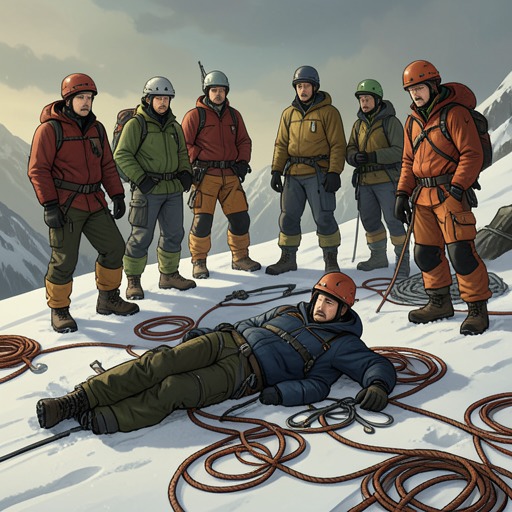
Madsen later joined Klev Schoening at Camp II while they continued acclimatizing. When Ngawang Topche Sherpa became disoriented and began coughing up blood-tinged froth, the two clients were at the camp without a Mountain Madness guide: Fischer had left, while Boukreev and Neal Beidleman were resting at Base Camp. Boukreev advised them by consultation to get the stricken climber down as quickly as possible and give him oxygen. When treatment failed, Madsen and Schoening rigged a makeshift sled to lower him. Beidleman and several Mountain Madness Sherpas came up through the Icefall and took over shortly before dark; Madsen and Schoening remained on the mountain to continue their acclimatization.
That rescue did not settle the question of whether Madsen and Fox were ready for the summit push. A few days before the planned May 10 attempt, they told another expedition member they were worried about proceeding without adequate acclimatization. They were advised to tell Fischer they wanted to wait and make their attempt later. Fischer’s response, as recalled by that member, was that the team was not organized for two attempts and would make only one. The clients had paid for the expedition expecting a summit opportunity, and the restriction surprised them. Madsen’s earlier illness and the pair’s private concern thus stood against a schedule that offered no second chance.
Boukreev remained concerned about both clients. He understood that Madsen and Fox had missed parts of the acclimatization routine and had not spent a night at Camp III. Fischer, however, believed Madsen’s athletic ability and Fox’s previous experience on two 8,000-meter peaks could carry them through. The contrast between the clients’ doubts and the guides’ differing assessments persisted as the expedition prepared to leave for the summit.
The Summit Attempt
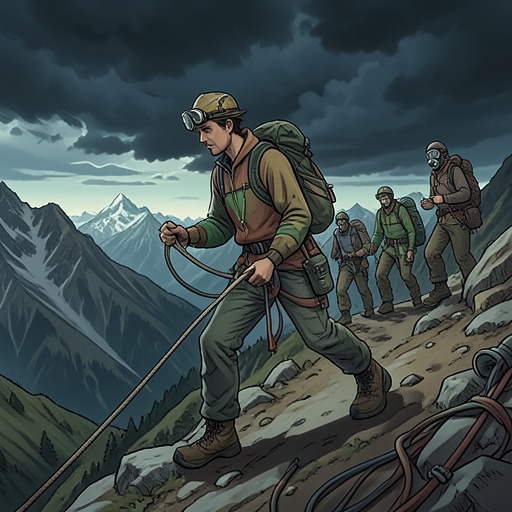
Shortly after midnight, at the South Col, Fischer asked whether anyone was ready to leave with Lopsang Jangbu Sherpa. Sandy Hill Pittman stepped forward; Lopsang attached a short rope to her harness and set off with her on a towline. Fox left about ten minutes later, at the start of her thirty-ninth birthday, after Beidleman urged her onward. Madsen was among the climbers following the early departures. He and Fox reached the summit at about 2:20 or 2:25 p.m., according to Madsen’s later recollection in the expedition debriefing.
On the descent, the fixed ropes at the Hillary Step were a tangle of old ropes and frayed cord. Pittman struggled to identify which line to clip into and how to negotiate the steps. Beidleman went down to assist her; an attempt to rappel her failed because the cords were too tangled, so she descended by hand with help. From where Beidleman was, the others appeared to be making reasonable progress. That impression did not last: as the climbers came toward the South Summit and the weather worsened, members of the group began to falter and lose their way.
Staying with the Stranded Climbers
When the wind and poor visibility made progress toward Camp IV desperate, Madsen chose not to continue with the climbers making a dash for shelter. He stayed with Fox, who refused to walk and whom he did not have the strength to drag or carry to camp. He described supporting her on his arm, back, or head as they tried to work out where they were. Then he heard a moan behind them and went back for Namba, bringing her to Fox. Mike Groom was still tethered to Beck Weathers, who was also having great difficulty walking. Madsen told Groom, whom he presumed still capable of moving, to get to camp and bring help.
Madsen, Fox, Namba, and Weathers remained together, with Madsen, in a small cluster on the mountain. They tried to repeat what the larger group had done earlier: stay close, remain awake, and keep one another warm. Pittman had lost sight of the headlamp ahead and crawled through the wind until she called out and heard Madsen answer. She rejoined the group, making five. The rescue effort had become a matter of holding a vulnerable group together while the storm obscured the route and movement toward camp became impossible for some of them.
Madsen’s account also records the small acts that mattered within the ordeal. Klev Schoening remembered seeing him put Pittman’s gloves back on at least twice, perhaps three times, after she repeatedly removed them. Schoening believed that Madsen and Beidleman helped save her fingers. In the larger pattern of the storm, the gloves mark the practical work of care: not a single dramatic gesture, but repeated attention to a climber who was losing the ability to protect herself.
Rescue, Survival, and Aftermath
Boukreev eventually located the stranded group after more than one attempt. He first carried Fox back to Camp IV and gave Pittman an oxygen bottle; on a later trip he returned with tea and another oxygen bottle, brought Pittman back, and Madsen followed. In another account of the rescue, Boukreev recalled giving Madsen a canister and drink before they began moving. Around dawn, he helped Madsen into a tent, helped remove his crampons and harness, and got him inside. The rescue brought the group to shelter, but only after hours in which Madsen had stayed with climbers he could not carry to camp himself.
Madsen survived, as did Fox and Pittman, though all three had narrowly escaped death. Namba died after being caught in the storm with the group; Madsen’s decision to bring her to the others did not make it possible to save her. The outcome underscores the limits of what a client could do in that terrain and weather: his actions created a group that could wait together and helped make rescue possible, but they could not overcome the storm or restore Namba’s strength.
Five days after the tragedy, Madsen participated in Mountain Madness’s recorded debriefing with Beidleman, Boukreev, Lopsang, Ingrid Hunt, Martin Adams, Lene Gammelgaard, Pittman, Klev Schoening, and Pete Schoening. Fox was absent, having been flown to Kathmandu for medical attention for frostbite; Dale Kruse had already left Base Camp and had not attempted the summit. The debriefing began by asking when Fischer had left Camp IV, then returned to the departure scene and the sequence of events. Madsen’s later recollections supplied both a time for the summit and an account of decisions under pressure, preserving the difference between the planned climb and the improvised work of survival.