
The Statute Versus the Truth
The Collini CaseThe defense’s discovery distinguishes legal discontinuance from exoneration and exposes how a limitation rule can end investigation without settling guilt.
increasing Bearing strength in each event
 decreasing
Bearing strength in each eventdecreasingA Complaint Filed

A Complaint Filed
Seeking an official answer
Fabrizio Collini informs the authorities that Hans Meyer was responsible for his father’s death. He gives the state a name and the basis for investigating it.
Trust placed in procedure
Collini follows the available legal route rather than immediately taking revenge. The later failure of that route becomes central to his understanding of justice.
A File Without Questioning

A File Without Questioning
Proceedings opened
The Stuttgart Public Prosecutor’s Office investigates Meyer’s wartime role. Yet Meyer is neither charged nor questioned before the process ends.
A missing determination
The absence of a trial leaves the underlying allegation unresolved. The procedural outcome will later be misread as a substantive finding unless the reason is carefully examined.
The Limitation Barrier

The Limitation Barrier
A legal end
The investigation is discontinued because the relevant offense is considered time-barred after a change in the law. Collini receives notice, but no verdict on Meyer’s responsibility.
An enduring grievance
The state closes the case without answering the accusation. The distinction between legal finality and moral resolution remains buried until Collini’s murder trial.
A False Impression
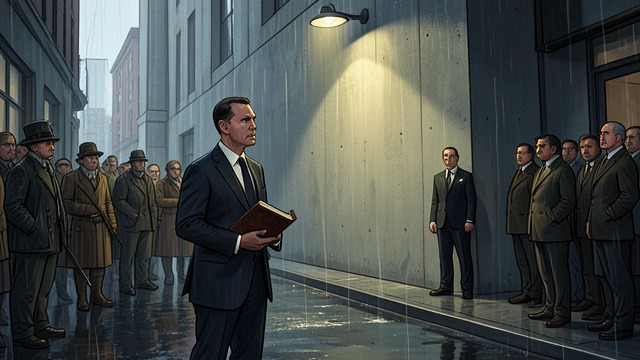
A False Impression
A skillful presentation
Mattinger asks about the legality of reprisals and the discontinued investigation. The sequence encourages the courtroom to infer that Meyer escaped conviction because the shooting was justified.
The defense is cornered
The implication threatens to recast Collini as the only criminal in the story. Leinen knows the conclusion rests on a distinction the questioning has obscured.
The Reason Revealed
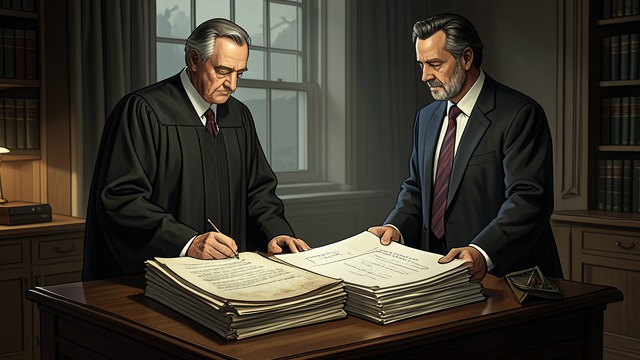
The Reason Revealed
Leinen’s correction
Leinen asks who filed the complaint and why the inquiry ended. Schwan confirms that Collini reported Meyer and that the statute of limitations, not exoneration, ended the case.
A public record corrected
The court sees the difference between a crime judged lawful and a prosecution legally barred. The revelation changes the meaning of the old file and the present trial.
After the wartime executions
During the 1968–1969 investigation
7 July 1969
During Mattinger’s expert examination
After the lunch adjournment
