
The Family Reconstructed Through Evidence
The Collini CaseThe records of an execution rebuild the Collini family story from isolated losses into a traceable chain of state violence and failed recourse.
increasing Bearing strength in each event
 decreasing
Bearing strength in each eventdecreasingA Father’s Absence
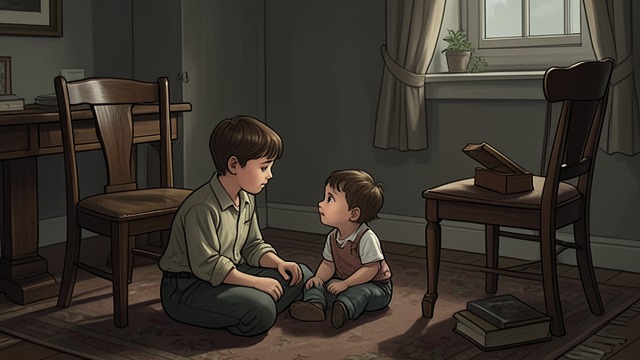
A Father’s Absence
The child’s question
Fabrizio learns that his father has been taken but does not know where. His sister and uncle try to manage the family crisis without clear information.
Uncertainty becomes loss
The absence leaves room for hope until the authorities’ record reveals what happened. The family’s first wound is not only death but enforced disappearance.
An Official Piece of Paper
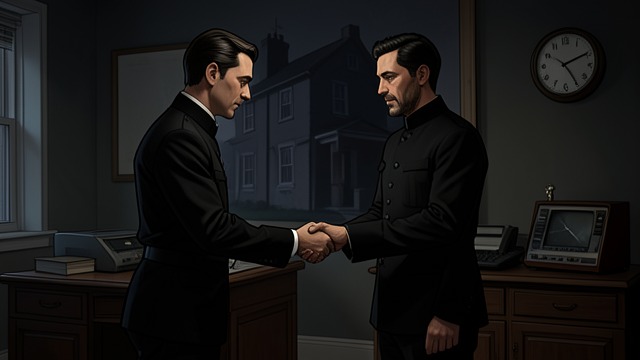
An Official Piece of Paper
The SS notice
Uncle Mauro returns with a document identifying Nicola’s detention and the German commander in charge. The paper carries the name Hans Meyer.
Bureaucracy reveals violence
The formal document gives the family information but no justice. Its official stamps make the killing legible as administration rather than an individual tragedy.
An Adoptive Promise
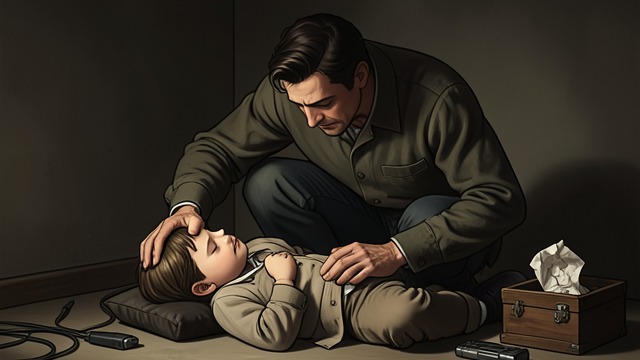
An Adoptive Promise
A new family tie
Uncle Mauro bends over the sleeping boy and tells him he is now his son. The promise answers the immediate loneliness created by the loss of Fabrizio’s parents and sister.
Care amid ruin
The gesture cannot undo the violence, but it gives the child a place to live and a person responsible for him. Family loyalty becomes a source of survival.
A Complaint in Adulthood

A Complaint in Adulthood
Returning to the authorities
As an adult, Collini identifies Meyer to prosecutors and submits the history for investigation. He follows formal procedure rather than hiding the accusation.
A record made incomplete
The inquiry is discontinued before Meyer is questioned. The family’s story reaches the state, but the state does not produce an account of responsibility.
A Family’s History in Court
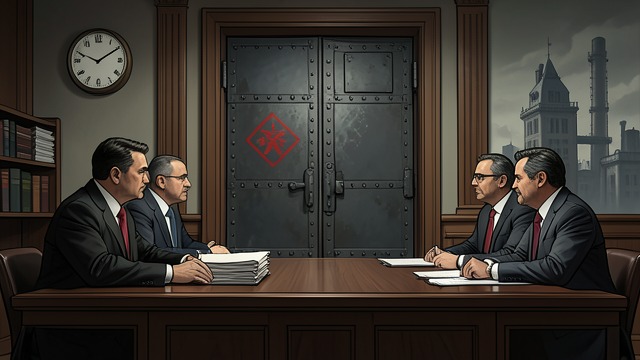
A Family’s History in Court
The archive supplies names
Leinen brings the execution records and the old complaint into the courtroom. The family losses become connected to documented state decisions.
Recognition without repair
The court and public finally hear the story, but the recognition comes after the people involved are dead or beyond prosecution. Evidence can restore a history without restoring a family.
After Nicola Collini’s arrest
Four days after the execution
The night the news arrives
In 1968–1969
During the murder trial
