
From Witness to Public Testimony
The Collini CaseLeinen’s research turns a private, undocumented grievance into evidence that the court and public must confront.
increasing Bearing strength in each event
 decreasing
Bearing strength in each eventdecreasingA Fragment of Evidence
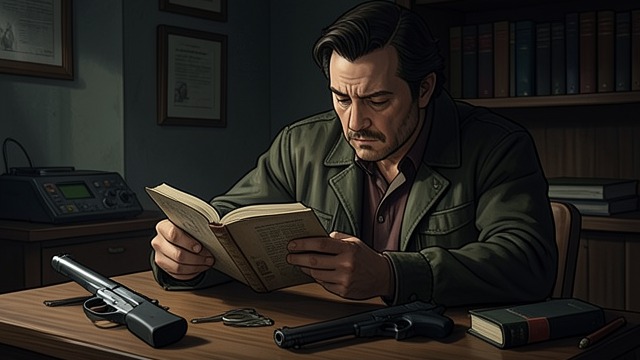
A Fragment of Evidence
The weapon noted
Leinen reads the police file and recognizes the Walther P38 pictured among the crime-scene materials. His father’s familiarity with firearms helps the lawyer notice its significance.
A trail begins
The clue does not prove a motive, but it points toward wartime documentation. Leinen leaves the immediate courtroom record to search a distant archive.
The Archive Opens
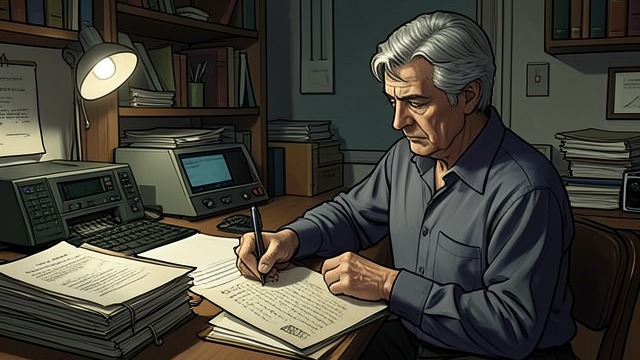
The Archive Opens
Records recovered
At the Ludwigsburg archive, staff locate folders from a vast collection of Nazi-crime documentation. Leinen begins reading papers whose connection to the murder is still uncertain.
Patient reconstruction
The work is slow and demanding, requiring him to follow names and administrative traces. The archive offers no dramatic revelation at first, only the possibility that an answer exists.
The Execution Record
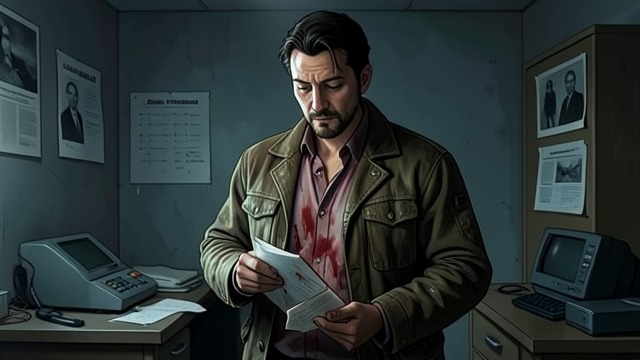
The Execution Record
A chain of names
Leinen reconstructs the reprisal operation, identifies Meyer’s command, and finds the record of Nicola Collini’s execution. He also uncovers the later complaint and its termination.
Evidence changes meaning
The folders connect the victim and killer through a history absent from ordinary police inquiries. What had seemed unrelated becomes a sequence of official decisions and family losses.
Preparation With Schwan

Preparation With Schwan
Expertise aligned
Leinen discusses the historical material with Dr Schwan, who understands the records and the legal background. Their shared work helps him anticipate how the evidence may be presented.
A courtroom plan
When Mattinger later calls Schwan, Leinen is prepared to test the inference drawn from her answers. Archival research becomes effective only when carefully translated into courtroom questions.
The Public Account
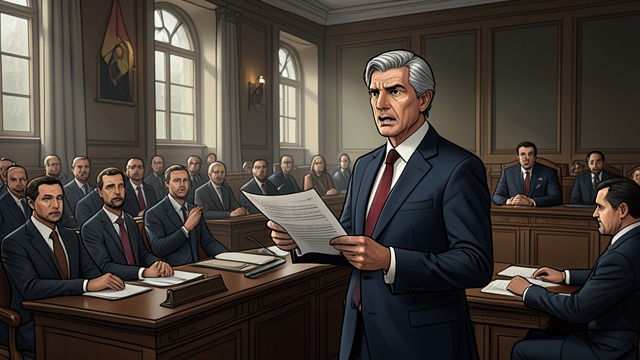
The Public Account
Evidence spoken aloud
Leinen presents the wartime story and later limitation history in open court. Journalists and spectators hear how a technical legal change prevented a substantive inquiry into Meyer.
From private grievance to public record
The testimony cannot restore Collini’s family, but it prevents the complaint from remaining invisible. The archive becomes a public challenge to an incomplete legal memory.
During Leinen’s review of the crime file
The first day in Ludwigsburg
During five days of archival research
Before the trial resumes
During the resumed trial
