Café Trento
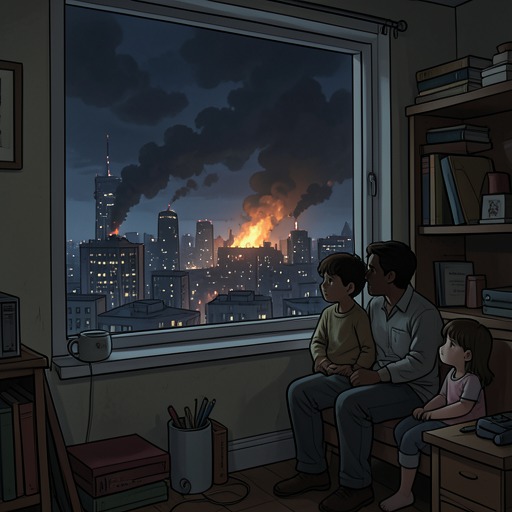
The Collini CaseCafé Trento is the Genoa setting of the 16 May 1944 bombing that precipitates a German reprisal against twenty prisoners unconnected with the attack. The café is first rendered as an ordinary gathering place occupied by German servicemen; the delayed explosion turns it into the starting point of a chain of violence whose victims extend far beyond the room.
Setting and Occupants
At eighteen minutes past ten in the evening, all fourteen tables in Café Trento, on the narrow Via di Ravecca in Genoa, were occupied. The guests were German soldiers, as they usually were, and nearly all served in the marines. Some played cards, and some were already drunk; their uniforms were unbuttoned as they spent the evening in the café.
The account establishes the place through its everyday routine and precise physical details: tables filled the room, a bar stood at its edge, and windows and a door opened onto the street. This familiar setting matters to the episode’s contrast between ordinary military leisure and the violence that abruptly interrupts it.
The Bombing
A man in a lance corporal’s uniform entered carrying a bag weighing about one kilogram. He ordered a small beer, drank it standing at the bar, and nudged the bag partly underneath it. Before entering, he had crushed an ampoule in a brass tube with pincers. The copper chloride solution inside began to corrode an iron wire, delaying the device’s detonation while he left the café.
The bomb exploded eighteen minutes after he departed. Its delayed mechanism gave the attack a brief interval between placement and detonation, but the café itself offered no warning to the men gathered there. The blast killed two men and injured fourteen others. Tables, chairs, bottles, glasses, and ashtrays were thrown or broken; the windows shattered, and the door was torn from its hinges and landed on the paving outside.
Reprisal and Narrative Significance
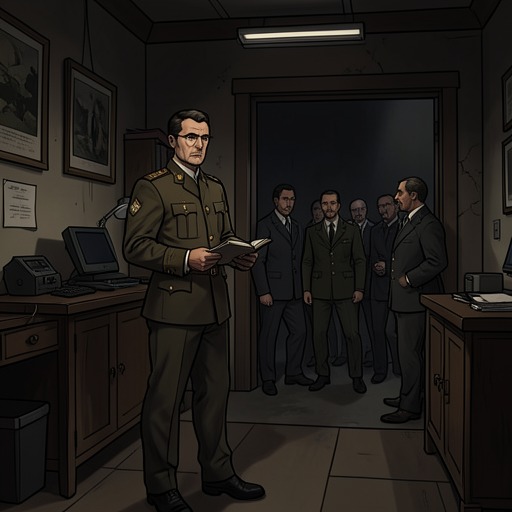
The bombing becomes the stated reason for an immediate German response. The interpreter, summoned to Marassi Prison in the early hours, understands that the authorities will not accept the attack without retaliation. He is told that twenty prisoners are to be moved; none, the account makes clear, had anything to do with the bomb. The attack at Café Trento thus sets in motion punishment directed not at those responsible, but at prisoners selected for reprisal.
Hans Meyer enters this sequence at the prison door, where he joins the convoy carrying the prisoners away. His presence connects the café bombing to the wider machinery of occupation and reprisal. The café’s narrative importance therefore reaches beyond the explosion: an attack confined to one crowded room becomes the occasion for a planned response that transfers the cost of violence to people who had no part in it.