Caspar Leinen—Mattinger: professional rivalry
The Collini CaseThe professional rivalry between Caspar Leinen and Richard Mattinger is tested when their opposing courtroom strategies make the meaning of a closed investigation decisive. Mattinger wins the first impression: Leinen’s later questioning reveals that Hans Meyer’s case was discontinued because of a limitation rule, not because an investigation established his innocence. Their encounter ends not in hostility but in admiration, a philosophical disagreement, and Mattinger’s offer to bring Leinen into his practice.
The courtroom contest
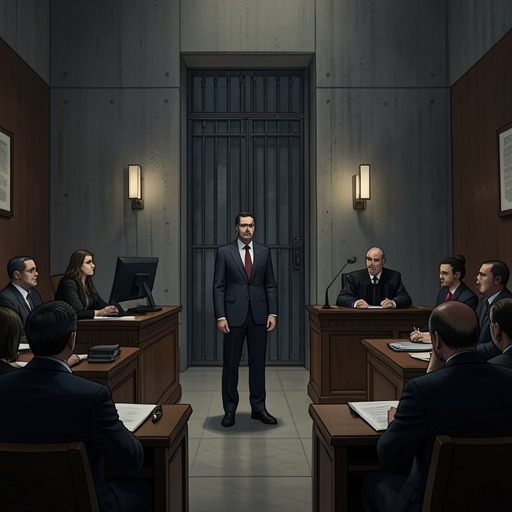
During the examination of Dr Sybille Schwan, Mattinger draws attention to the fact that the Stuttgart Public Prosecutor’s Office had investigated accusations against Hans Meyer, assembled a file, and then discontinued the proceedings without charging or condemning him. Having elicited that Schwan believed Meyer met the criteria for a legitimate shooting of hostages, Mattinger asks what happened to the proceedings. When she confirms that they were discontinued, he presents the result as a victory: in the courtroom’s first understanding of his argument, Meyer is no longer a murderer.
Leinen initially appears to accept that account. He later challenges Schwan, however, and she clarifies that Mattinger’s questioning has encouraged a mistaken impression. The shooting did take place, and Meyer was in command; the investigation ended because the statute of limitations had come into force. Leinen presses the consequence: Fabrizio Collini had identified the man who ordered his father’s shooting, laid a charge, supplied the evidence, and trusted the authorities, only to receive notice that the case had been discontinued. The closure had not resolved Meyer’s guilt or innocence through further investigation.
Competing legal strategies
The contrast between the lawyers is not simply that one wins and the other loses. Mattinger’s questioning makes the official outcome sound like vindication; Leinen’s questioning distinguishes a procedural bar from a finding about what Meyer did. By turning to the reason for the discontinuance, Leinen redirects attention from the fact that proceedings ended to the legal change that made prosecution impossible.
Leinen had prepared for Mattinger’s line of examination. In Ludwigsburg, he and Schwan had found that they agreed on the issue; after Mattinger contacted her, Schwan called Leinen, giving him an opportunity to prepare. Mattinger recognizes the preparation as a sound way to win cases and openly concedes that Leinen has defeated him. Their rivalry is therefore shown as professional and strategic: Mattinger can appreciate the quality of the argument even while rejecting its implications.
Law, justice, and respect
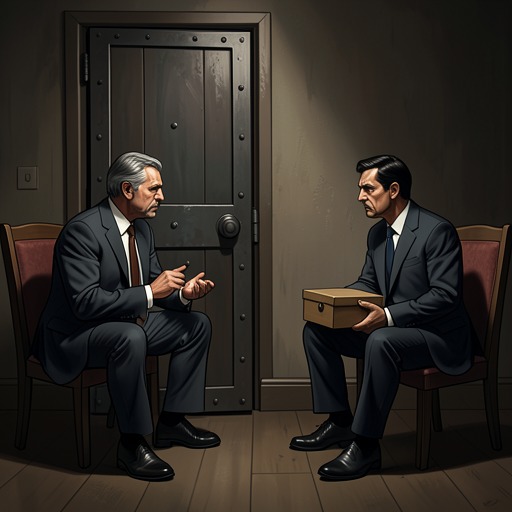
After the hearing, Mattinger tells Leinen that judges cannot decide according to what seems politically correct. In his view, if Meyer acted correctly by the standards of his time, he cannot be blamed by later standards. Leinen answers that Meyer’s conduct was cruel in objective terms, regardless of how judges in the 1950s and 1960s might have ruled. If judges would decide differently now, Leinen argues, that change reflects progress rather than a reason to excuse the past.
Their disagreement exposes different grounds for legal judgment. Mattinger says that he believes in the laws, while Leinen believes in society; neither treats their difference as settled by the courtroom result. Mattinger frames it as a question of which understanding will ultimately prove right. The exchange keeps their respect intact while making clear that professional success has not reconciled their views of legality and moral responsibility.
The rivalry’s ending
Outside the courtroom, Mattinger congratulates Leinen and says it has been a long time since he was defeated so decisively. He also acknowledges that Leinen anticipated his decision to call the archive director as an expert witness. The recognition is personal as well as professional: Mattinger praises Leinen’s preparation instead of dismissing the result as a fluke.
Mattinger then tells Leinen that Johanna Meyer had fired the company lawyer, Holger Baumann, after learning of Baumann’s attempted bribe. Before driving away, he invites Leinen to visit him if he still wants to practise as a defense lawyer after the trial, offering him a partnership. The offer turns their opposition into a possible working relationship, without erasing their disagreement. Mattinger leaves the trial and goes on holiday; Leinen watches his car disappear into traffic. Their rivalry closes with respect and an open professional possibility, rather than a declaration that either man has changed the other’s mind.