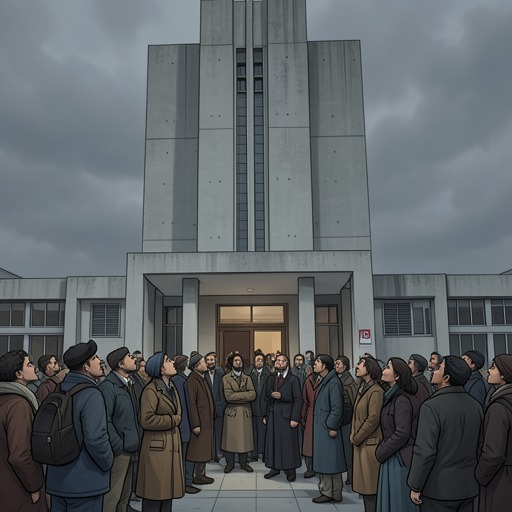
Meyer orders the shooting of the partisans
The Collini CaseHans Meyer orders the shooting of the partisans, an execution whose method made their impending deaths impossible to ignore and whose legal significance endured after the event. The account connects the conditions of the execution to the assessment that Meyer could be classified as an accessory to murder, while showing why that judgment would not have led to prosecution.
The Execution
The partisans were taken for hours to the place where they would be killed. They had no blindfolds; they saw the people already shot and heard their comrades being shot before them. They knew throughout the journey that they were going to die. On Hans Meyer’s orders, they were shot where they would fall into a pit.
The account compares this method to mass shootings in concentration camps. The comparison draws attention not only to the deaths but also to the partisans’ forced exposure to the sequence of killings and to the pit where they would fall.
Legal Assessment
The execution is discussed in the context of how the German Supreme Court might judge the case in the present day. The stated view is that Meyer would then be regarded as an accessory to murder. That assessment reframes his responsibility: the order is treated not merely as a wartime command but as conduct that could meet the legal classification of complicity in murder.
That hypothetical reassessment does not remove the obstacle of the statute of limitations. Meyer’s actions were already time-barred, so even a different judicial view would have been of no use in bringing him to justice. The account presents the law as both capable of changing its judgment and bound by a deadline that protects Meyer from prosecution.
Significance
The event joins the circumstances of the execution to the later limits of legal accountability. The partisans’ hours-long journey and awareness of what awaited them establish the human stakes of the order; the legal discussion then distinguishes a revised classification of Meyer’s role from the possibility of prosecuting him. The result is a stark gap between what a court might call the act and what the law could still do about it.