Professor Wagenstett
The Collini CaseProfessor Wagenstett is the head of forensic medicine whose examination of Hans Meyer’s body supplies evidence for the murder investigation and, later, the trial. His role joins careful medical procedure to public explanation: he records findings methodically, then helps the court understand what the evidence can establish.
Work at the Forensic Institute
When Caspar Leinen arrives at the Forensic Institute, Professor Wagenstett is expected there by Senior Public Prosecutor Reimers and two murder-squad officers. Leinen’s attendance as a defense lawyer is unusual, but he wants to understand every aspect of the case. Wagenstett begins the examination with his assistant, demonstrating how to assess the body systematically rather than allowing striking details to dictate the sequence of work.
The examination continues for about two hours. Wagenstett dictates observations into a microphone, consults the doctor’s report from the scene, and records the condition of the body in an orderly progression. He instructs his assistant to proceed slowly and respectfully, explaining that the initial outward examination is the first contact with the dead person and that the work must preserve the body’s dignity. When the ordinary approach to examining the head would not reveal the path of the bullets, he changes the procedure to trace them. His findings include four projectiles, which he shows to Senior Public Prosecutor Reimers, while noting that their distortion will make ballistic analysis difficult. The autopsy’s measurements and photographs later give the court a detailed evidentiary record.
Testimony at Trial
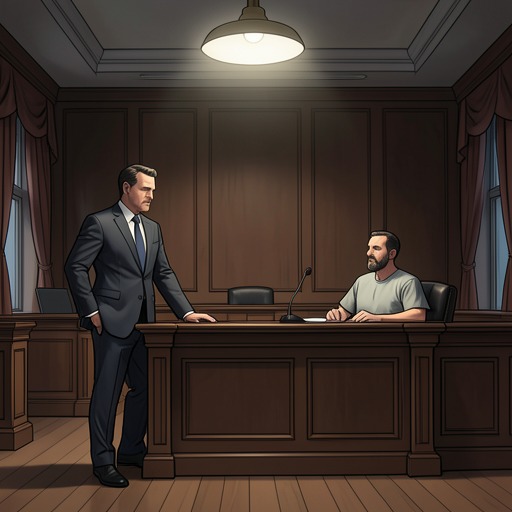
Professor Wagenstett was the first expert witness called at the trial. Senior Public Prosecutor Reimers had been present at the autopsy; in court, Wagenstett’s recorded examination became material that could be explained and assessed before the judges. Mattinger questioned him about the direction of the shots, the entry and exit wounds, the marks attributed to Collini’s shoe, and the sequence and nature of the kicks. Photographs helped the professor set out the medical findings, while Mattinger asked him to translate technical terminology into ordinary language whenever the courtroom needed clarification.
That exchange gave the evidence a force beyond its technical detail. The lay judges were sickened by the autopsy photographs, and after Wagenstett’s account the court had formed a mental image of an old man being made to kneel and shot from behind. Mattinger had not raised his voice or relied on dramatic gestures; the composed questioning and the images it summoned did the work. Wagenstett’s careful examination thus entered the trial not only as a record of physical findings, but as evidence whose presentation could shape how the defendant’s actions were understood.
Evidence and the Question of Motive
Wagenstett’s testimony supplied the trial with a carefully documented account of the physical evidence, but the proceedings eventually turned to a different question: what lay behind the killing. In his first major plea, Leinen read from what he had heard from Collini and found in the files at Ludwigsburg; the courtroom began to picture the people and places described, while Leinen recognized that criminal proceedings were also about abused human beings. Later, he asked Dr Schwan who had laid charges against Hans Meyer. Her answer—that Collini himself had done so—surprised the judges. These later disclosures do not alter the medical findings Wagenstett presented; they show how those findings occupied one part of a trial in which evidence about the act and evidence bearing on its motive had to be considered together.
The Reach and Limits of Medical Testimony
Wagenstett’s work gives the trial a disciplined account of what examination can establish: the physical evidence is observed, measured, photographed, and entered into a record before it is made part of an argument. In court, that record can clarify the shots and the sequence of violence, but it cannot by itself explain why the killing occurred. The distinction matters as Leinen later brings Collini’s history and the files from Ludwigsburg into the proceedings. Wagenstett’s evidence remains essential, yet its meaning depends on the separate task of weighing motive and guilt; medical precision establishes the material ground on which that wider judgment must be made.