
Colonial Power Against Olinka
The Color PurpleThis thread tracks how roads, rubber production, land seizure, and forced relocation turn apparent development into a crisis of survival and culture.
increasing Bearing strength in each event
 decreasing
Bearing strength in each eventdecreasingThe Road Appears
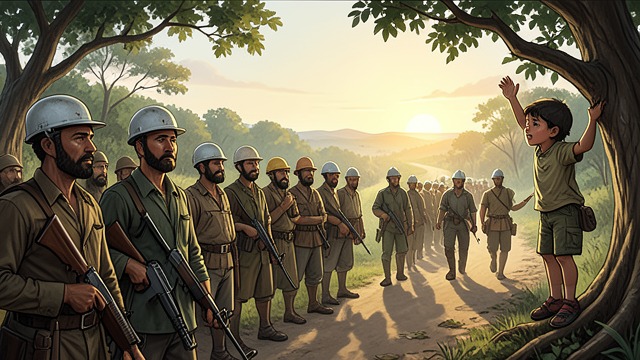
The Road Appears
Initial Hope
Villagers hear chopping in the forest and learn that a road is approaching. They welcome the builders with food and hospitality, imagining easier access to the coast.
Nettie observes how quickly relationships form, but she cannot yet see that the road has a purpose unrelated to the villagers' hopes.
A Hidden Plan
The builders continue past the village, carrying weapons and following an external route. What seemed to promise connection is revealed as infrastructure for plantation expansion.
The conflict begins when local expectation meets a plan made elsewhere.
Armed Displacement
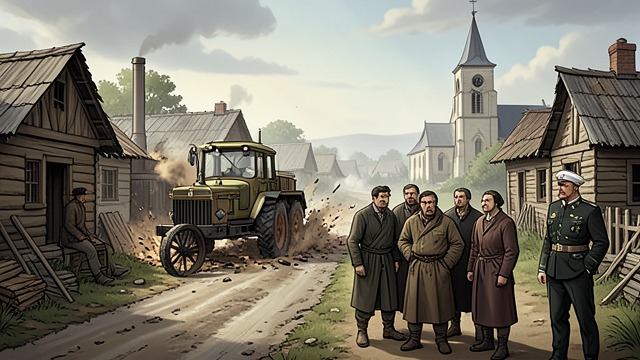
Armed Displacement
Homes Destroyed
Roadbuilders cut through fields, huts, the school, the church, and Nettie's home. Their guns make clear that the villagers cannot halt the work by appealing to custom or hospitality.
The destruction is fast and organized, turning a settled community into an obstruction to be cleared.
Ownership Reversed
The chief learns that the territory belongs to a foreign rubber manufacturer. Villagers are told to pay rent for their own land and tax for water.
Colonial power converts residence into dependency and treats an existing community as if it had no prior claim.
The Plantation's New Order
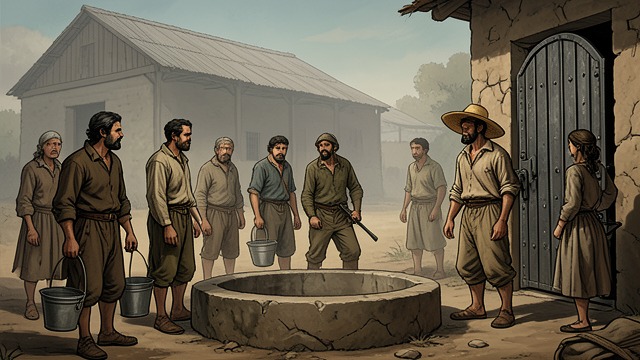
The Plantation's New Order
Costs Transferred to Villagers
Olinka people move to a barren site without dependable water. They must buy water and use resources supplied by the plantation, while paying rent for the land.
The new system makes survival contingent on labor and payment to the same authority that displaced them.
Labor and Scarcity
The plantation clears forest and replaces food crops with rubber. People lose access to game and gardens, and the scarcity of yams contributes to illness.
Economic development is revealed as a reorganization of land for profit at the expense of local life.
Resistance in the Forest
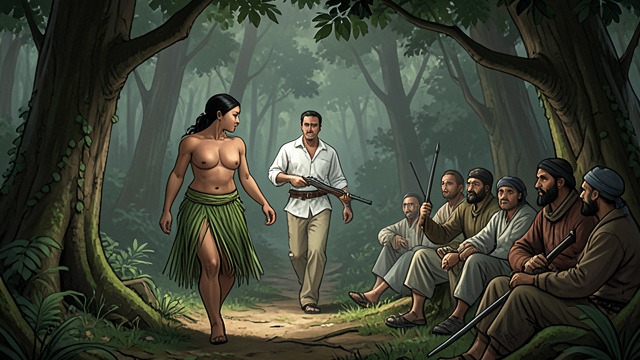
Resistance in the Forest
Choosing to Leave
Some Olinka join the Mbeles, who live in the forest and resist white plantations. Tashi and Catherine leave the mission community to join them.
Their departure is risky, but remaining under plantation rule also carries a cost. The choice exposes different forms of resistance within the village.
A Wider Struggle
Adam follows Tashi and discovers a community of people from many backgrounds, including organized opposition to the plantation. The conflict exceeds the reach of the mission school.
Resistance becomes a collective response to dispossession rather than a private grievance.
Missionaries Petition England
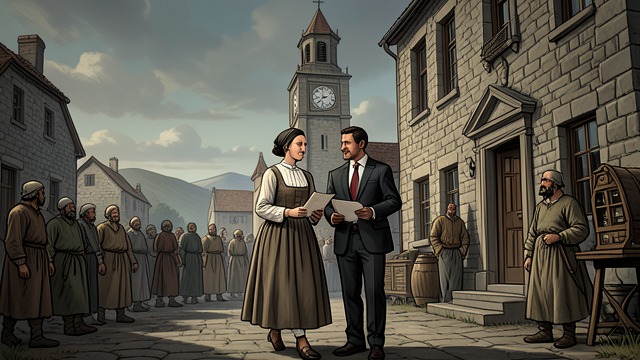
Missionaries Petition England
Seeking Intervention
Nettie and Samuel travel to England to appeal to church leaders and missionary institutions on the Olinka's behalf. They hope that outside influence can challenge the plantation's actions.
Their appeal is dismissed, and officials focus instead on appearances and their relationship. The institutional response exposes the weakness of moral language when it is disconnected from power.
Return Without Redress
Nettie and Samuel return with no remedy for the villagers. They continue teaching and caring for people, but recognize that the mission cannot reverse the land seizure.
The conflict remains unresolved, revealing the limits of petition when colonial interests control the territory.
After years of life in Olinka Village
When the road reaches the village
After the village is relocated to barren ground
As plantation control tightens
After the roofleaf is destroyed
