
Nature as Sacred Attention
The Color PurpleThis thread follows Celie's changing relationship to nature, from the trees she sought as a child to an expansive sense of divinity in the living world.
increasing Bearing strength in each event
 decreasing
Bearing strength in each eventdecreasingA Child Looks Outward
A Child Looks Outward
Escape from the Sermon
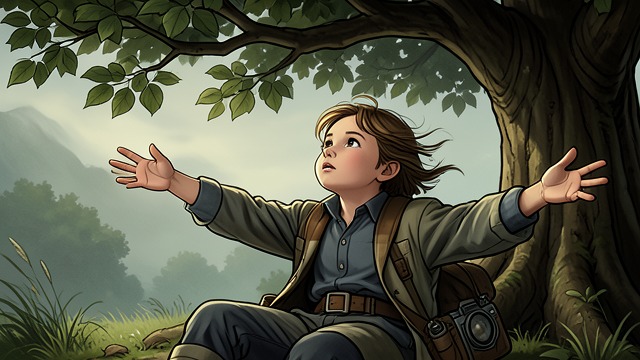
Celie remembers her spirit wandering toward trees and wind during Sunday sermons. Nature draws her attention more powerfully than the religious words spoken indoors.
This early habit is not yet a settled theology, but it shows that her sense of connection has always existed beyond formal authority.
A Seed of Recognition
The child seeks beauty and movement outside the structures that confine her. Later, Celie will understand this attention as a spiritual resource rather than a distraction.
The novel places her eventual transformation in continuity with a younger self who was already looking for life beyond the sermon.
Nature Before Doctrine
Nature Before Doctrine
Trees and Air
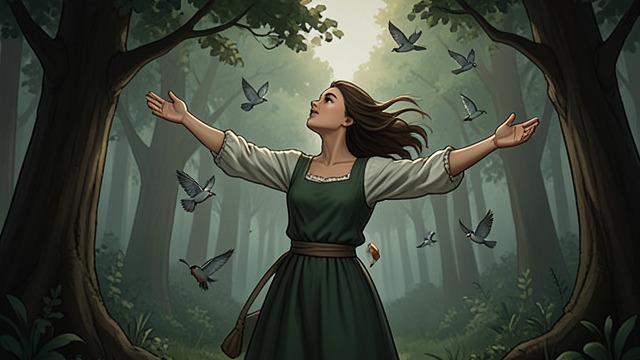
Shug describes turning first to trees, then to air, birds, and other people as she moved away from a distant white male God. Her spiritual change begins in attention to the world around her.
She describes a moment of feeling connected rather than separate, making nature a source of insight rather than scenery.
Connection as Experience
Shug's understanding is rooted in feeling, not in a demand that Celie accept a doctrine. She invites Celie to notice how life is interdependent.
The account gives Celie a vocabulary for a spirituality she has sensed but not named.
God Beyond the Picture
God Beyond the Picture
An Image Challenged
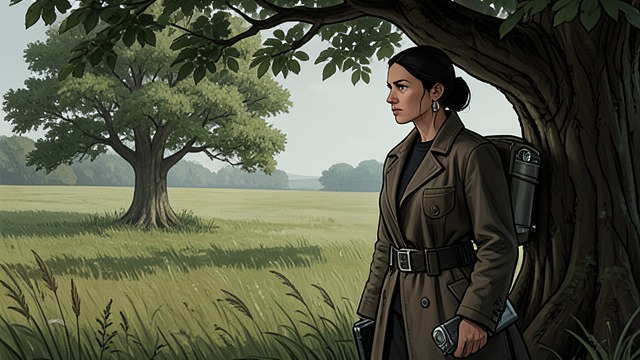
Shug asks why Celie imagines God as a white man. The question unsettles the association between divinity and the people who hold social power.
The conversation examines how images can make a political hierarchy appear sacred and natural.
The World as Presence
Shug suggests that God is not separate from people, trees, and the world. Celie begins to see that religious attention need not be limited to a picture or institution.
The shift creates room for a spiritual connection that does not depend on patriarchal authority.
The Purple Flower
The Purple Flower
Attention Relearned
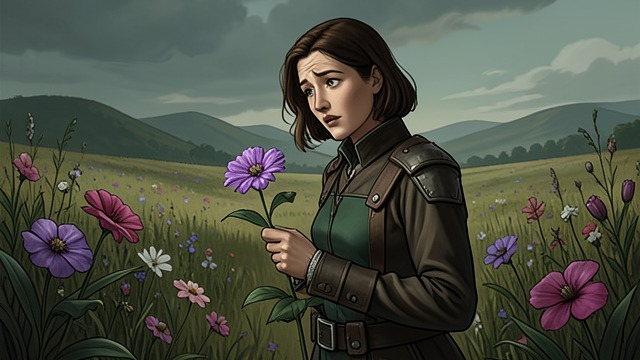
Celie realizes that she has been so occupied with the old white male image of God that she failed to notice the ordinary beauty around her. Shug's example directs her toward flowers and trees.
The act of noticing is a small but radical shift from fear toward participation in the world.
Beauty as Relationship
Purple in a field becomes an invitation to admire rather than an object with a single meaning. The natural world seems to offer its beauty freely and ask for attention in return.
The image joins spirituality to delight, perception, and care.
A Prayer to Everything
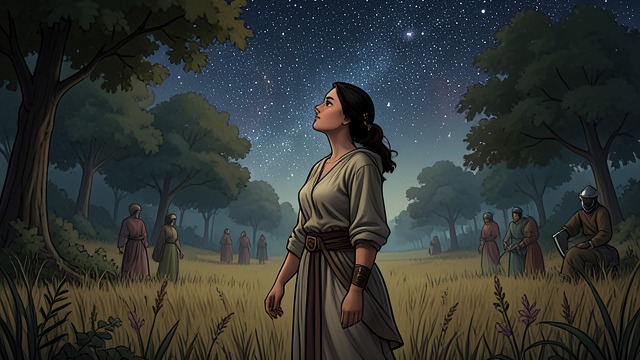
A Prayer to Everything
A Wider Address
Celie addresses stars, trees, sky, people, and everything. Her language gathers the world into a spiritual relationship rather than placing God at a distance.
The address reflects a hard-won belief shaped by sorrow, friendship, and attention to nature.
Gratitude Without Escape
Celie's gratitude does not deny violence or loss. It recognizes the family and community that have survived and returned to one another.
The novel closes with a spirituality that is expansive because it includes ordinary people and the living world.
When Celie is about eleven
During Shug's account of leaving the old image of God
During Celie and Shug's debate about God's appearance
After Celie begins noticing the world around her
At the novel's closing address
