
The Roofleaf and Olinka Memory
The Color PurpleThis thread follows the roofleaf from ecological necessity to sacred symbol, then tracks the damage caused when colonial development destroys it.
increasing Bearing strength in each event
 decreasing
Bearing strength in each eventdecreasingA Story of Greed
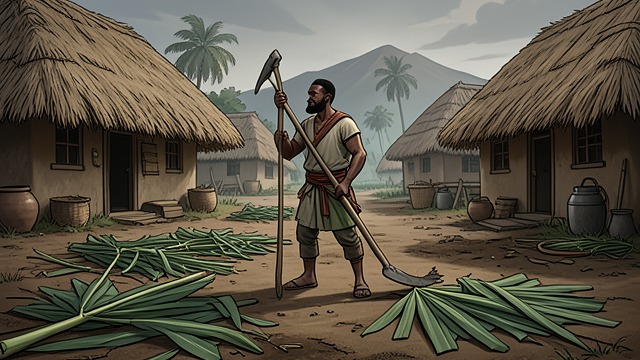
A Story of Greed
Common Land
Olinka elders tell how a chief once took communal land to grow crops for trade. As cultivation spread, it displaced the roofleaf that villagers relied on for shelter.
The story links private accumulation to shared vulnerability. It warns that a resource can seem abundant until someone treats it as limitless.
A Sacred Lesson
When storms destroy the village roofs, the scarcity of roofleaf becomes a crisis. The community remembers the loss through ceremony and story.
Nettie hears a local account in which ecological balance, history, and worship cannot be separated.
Roofleaf as Shelter
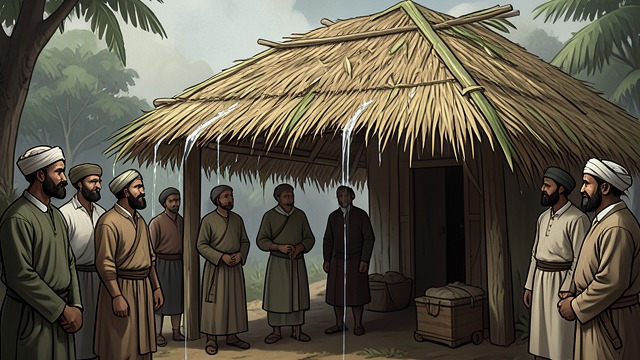
Roofleaf as Shelter
Material Dependence
A roof made from roofleaf is presented to the missionaries as a sign of welcome. The material protects homes from rain and belongs to a shared system of knowledge and labor.
Its significance is practical as well as spiritual. The villagers see their dependence on it as a relationship deserving respect.
A Local Understanding of God
Joseph asks whether roofleaf, in its humble way, can be understood as God. Nettie is tired but receptive to the possibility that sacred meaning can inhabit ordinary life.
The encounter broadens her sense of faith beyond imported images and doctrines.
The Road and the Trees
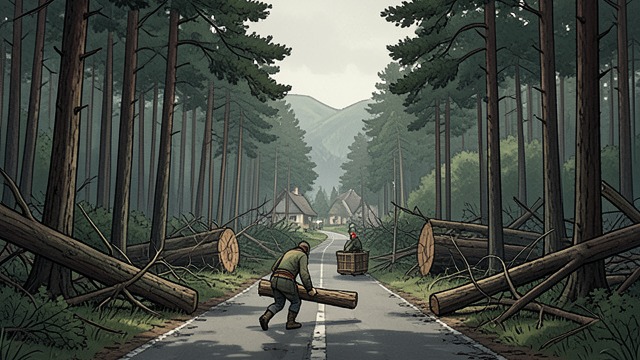
The Road and the Trees
Development Promised
Villagers welcome roadbuilders with food, expecting easier travel and exchange. The road appears at first to connect rather than divide the community.
The builders continue beyond the village, following orders that serve an external plantation plan. The road's meaning changes as its route becomes visible.
Forest Cleared
The road cuts through homes and crops, and land is cleared for rubber. The trees and roofleaf disappear as the territory is reorganized for commercial use.
What had supported local life is treated as an obstacle to production.
Tin Roofs and Exile
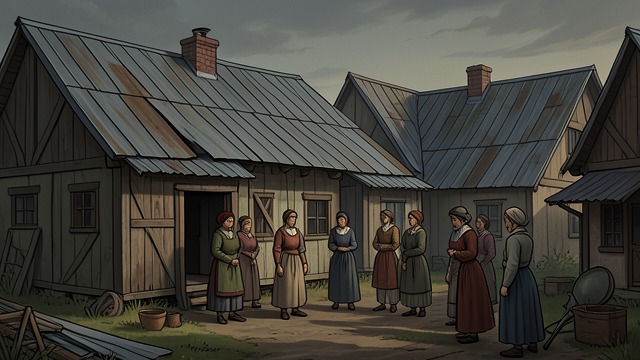
Tin Roofs and Exile
A Costly Substitute
With roofleaf destroyed, the Olinka must pay for corrugated tin roofing. The replacement is costly and disliked, while the original material carried generations of memory.
The community's ability to shelter itself is now dependent on the system that displaced it. Economic control reaches directly into daily life.
A Sacred Loss
The women mourn as the tin is installed. Their grief registers the loss of a cultural relationship, not just an aesthetic preference.
The roofleaf story acquires new force because its warning has become the villagers' present reality.
Memory Carried Away
Memory Carried Away
A Damaged Community
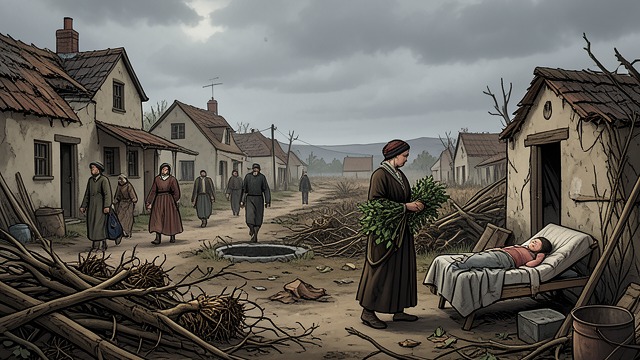
Forced relocation, water costs, and the destruction of crops make village life increasingly difficult. People leave for the forest or for plantation work, while illness spreads.
Nettie understands that teaching cannot undo a seizure of land. Still, she carries the villagers' stories and the roofleaf's meaning with her.
Beyond a Single Village
The episode joins environmental destruction to colonial power and cultural erasure. The story of the roofleaf becomes a warning about what happens when land is valued only for extraction.
Its memory remains a form of knowledge that the plantation cannot fully take away.
During the missionaries' welcome ceremony in Olinka
At the end of the welcome ceremony
When roadbuilders move beyond the village
After the villagers are relocated
As Nettie prepares to leave Olinka
