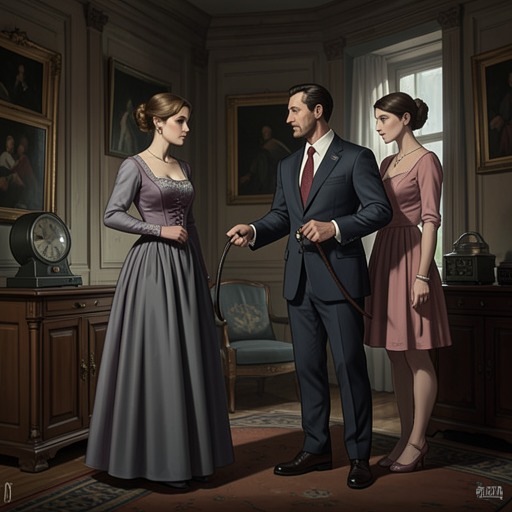
Celie and Albert rebuild their friendship
The Color PurpleCelie and Albert rebuild their friendship after the abuse that defined their marriage, creating a relationship in which honesty and shared work replace coercion. Their reconciliation does not make the past disappear: it depends on Albert’s recognition of the harm he caused, Celie’s ability to speak about what she feels, and a new companionship that does not require her to accept him as a husband again.
From harm to understanding
The change begins with Albert becoming someone Celie can talk to about her feelings. He seems to be the only person who understands them, a striking contrast with the marriage in which he controlled and hurt her. Celie does not claim that the harm was small or that she has forgotten it. Instead, she explains why she does not hate him: he loves Shug Avery, Shug once loved him, and he appears to be trying to make something of himself. Her judgment rests partly on observable change. Albert works, cleans up after himself, appreciates the world around him, and, most important to her, listens when she speaks.
Albert’s account of his own change is modest but consequential. He describes feeling, for the first time, that he is living on Earth as a natural man, as though life has become a new experience. The change appears not as a claim that he has repaired everything, but as a new capacity to attend to another person. That attentiveness matters when he recognizes that Celie’s love for Shug is not something he needs to guess at or dismiss. He distinguishes what people do with their bodies from love, which he says he knows through having loved and been loved. His words allow Celie’s love to exist without treating it as a grievance against him.
Naming the history of violence
Albert’s new understanding is tied to a particular admission about the marriage: he told Shug that he beat Celie because Celie was herself and not Shug. Celie already knows this, and does not blame Albert for telling her. The confession gives the violence a motive that is painful precisely because it makes Celie’s mistreatment inseparable from Albert’s desire for another woman. His willingness to speak about it now, and Celie’s ability to hear him without either denying the harm or reducing him to it, mark a real change in their conversation.
Albert also places that violence within his own earlier history without using it to excuse himself. He recalls that his father chose his first wife, Annie Julia, because his father was in charge and wanted that marriage. Albert did not want the match; he wanted Shug. After Annie Julia was married off to him, her family behaved as if they had cast her away. Albert and Shug both mistreated her, and she told nobody; she had no one to tell. The recollection reveals a pattern in which women were deprived of choice and left without support. It also gives weight to the difference between that silence and Celie’s present ability to tell Albert what she thinks and feels.
Friendship in ordinary life
The renewed bond takes shape in everyday encounters, not only in conversations about remorse. Sofia and Harpo try to arrange dates for Celie, although they know she loves Shug and assume women might love whichever man is available. When a salesman presses his attention on Celie at Harpo’s juke joint, Albert comes to her aid by identifying himself as her husband, and the man leaves. The gesture recalls their former marriage, but its immediate effect is to protect Celie from unwanted attention rather than to reassert control over her.
Afterward, Celie and Albert sit together with a cold drink and talk about their days with Shug. They remember her illness, the crooked song she used to sing, and their evenings at Harpo’s. These recollections connect them through a shared past without making that past a demand on Celie. Their friendship can include memories of loving Shug while leaving room for Celie’s continuing attachment to her. When Celie speaks of missing Shug, Albert does not dismiss the feeling; he understands it.
Shared work gives their changed relationship another form. Albert tells Celie that when he was growing up he tried to sew alongside his mother, who was always sewing, but people laughed at him. Celie answers that no one will laugh at him now and invites him to help stitch pockets. When he admits he does not know how, she offers to show him—and does. The moment reverses the old imbalance: Albert is the novice, Celie the teacher, and the work proceeds on her terms. Later, he is busy patterning a shirt to go with her pants. He insists that it needs pockets and loose sleeves and should not be worn with a tie, extending their collaboration into the design of clothes made for people to wear.
A proposal declined, a friendship affirmed
Albert eventually asks Celie to marry him again, this time in spirit as well as in the flesh. The proposal shows the seriousness of his affection, but Celie does not accept it. She says she still does not like frogs, yet proposes that they remain friends. Her answer distinguishes intimacy from marriage: reconciliation has brought them close again, but it has not restored the old marital arrangement or required Celie to surrender her independence.
The timing makes the distinction especially clear. Just as Celie knows she can live content without Shug, and just after Albert’s proposal and her answer, Shug writes that she is coming home. Celie responds with calm rather than the despair she once associated with Shug’s absence. The announcement changes what lies ahead, but it does not cancel the friendship Celie and Albert have built. Their relationship has become capable of holding separate attachments, painful history, and a future that remains open.