Celie and Olivia's mother-daughter relationship
The Color PurpleCelie and Olivia's mother-daughter relationship begins under coercion and separation, then survives as a bond Celie can recognize before she can prove it. Olivia is taken from Celie as an infant and raised by Corrine and Samuel; years later, Nettie's letters disclose her identity, and the family's return brings mother and daughter into a shared reunion. The relationship gives the novel a precise contrast between biological kinship interrupted by violence and the care that sustains a family while its members are apart.
Birth and Separation
Celie becomes Olivia's mother after being subjected to sexual abuse by her father. The account establishes the abuse as the cause of the pregnancy without presenting motherhood as a choice Celie was free to make. Olivia is taken from Celie when she is about two months old, severing their daily relationship before it can develop. The separation is therefore both personal and imposed: Celie loses the chance to raise her daughter, while Olivia grows up elsewhere without Celie in her life.
Even in absence, Celie preserves a material trace of the child. She embroiders the name Olivia on the seat of the baby's diapers, adding small stars and flowers. The garments are taken along with the infant, but the act of stitching the name records Celie's recognition of her daughter and gives that recognition a durable form. The name is not yet knowledge she can confirm publicly; it is the identity she gives the child she believes is hers.
The Sighting in Town
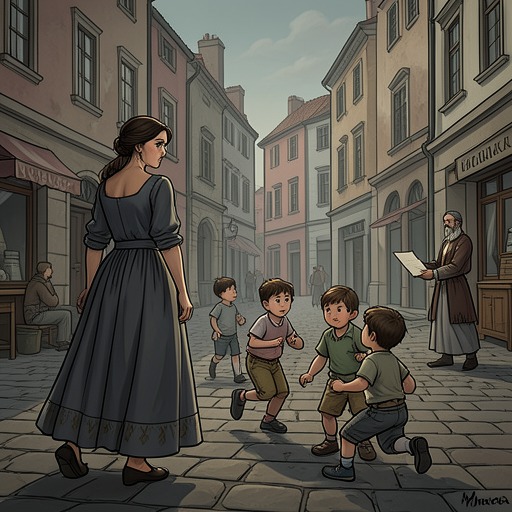
When Olivia is about six, Celie sees her in town while sitting on a wagon as Albert is in a dry-goods store. The girl is walking behind a woman, and the two are dressed alike. Celie recognizes a resemblance to herself and her father and is struck by the sense that the child shares her own eyes and way of looking. Olivia frowns as she passes, apparently absorbed in something of her own. The encounter offers Celie a glimpse, not a reunion: she can study the child's face but has no established way to claim or approach her as a daughter.
Celie holds two kinds of knowledge in tension. Her heart tells her the girl is hers, yet she admits that she cannot know for certain. This uncertainty matters because recognition alone cannot undo the separation or disclose the circumstances of Olivia's life. The embroidered name and remembered resemblance are private evidence; the child's identity remains to be confirmed through the family history that Nettie later sends.
A Daughter Raised in Another Household
Nettie's letters identify the woman Celie saw as Corrine, and name Olivia as Corrine and Samuel's daughter. Nettie explains that she lives with the family, who include her in their church work and household life rather than leaving her isolated. Corrine and Samuel had been unable to have children, and they came to understand Olivia and Adam as children sent to them by God. Their adoptive parenthood is thus an actual history of care, not merely a mistaken label: Olivia grows up within a household that loves and raises her.
At the same time, Nettie's account restores the concealed biological connection. She tells Celie that Olivia and Adam are Celie's children and that she herself has been entrusted with watching over and cherishing them. The resulting family structure crosses households: Corrine and Samuel are the parents who raise Olivia, Celie is her birth mother, and Nettie is her aunt as well as a caretaker in the children's lives. The letters make these relationships legible without erasing the years in which Celie could neither know nor care for her daughter directly.
Disclosure and Reunion
Celie eventually tells Corrine that she is the children's aunt and that their mother is her older sister. The disclosure gives Celie's claim a voice beyond her earlier private conviction and connects the information carried in Nettie's letters to the people raising Olivia. The evidence establishes the disclosure itself; its importance lies in making Celie's place in the children's family history explicit rather than leaving it as an unspoken certainty.
At the novel's closing family gathering, Nettie introduces Samuel, Olivia and Adam as her family, and identifies Tashi as Adam's wife. Celie and Nettie have just embraced, and Nettie remains wrapped around Celie's waist as the introductions are made. Olivia is therefore present within the family that had once been scattered across separate lives and continents. The scene does not recount a separate conversation between Celie and Olivia, but it places mother and daughter together in the returned family circle. Their relationship's resolution is not a recovered childhood; it is the possibility of kinship after long separation, made visible by the daughter's presence and the truth Celie has finally been able to name.