Olivia
The Color PurpleOlivia is Celie’s daughter, taken from her when she was about two months old and raised by Corrine and Samuel with Adam. First recognized through resemblance and a name Celie had stitched into her baby’s clothes, Olivia embodies the gap between biological kinship and the family life created by adoption and care. Her story moves from a brief childhood encounter and years of uncertain separation to a reunion in which she is named openly as Celie’s child and Nettie’s niece.
Identity and Early Separation
Olivia is born to Celie, who loses her as an infant. At the time of their separation, Olivia is about two months old; when Celie later sees her in town, she estimates that she is about six. The separation leaves Celie without reliable knowledge of her daughter’s life, but not without a powerful sense of recognition. Seeing the child, Celie notices that she looks like herself and her father, and especially recognizes her own eyes in Olivia’s face. That resemblance gives her an immediate conviction that the child is hers even while she acknowledges that she cannot know for certain.
The name Olivia is bound to this early loss. Celie had embroidered it into the seats of the baby’s diapers, along with little stars and flowers. The clothes had gone with the child when she was taken, so the name survives in Celie’s remembered acts of care even as mother and daughter are kept apart. In town, Corrine first says that the girl is called Pauline, then explains that she calls her Olivia because the name seems to suit the child’s eyes. The coincidence between Corrine’s chosen name and the one Celie had sewn into her daughter’s clothing does not itself establish their relationship, but it intensifies the scene’s recognition: Olivia bears, without knowing it, the name through which Celie had continued to imagine her.
The Encounter in Town
Celie first sees Olivia while sitting on a wagon as Albert is inside a dry-goods store. The child is walking behind a woman dressed like her, and when they pass the wagon Celie speaks to them. Olivia looks up and frowns; Celie reads the expression as a sign that the little girl is troubled and imagines her considering what she sees. The encounter is brief, but its details make the distant child vivid to Celie: Olivia’s eyes, her resemblance, and her quiet movement beside the woman she understands to be the child’s mother.
Celie follows Olivia and Corrine into a store. Olivia runs her hand along the counter without showing interest in the goods, while Corrine tells her not to touch anything and continues buying cloth. Olivia yawns. These ordinary gestures place her within a life Celie can witness but does not share. Celie has no recognized maternal place in the scene; she can follow, observe, and ask about the child’s name, but the relationship between them remains unspoken. Her laughter with Corrine over a joke about hospitality offers a moment of human contact without resolving the painful uncertainty of whether Olivia is truly her daughter.
A Childhood Within Corrine and Samuel’s Family
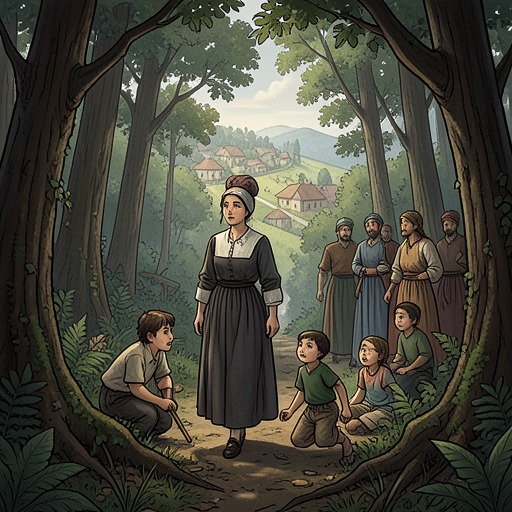
Olivia grows up in the household of Corrine and Samuel, who are described as devout and loving. They live in a house beside the church where Samuel preaches and include Nettie in their church work and family life. In Nettie’s account, the couple had been unable to have children and received Olivia and Adam as children entrusted to them. Nettie understands them as Celie’s children and herself as their sister and aunt, but initially keeps that knowledge to herself while she lives with the family and helps care for them.
Samuel’s account supplies the circumstances of the children’s arrival. A widow, already caring for small children and suffering from worsening mental illness, marries a stranger who later brings Olivia and then Adam to Samuel’s house. Samuel recognizes the man as someone he had known before finding Christ. He feels unable to refuse the children and understands their arrival as an answer to his and Corrine’s prayers. The account establishes how Olivia comes to be raised by Corrine and Samuel without making her adoptive family’s care a mere disguise: they welcome her into a household and give her a childhood within a loving religious community. Her life is therefore shaped by two connected truths, her birth to Celie and her upbringing with Corrine and Samuel.
Recognition and the Truth of Her Parentage
The truth becomes difficult for Nettie to keep private once Corrine falls ill and doubts the children’s parentage. Nettie tells Corrine that she is the children’s aunt and that their mother is Celie, then relates the story of the family. Corrine remains unconvinced. Nettie tries to prompt her memory of meeting Celie in town, recalling the main street, the hitching post outside Finley’s dry-goods store, and the smell of peanut shells. Corrine remembers the place but not a man speaking to her. The memory does not immediately settle the question, even though Olivia’s resemblance to Nettie—and Nettie’s resemblance to Celie—offers a visible link across the generations.
Nettie explains to Celie that Olivia has Celie’s face and eyes exactly, and wonders that Corrine has not recognized the resemblance. The recognition thus develops through more than one route: Celie’s first, private certainty in town; Nettie’s knowledge of the children’s origins; and the effort to make Corrine remember the earlier encounter. When Nettie later tells the children about Celie, Corrine’s love for them, and her own place as their aunt, Olivia asks where her other mother’s sister is. Her question shows that the new knowledge reaches her as a family relationship, not simply as an account of the past.
Reunion and Narrative Significance
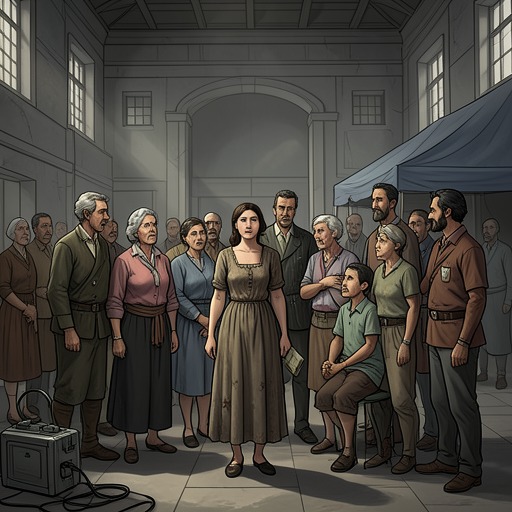
Years later, Nettie returns to Celie with Samuel, Olivia, Adam, and Tashi. In the reunion, Nettie introduces Olivia and Adam as their children, and Tashi as Adam’s wife. The introduction gives Olivia a place in the family gathering that had been absent from her childhood encounter with Celie: she is publicly identified as Celie’s daughter and as part of Nettie’s family. The return also brings her into contact with Celie’s wider circle, including Shug and Albert.
Olivia’s presence matters again when Tashi fears that her facial scarification will cause Americans to reject her and any children she may have. Olivia answers that Tashi would have a sister. The reassurance is brief, but it makes kinship something that can be offered across fear and displacement: Olivia names herself as a potential source of belonging for Tashi. Her role in the novel is consequently not limited to the revelation of Celie’s lost motherhood. Olivia links separation to return, adoption to birth family, and family identity to acts of recognition and welcome. Her own history begins with care divided between households; at the reunion, that division no longer prevents the family from naming and receiving one another.