Purple Imagery
The Color PurplePurple Imagery turns an ordinary color into a test of attention and a way of understanding the sacred. In Shug Avery’s account, noticing purple in a field is not incidental appreciation: creation offers beauty to be seen, and that act of recognition becomes part of spiritual life. For Celie, learning to look outward at the living world also loosens the hold of Albert’s “evil” without pretending that its effects have vanished.
Attention and the Sacred
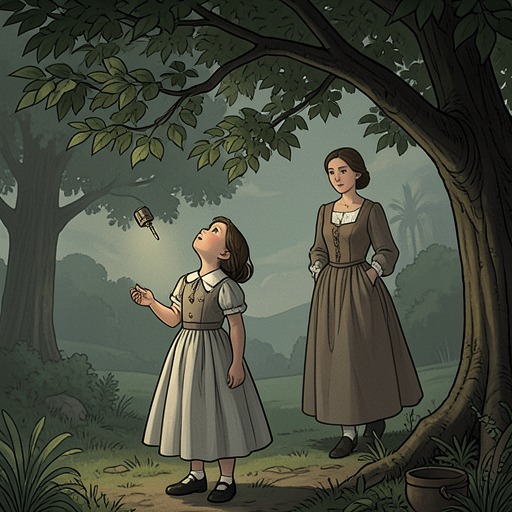
Shug connects divine love to attention and admiration. She says, “I think it pisses God off if you walk by the color purple in a field somewhere and don’t notice it.” The image makes spiritual neglect concrete: a person can pass through a field without seeing what is there. Purple is not presented as a coded doctrine with a single fixed meaning; it is a particular, vivid instance of the beauty that Shug believes God continually makes and offers.
That offer is reciprocal. Shug describes God as making surprises for people and says, “Everything want to be loved.” Her examples extend beyond human beings to trees, which seek attention in their own way. In this account, nature is not merely scenery for human feelings. Its forms and acts of appeal give it a presence of its own, while human noticing becomes one way of answering that appeal.
Celie Learns to Look
The image matters because Celie recognizes how little she has been able to see. She has been so occupied with the idea of a white, male God that she has not truly noticed what is made around her: a blade of corn, wildflowers, or the color purple. Her new attention is both spiritual and perceptual. Rather than arriving through an abstract argument, it begins with familiar parts of the world that she had passed over.
The shift does not make harm disappear. Comparing Albert’s evil with even a small bush in her yard, Celie feels it shrink, but not altogether. Shug’s instruction to get the man out of one’s line of sight names the change in scale: when a male figure no longer occupies the whole field of vision, other forms of life and value can come into view. Purple therefore figures an opening in perception, not a claim that Celie’s suffering has been undone.
A Counter to Condemnation
The contrast with the church’s treatment of Shug sharpens the motif’s significance. When Shug is sick, the preacher turns her condition into a sermon and condemns her as sexually immoral; the women in the congregation affirm him. Against this language of public judgment, Shug’s understanding of God values admiration, pleasure, and the capacity to notice what is beautiful. Purple belongs to a more generous spiritual vision than the one used to shame her.
That vision accompanies a change in where Celie directs her words. She tells Nettie, “I don’t write to God no more. I write to you.” The turn toward her sister does not cancel the spiritual conversation that Shug has opened; it places communication and connection within Celie’s changed life. Purple imagery gathers these movements together: attention shifts from a distant, human-shaped authority toward nature, delight, and relationships, while the world’s beauty remains present to be noticed.