Senegal
The Color PurpleSenegal enters the narrative as the first African country Nettie sees on her voyage from England, with Dakar serving as both a port of arrival and a vivid encounter that complicates her ideas about Africa. The country is at once an imagined point of ancestral return and a present-day place whose people and everyday exchanges resist any simple, sentimental picture.
Setting and Arrival
After leaving Southampton on July 24, Nettie, Corrine, and Samuel stopped in Lisbon and Dakar before reaching Monrovia, Liberia, on September 12. Dakar was Nettie’s first glimpse of Africa. Its people spoke French as well as their own language, which Nettie tentatively calls Senegalese in her letter to Celie. The stop thus introduces Africa not as a single, familiar place but as a region of distinct languages, communities, and experiences.
The arrival carries a personal and historical charge. Seeing the African coast moves Nettie, Corrine, and Samuel to kneel on deck and give thanks for the land their ancestors had longed to see again. Yet Senegal is not described as a recovered home or a completed return: it is the beginning of a journey whose route continues to Liberia, and the emotional force of arrival exists alongside the distance and unfamiliarity that remain.
Dakar Through Nettie’s Eyes
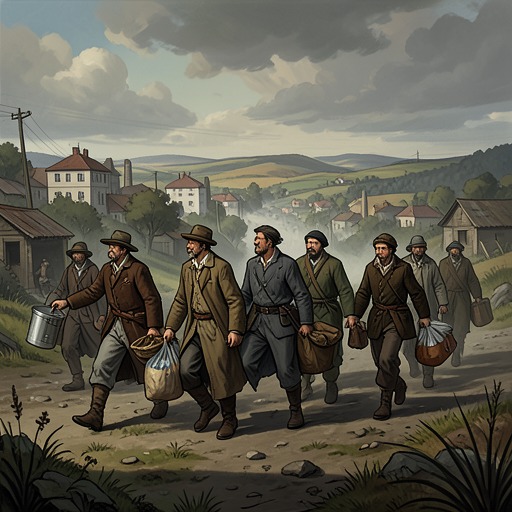
Nettie’s first impression of Dakar centers on the people she sees there. She describes their very dark skin as strikingly luminous, and remembers their brilliant blue robes patterned like elaborate quilts. The image makes her feel that she is seeing Blackness anew. Her language conveys the intensity of the visual encounter, while its comparisons also show her reaching for familiar expressions to describe a sight that exceeds them.
That wonder does not make her meeting with Senegalese people uniformly warm. In the market, she finds the vendors focused on selling produce. When the travelers do not buy, the sellers look through them just as quickly as they look through the white French people living there. The market scene sets the grandeur of Nettie’s first visual impression against an ordinary commercial encounter in which the visitors are not automatically welcomed or singled out.
The presence of white residents also unsettles Nettie’s expectations. She had not imagined seeing white people in Africa, yet she notices them in large numbers and recognizes that they are not all missionaries. Dakar therefore appears not as a place outside European presence, but as a setting where African life and European residence meet in plain view.
Narrative Significance
Senegal marks the threshold between Nettie’s earlier imaginings of Africa and the continent she begins to encounter directly. Before traveling, she had never treated Africa as a real destination; her departure becomes possible when a missionary’s place on the journey opens and she cannot find work nearby. The passage through Dakar gives that change a concrete first scene: wonder at the coast and the people, followed by observations of trade, language, and white settlement.
In her letter to Celie, Nettie’s account holds ancestral longing together with the limits of her own perspective. The kneeling passengers understand the coast through histories of separation and hoped-for return, while Nettie’s descriptions of Dakar register a traveler still learning how varied and present-day African life is. Senegal’s brief appearance consequently opens the journey without reducing the country to either a symbol of origins or an object of missionary imagination.