Shug's Immanent View of God (Pantheism)
The Color PurpleShug's Immanent View of God (Pantheism) replaces a remote, human-shaped deity with a presence within every person and throughout everything that exists. Shug describes this understanding through inward searching, bodily recognition of kinship with nature, and the pleasure of noticing beauty; later, Nettie's account of a more internal faith in Africa echoes the freedom of belief without a fixed image.
A God Beyond Human Images
Shug's account begins with a rejection of the idea that God must be a white man. She connects that image to her loss of interest in religion, and Celie recognizes the broader racial setting of the problem: white people, she believes, do not listen to Black people except long enough to tell them what to do. Against a God imagined through the authority of dominant human figures, Shug describes a presence that is not male or female, but an it. The pronoun is not a new picture of God; it refuses the assumption that divinity must look like a person at all.
For Shug, God is not an object that can be viewed apart from the world or from the person seeking it. God is within each person and present in everything that has existed, exists, or will exist. People discover this presence by searching inward, though hardship and sorrow may bring it into awareness even when they are not deliberately looking. The account thus joins spiritual knowledge to lived experience rather than to an image or an abstract definition: one recognizes God by feeling connected to the whole.
Nature, Kinship, and Attention
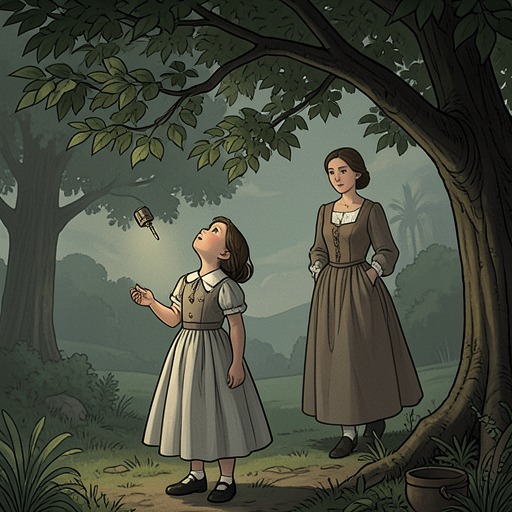
Shug traces her own realization through a sequence of relations: trees, air, birds, and then other people. While sitting quietly and feeling like a motherless child, she experienced herself as part of everything rather than separate from it. Her understanding became physically legible in the thought that cutting a tree would make her own arm bleed. The image makes kinship with the natural world more than an idea: injury to another form of life registers as injury to oneself. Her laughter, tears, and sudden movement around the house mark the intensity of that recognition.
This connection does not stop at nature. Shug's account extends from trees and birds to people and to all existence, refusing a division in which human life alone matters. She also describes God as loving what people love, as well as much that they do not, and particularly valuing admiration—not vanity, but the sharing of something good. Her example is the purple in a field: failing to notice it is a failure of attention to a beauty that is already being offered. God, in turn, does not only ask to be pleased; Shug sees the world as continually trying to please people back. Delight and perception become part of spiritual life.
Prayer, Authority, and Celie's Change
The novel sets Shug's account against religious speech that condemns her. When Shug is ill and unwelcome in town, the preacher uses a sermon to denounce the sort of woman he associates with her—her clothes, smoking, drinking, singing for money, and relationships with other women's men. Celie wants someone to stand up for Shug, but Albert remains silent while the congregation's women affirm the sermon. This scene shows religious authority operating as public shame, while Shug's later understanding locates spiritual presence within people and the world rather than in the judgment of a preacher.
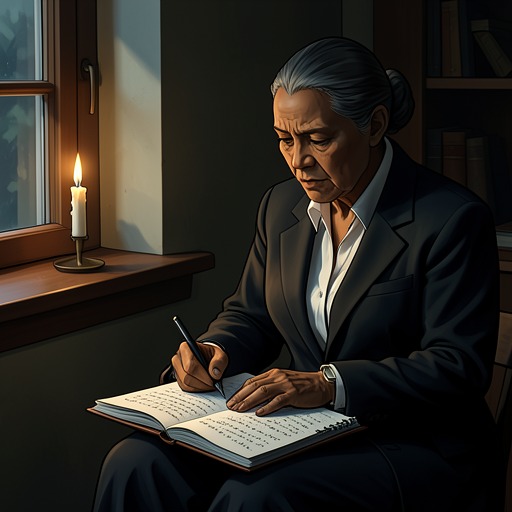
Celie's own relation to prayer changes alongside this rethinking. At the point when she tells Nettie that she no longer writes to God and writes to her instead, the statement marks a change in the addressee of her letters, not a simple disappearance of spiritual concern. Shug's ideas give Celie's questions a different framework: a God who is not a distant person in the image of a powerful man need not be approached through the same assumptions of authority and silence. The letters to Nettie sustain a human connection as Celie's understanding of spiritual connection is being reconsidered.
Nettie's Parallel Faith in Africa
In a later letter, Nettie says that years in Africa have made God more of a spirit and more internal. She and Samuel do not believe that God has to resemble something or someone, whether a roofleaf or Christ; release from dependence on God's appearance, she writes, frees them. Nettie's account is not Shug's scene or a claim that she learned her belief from Shug, but it develops a closely related possibility: faith need not depend on a visible representation.
Nettie imagines that she and Samuel might establish a church in their community without idols, encouraging each person to seek God directly and strengthening that belief through the example of people who share it. Her proposal carries Shug's inward theology into a possible form of communal practice. Together, the accounts distinguish spiritual life from an imposed image without reducing it to isolation: God is inward, but also present in other people, the natural world, and relationships sustained through care and attention.