The Sacred Significance of Roofleaf
The Color PurpleThe Sacred Significance of Roofleaf lies in its double life as a divine presence and an essential part of ordinary shelter. For the Olinka, roofleaf is not a resource detached from belief: it is worshipped as a God and used to cover their huts. When colonial development destroys the plant along with their village, the Olinka lose more than a home. They are forced to confront a world in which their sacred protection has been made unavailable by the same powers that have taken their land and water.
Sacred Presence and Everyday Shelter
Roofleaf joins spiritual meaning to material life. The Olinka cover their huts with it because they regard it as divine; the sacred is thus present in the structure that shelters a household, rather than confined to a separate place or object. That interdependence makes the plant's later destruction especially consequential: the Olinka cannot simply replace a roof without changing what a roof means.
Elsewhere, a conversation with Celie reflects on the desire of living things to be loved and noticed, comparing human gestures of affection with the way trees seek attention. In that broader attention to nature, the Olinka's regard for roofleaf resonates as a way of recognizing the natural world as worthy of reverence, not merely useful. The narrative makes the stakes concrete through the plant's practical role: roofleaf is both a material covering and the focus of worship.
Displacement and the Destruction of Roofleaf
The colonial road and rubber plantation bring the sacred plant into direct conflict with commercial development. The builders want the Olinka village site for plantation headquarters because it is the only nearby place with a steady supply of fresh water. The people and their missionaries are moved to barren ground without water for half the year; in the dry months they must buy water from the planters, and in the rainy season they try to dig cisterns into nearby rock. Discarded oil drums become temporary containers for what the new settlement cannot provide.
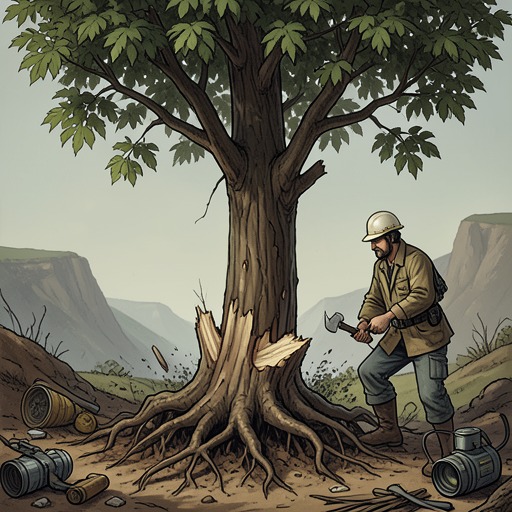
The Olinka refuse to live in dwellings not covered by Roofleaf. The builders respond by leaving the men's barracks and the barracks for women and children without roofs, then plowing under the village and the surrounding land, including every last stalk of roofleaf. The sequence makes dispossession at once material and spiritual: the community has been driven from its water source, and the plant that would make its new shelter acceptable has been destroyed.
Tin Roofs and the Cost of Defeat
After weeks in the hot sun, a truck arrives with corrugated tin. The Olinka must pay for it themselves, exhausting their meager savings and nearly wiping out the money Nettie and Samuel had set aside for the children's education when they returned home. Tin offers a roof in the physical sense, but it cannot restore Roofleaf or the relationship to shelter that the Olinka have defended. Its cold, hard, glittering surface stands in stark contrast to the sacred plant it replaces.
As the women struggle to put up the metal roofs, their ululation of sorrow echoes through the surrounding caverns. On that day, the Olinka acknowledge temporary defeat. Some people leave to join the Mbeles, who live deep in the jungle and refuse to work for white people or submit to their rule. Though the Olinka no longer ask Nettie and Samuel for help beyond teaching their children, the missionaries decide to act against this latest outrage and travel with the children to England. Roofleaf's destruction therefore marks both a devastating loss and a turning point: colonial power has stripped the community of land, water, and sacred material, while the effort to respond carries its consequences beyond the village.