Ammi Pierce
The Colour Out of SpaceAmmi Pierce is the lone keeper of the strange days in the hills west of Arkham: an old, isolated witness whose story gives the narrator access to a catastrophe the community will not discuss plainly. He survives it, but not unchanged; decades later he still fears the place, and the final glimpse he had of its unnatural colour has never left him.
The sole witness in the hills
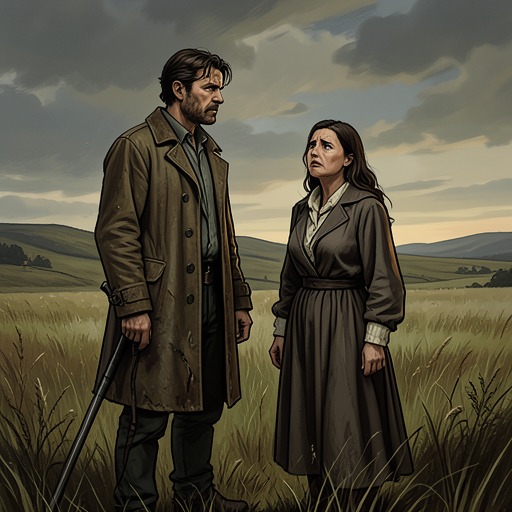
By the time the narrator visits, Ammi Pierce has lived alone for years in an ancient, tottering cottage near the point where the trees begin to thicken. His head has long been considered a little queer, and people in Arkham dismiss his stories as crazy tales. Yet he is the only person who remains in the district and speaks of the strange days. He has never told the foreign settlers who tried and abandoned the surrounding farms what he remembers. His house lies close to open fields and travelled roads, a location that makes his continued residence and willingness to talk exceptional.
The narrator finds a man more alert and educated than local opinion had suggested. After being roused by persistent knocking, Ammi Pierce listens to the visitor’s account of his surveying work and answers questions about the district with a grasp of the subject that matches anything the narrator has heard in Arkham. He does not protest the coming reservoir, which will cover old woods and farmland: his response is relief. The valleys through which he has roamed all his life, he believes, are better under water since the strange days.
Witness to the horror
Once Ammi Pierce begins his story, his husky voice drops and he leans forward, pointing with a trembling forefinger. The narrator must draw him back from rambling, reconstruct scientific details that survive only as a fading echo of professors’ explanations, and bridge breaks in his logic and continuity. The manner of the telling makes its cost visible: Ammi Pierce is not simply passing on a local legend but trying to recount an experience that has disordered his memory and his life.
In the attic of the Gardner house, he encounters a dark shape in a room so foul that he has to retreat for breathable air before going in. The thing in the corner moves slowly even as it crumbles. Ammi Pierce understands it to share the nameless fate of young Thaddeus Gardner and the livestock. The sight is accompanied by a momentary dimming at the window and strange colours before his eyes, which recall the globule in the meteor and the sickly vegetation that had grown in spring. He gives the narrator no further particulars about the shape. What follows is conveyed through the sounds he hears on the staircase: a thud, a possibly choked scream, heavy dragging and a sticky noise, while the visible woodwork glows faintly. The account leaves the impression that the horror in the attic was not the only presence in the house.
Ammi Pierce nevertheless acts. He locks the attic’s secret away and turns to the practical responsibility of caring for Nahum Gardner, who must be fed, tended, and taken somewhere he can receive care. The narrator infers that Ammi Pierce did not leave anything capable of motion in the room, though the nature of what he found and what he did remain unstated. His conscious passage through the doorway, rather than a collapse or flight, gives the episode its grim force: he continues to meet ordinary human obligations in the midst of something he cannot safely explain.
The final glimpse and its aftermath
After the horror rises from the valley, seven shaken men make their way back toward Arkham by the north road. Ammi Pierce is more distressed than the others and asks them to escort him to his kitchen rather than leave him to cross the dark, wind-whipped woods alone. He has seen something they missed. Looking back toward the desolate valley, he watches a faint remnant rise and sink again where the great shapeless horror had shot into the sky. He recognizes its colour and knows that some last trace remains in the well. The narrator attributes Ammi Pierce’s lasting mental disturbance to this recognition.
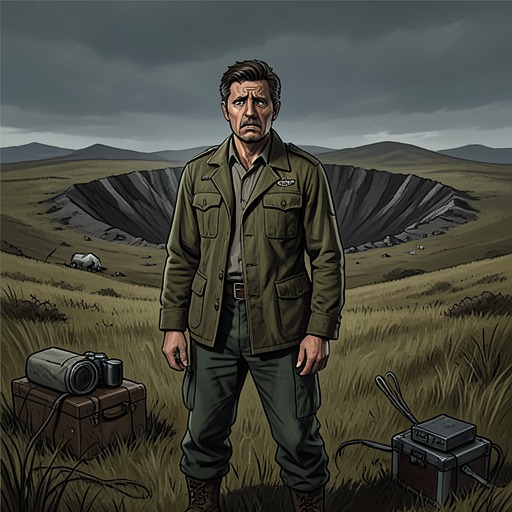
More than half a century later, Ammi Pierce has never gone near the place again and is glad that the reservoir will cover it. His avoidance is not merely a matter of local custom: he personally saw what emerged, and the knowledge that something remained below the well gives the flooded landscape a continuing menace. The narrator, too, is unsettled by the changed sunlight near the well and says he will never drink the water or return to the Arkham country. The damaged ground remains a dusty grey heath where nothing grows; reports of altered vegetation at its borders suggest that the blight may be spreading. Ammi Pierce’s fear thus sits beside a physical aftermath that the community has not explained away.
Memory, folklore, and narrative role
Ammi Pierce’s testimony stands at the meeting point of private memory and local legend. The narrator first hears evasive references to a family lost or killed in the hills, then seeks out Ammi Pierce because other residents have warned him away from the old man’s account. His story turns those vague communal rumours into a particular recent disaster, while its broken sequence and missing details preserve the limits of what can be recovered. The narrator must assemble the account from fragments, but the gaps are not resolved into certainty.
That uncertainty contrasts with the narrator’s earlier confidence in explaining folklore as an imaginative inheritance. Reports of strange beings had circulated in the hills for generations, and their details were transmitted through local stories and old written collections even as settlement customs and economic habits pushed people away from feared places. Ammi Pierce’s account gives those stories a disturbing proximity to lived experience without making every legend verifiable. As the one witness who still speaks, he keeps the memory alive; as a man permanently marked by what he saw, he also embodies the cost of carrying it. His relief at the reservoir’s advance is therefore double-edged: it may bury the visible landscape of the strange days, but it cannot erase the knowledge that he brought back from the well.