Arkham
The Colour Out of SpaceArkham is an old Massachusetts town whose importance lies both in its ordinary institutions and in the stories gathered around it. It is a center of folklore and learning, but also the nearest settled place to the valleys and blasted heath west of town, where local unease attaches to a recent family disaster. Arkham is also the setting of Nathaniel Wingate Peaslee’s academic life and return after five years of amnesia. Across these accounts, the town supplies a human scale for events that its inhabitants can describe only incompletely.
Town, folklore, and the strange days
Arkham’s reputation precedes the surveyor who visits the hills west of it. Local people call the region evil, and the narrator initially takes this for one more expression of the town’s old witch legends, the kind of inherited fear passed from grandmothers to children. His understanding changes when he sees the wooded valleys and the blasted heath for himself. The landscape seems older and stranger than the folklore he had assumed could explain it; the town’s unease points toward something more recent than centuries of legend.
When the surveyor asks Arkham’s older residents what they mean by the strange days, they offer little beyond evasions. The events, they indicate, occurred during their own lifetimes, in the 1880s, and involved a family that disappeared or was killed. Their unwillingness to be exact makes the town a source of partial testimony rather than a place where the mystery is openly understood. They also direct the questioner away from Ammi Pierce, dismissing his account as the product of a disturbed mind. The gap between these warnings and the information they withhold gives Arkham’s local memory an uneasy character: knowledge persists, but is not readily shared.
The town’s western boundary
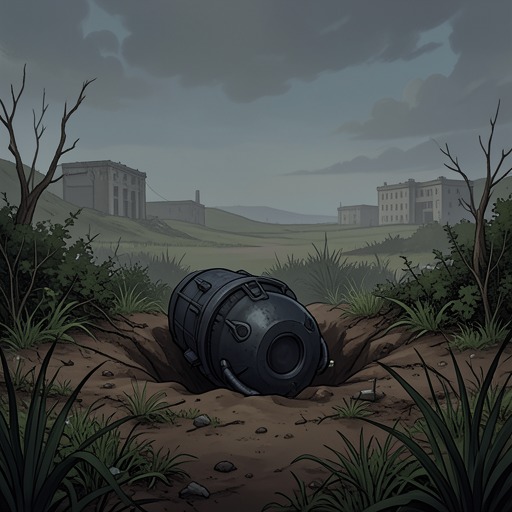
The wooded valleys and blasted heath lie west of Arkham, not within its settled streets. Their proximity nevertheless shapes the town’s stories. A surveyor working on plans for a new reservoir hears warnings in Arkham before entering the area; after seeing the gray, barren expanse, its abandoned well, and the remains of a chimney and cellar, he understands why the warnings have endured. Even the road through the hills has been replaced by a route that curves far to the south, leaving traces of the older way among the weeds.
The proposed reservoir promises to alter this landscape again. The surveyor anticipates that water will cover half the hollows, while the woods will be cut down and the blasted heath submerged. This threatened transformation gives Arkham’s surrounding countryside a double history: first a place people avoided and spoke of indirectly, then a region scheduled to disappear beneath a modern project. The expectation that its secrets will be hidden under water does not resolve them; it makes the town’s landscape-bound memories seem likely to pass out of view along with the old road and valleys.
Ammi Pierce and local testimony
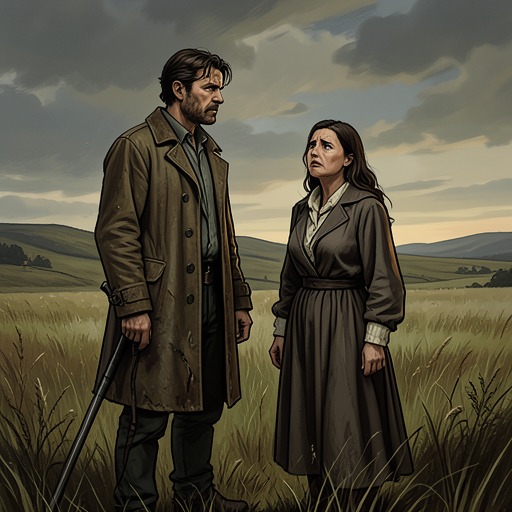
Ammi Pierce is the exception to Arkham’s silence about the strange days. He is the only person who remains in the countryside and continues to talk about them. His cottage stands near the open fields and traveled roads around Arkham, a position that makes his continued presence possible even as other people avoid the area. The town’s residents treat his recollections as unreliable, but the surveyor finds him brighter and better educated than that reputation suggests.
Ammi’s response to the planned reservoir differs from the surveyor’s expectation. He does not protest the prospect of farmland and woods being covered, perhaps because his home lies outside the future lake’s bounds. Instead, he appears relieved at the prospect of the dark valleys being submerged. His relief makes clear that the landscape is not merely a subject of local superstition for him: he has lived among these places, and the strange days have changed how he regards them. In Arkham’s account of the past, his willingness to speak stands against the evasions of the older residents, though it does not make the town’s mystery easy to verify.
University, residence, and Peaslee’s return
Arkham is also the academic home of Nathaniel Wingate Peaslee. He entered Miskatonic University at eighteen, in 1889, and returned after studying economics at Harvard to teach there. By 1908 he was a professor whose life, by his own account, had run smoothly; his marriage, children, and academic advancement belonged to an ordinary personal history. He stresses that his ancestry and early life were normal, distinguishing Arkham as his place of residence and work from the outside source he believes caused his sudden amnesia.
After that amnesia ended in 1913, Peaslee returned to Arkham and reopened his long-closed house on Arkham’s Crane Street. His return was marked by an unexplained mechanism assembled from parts made by scientific-instrument makers in Europe and America, kept from close inspection, and described by witnesses as a small arrangement of rods, wheels, and mirrors. On the night of September 26, he dismissed the housekeeper and maid until the next day. A dark, unfamiliar visitor arrived by automobile; later, a call for medical help was traced to a public telephone booth in Boston. When a doctor reached the house, Peaslee was unconscious, the mechanism had disappeared, and ashes in the library grate indicated that papers associated with his years of amnesia had been burned. The next day he gradually resumed speech and expression, and his former self returned.
Peaslee’s life in Arkham after that return remained unsettled. He regained custody of his son Wingate, lived with him on Crane Street, and resumed teaching at Miskatonic University in February 1914. He continued for a year, but found that the experience had left him with reduced energy, troubling dreams, and a disordered sense of time. Thus Arkham’s university and home streets provide the setting for a return to familiar life that is real but incomplete: Peaslee can resume his work and household, yet cannot simply recover his former sense of experience.
Arkham as a frame for uncertainty
In these accounts, Arkham is neither a remote wilderness nor an all-knowing witness. Its university supports scholarship, and its inhabitants preserve reports and traditions, yet neither institution nor community can settle what lies behind the strange days or Peaslee’s lost years. The town’s old legends initially invite an easy explanation for the western hills, while the residents’ guarded recollections point toward a history much nearer to them. Peaslee’s insistence on his ordinary origins makes a related distinction: his life was rooted in Arkham, but he locates the cause of his amnesia elsewhere.
The town’s narrative role comes from that tension between the familiar and the unexplained. Roads, houses, classrooms, and local testimony give the events recognizable coordinates; evasions, absences, and incomplete returns prevent those coordinates from becoming a full explanation. Arkham is therefore both a place where people try to interpret extraordinary experience and the limit of what those interpretations can establish.