Great Race’s taboo on the Elder Things
The Colour Out of SpaceThe Great Race’s taboo on the Elder Things governs what can be known about an ancient enemy and the sealed places where it remains. The subject is absent from ordinary accounts and rarely named aloud; what survives is a history of conquest, recurring breaches, and precautions against a future danger. The taboo turns silence itself into evidence, while leaving the underlying threat only partly disclosed.
A Forbidden Subject
The fear of basalt ruins and sealed trap-doors was largely conveyed through unspoken suggestion or furtive whispers. Information that might explain it was conspicuously missing from books on common shelves. This was the one subject wholly under taboo among the Great Race: its members never intentionally discussed it, and the narrator could learn anything specific only from captive minds unusually capable of observing what others left unsaid.
The silence was not simply a lack of surviving information. Old myths avoided the subject, or their references may have been deliberately excised; dreams and legends offered even fewer clues. The result is an uneven record in which the Great Race’s fear is unmistakable but its object remains difficult to picture. The taboo protects the secret from ordinary inquiry while making the gaps in the record part of the account.
The Buried History
The fragments that break through the silence describe the Elder Things as an alien, partly material race that came from distant universes and dominated Earth and three other planets about six hundred million years ago. Their perception differed radically from that of terrestrial organisms: they had no sense of sight, and their consciousness operated through a non-visual pattern of impressions. They could pass through material barriers, but their substance could not; certain forms of electrical energy could destroy them. The Great Race could not exchange minds with them.
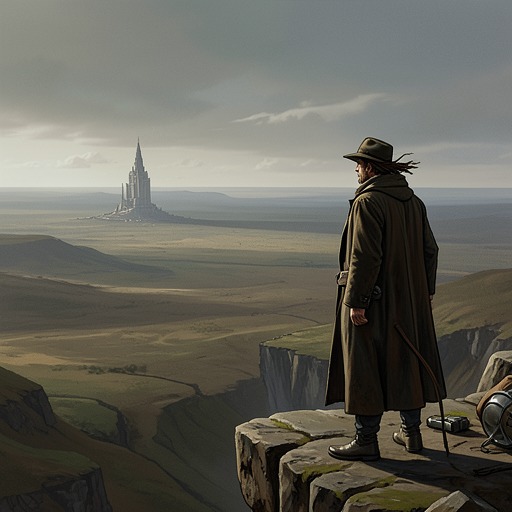
The Elder Things built massive basalt cities of windowless towers and preyed on the beings they encountered. When the Great Race arrived from Yith, it used its instruments to subdue them and drive them into caverns beneath the surface, sealing the entrances. The Great Race then occupied much of the conquered cities, preserving some important buildings for reasons connected more with superstition than with indifference, boldness, or historical curiosity. The taboo thus surrounds not an unknown enemy alone, but a history in which the Great Race’s own settlement and power were bound to the enemy’s confinement.
Fear, Breaches, and Precautions
Sealing the underground passages did not end the danger. Across the aeons, the Great Race received signs that the Elder Things were growing stronger and more numerous below. Hideous incursions occurred in remote cities and in deserted elder cities where routes into the depths had not been properly sealed or guarded. The Great Race responded by strengthening its precautions and closing many passages permanently. Some sealed trap-doors remained for strategic use should the Elder Things break through elsewhere; geological changes had also choked some routes and opened fresh rifts.
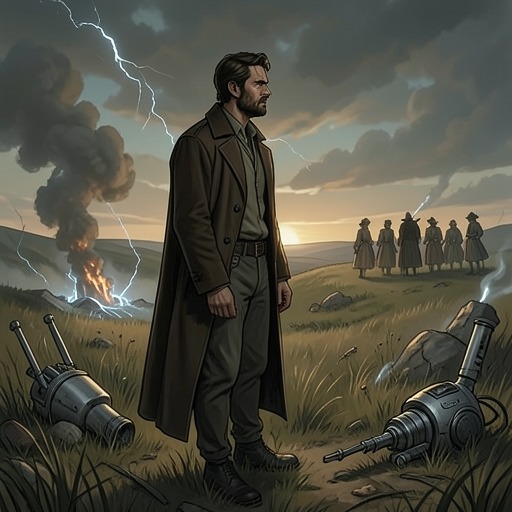
The fear shaped the Great Race’s military arrangements as well as its silence. It maintained an enormous army equipped with camera-like weapons that produced powerful electrical effects, for purposes seldom discussed but evidently connected to the windowless ruins and trap-doors. The taboo therefore coexists with preparation: the danger is too consequential to ignore, yet too laden with horror to describe openly. Accounts associate the Elder Things with extraordinary changes in visibility, control of great winds, whistling sounds, and immense footprints marked by five circular toes, but no clear description of their appearance is ever recovered.
Deep Time and the Limits of the Record
The taboo’s force becomes clearer against the scale of the Great Race’s history. Myths and delusions imagined many dominant races before humanity, but they most often concerned the Great Race, which had mastered time by projecting its minds into other eras and gathering knowledge across millions of years. Its vast knowledge did not make the sealed past fully legible: the history of the Elder Things remained more obscured than other subjects, and the threat was known chiefly through fragments and inherited dread.
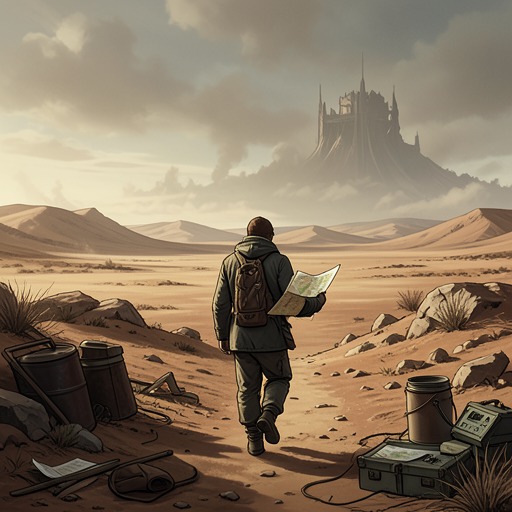
Later evidence lends material weight to the buried history without resolving it completely. In the Australian desert, an expedition uncovers about 1,250 ancient blocks, mostly carved megaliths, whose condition points to immense age and geological upheaval. In his account of the underground ruins, the narrator describes finding a book in a metal case; its brittle pages bear English words in his own handwriting. Yet he had not brought back the case, and the underground corridors had not been found, leaving him unable to prove what he believed he had seen. The surviving record thus mirrors the taboo: traces suggest a past extending far beyond human history, while the decisive evidence remains inaccessible and the explanation uncertain.