The Strange Days
The Colour Out of SpaceThe Strange Days is the name given to the late-nineteenth-century crisis that began with a meteorite’s fall near the Nahum Gardner farm and ended in the destruction of the household and its surroundings. Its importance lies not only in the disaster itself but in the way it persists: as a name people mutter without explaining, a scar in the landscape, and a story preserved chiefly by an old witness. Across the wider narrative, that local history sits within a much longer and less secure chronology, where geological traces and inherited accounts reach beyond ordinary human memory.
The Meteorite and the Local Chronology
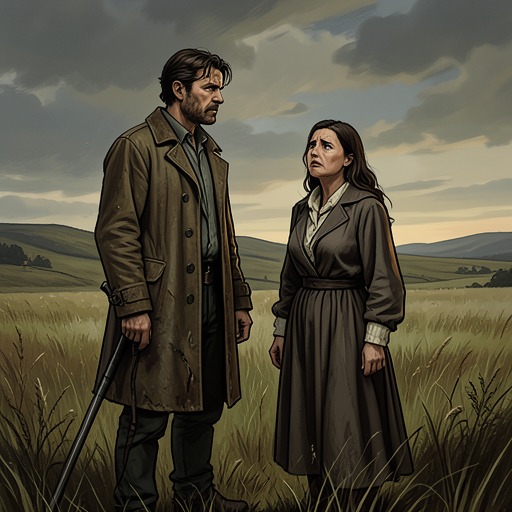
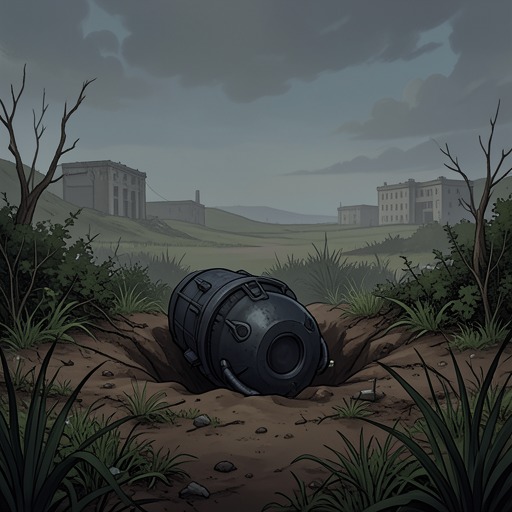
The Strange Days began, according to Ammi Pierce, when a white cloud appeared at noon, explosions sounded in the air, and smoke rose from a wooded valley. By night, word had spread through Arkham that a large rock from the sky had struck the ground beside a well at the Nahum Gardner farm. The event belongs to the 1880s; the canonical chronology places the meteorite’s fall in June 1882. Before it, the western woods were not feared in the way they would be afterward. The Gardner property had been a trim white house surrounded by productive gardens and orchards, not the grey wasteland that came to mark the site.
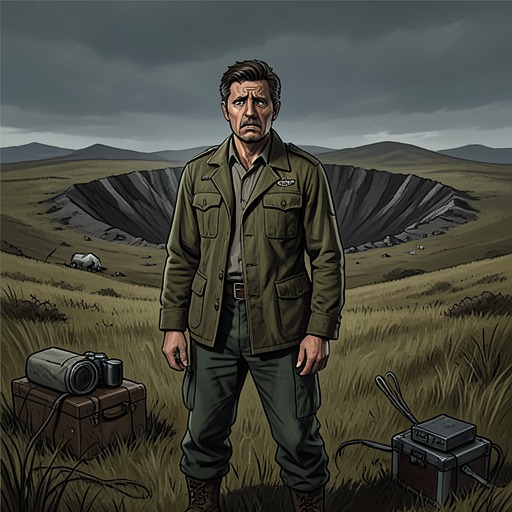
The meteorite resisted ordinary explanation from the first examination. It was still hot, had reportedly glowed at night, and proved so soft that the visiting Miskatonic University professors gouged out a sample rather than chipping it. The fragment continued to burn through the bottom of the pail used to carry it and grew smaller. These details make the beginning of the Strange Days a sequence of failures of measurement: the object’s size, heat, and substance did not behave as the observers expected. The strange material did not remain a contained curiosity; its arrival preceded the gradual ruin of the farm and the disappearance or death of the Gardner family.
The episode’s chronology is also preserved in the land. The house and orchards were replaced by five acres of grey dust, with the chimney bricks, cellar stones, and abandoned well marking what remained of the homestead. Nothing grew across the tract. More than half a century later, the narrator still finds the well’s light unsettling and hopes that a planned reservoir will cover the ground. The proposed flooding promises concealment rather than explanation: it may place the old site beyond sight, but it cannot make the past knowable or safe.
A Name Preserved by Reluctance
The phrase Strange Days survives less as a clear community history than as a guarded reference. When the narrator asks older residents of Arkham about the phrase and the blasted heath, they disclose only that something had happened within living memory and that a family had vanished or been killed. They refuse precision and direct the narrator away from Ammi Pierce’s stories. The avoidance gives the name its peculiar historical force: the event is not ancient legend, yet those who remember it treat it as something best left indistinct.
Ammi’s account is the exception, though it is not a complete or orderly record. He speaks in a husky, halting manner, wanders from the sequence of events, and cannot consistently maintain scientific explanations or logical transitions. The narrator must draw him back to the subject and fill gaps in the telling. His testimony nevertheless preserves what the wider community has suppressed. The narrator returns to Boston and abandons his surveying position after hearing it, unwilling to cross the region again or to remain beneath its open sky at night. The story thus passes from an old witness to a listener who is himself changed by the act of hearing it.
The aftermath makes that transmission more unsettling. On the night of the final disaster, Ammi saw a faint remnant of the anomalous colour rise from the devastated valley and sink back toward the well. He recognized it as connected to what had come before and never fully recovered from the sight. He would not return to the place, and he welcomed the prospect of the reservoir covering it. The narrator shares the wish for concealment but not confidence in it: the well remains a possible refuge for what survived, and the grey tract offers no reassuring sign that the episode is wholly over.
Folklore, Flood Reports, and Contested Memory
The Strange Days are distinct from the later reports collected after the Vermont floods of November 3, 1927, but those reports reveal how old fears can re-enter public life. As an instructor of literature and student of New England folklore, the narrator initially treats accounts of unfamiliar shapes in swollen rivers as distortions of flood debris. Reports from the Winooski, West, and Passumpsic Rivers describe pinkish, roughly five-foot forms with crustacean bodies, wings or fins, articulated limbs, and an unusual head. Their similarities trouble his scepticism, yet he explains them through shared folklore and the possibility that witnesses mistook human or animal remains for something unknown.
That folklore had its own layered history. Older accounts described hidden beings in remote hills, with signs including unusual tracks, stone circles, deep caves, and rare sightings of many-legged, winged creatures. Some legends portrayed the beings as leaving people alone unless their territory was entered; later stories attributed disappearances, secret outposts, imitations of human speech, and unsettling changes in recluses to them. Pennacook traditions gave the Winged Ones a stellar origin, mines in earthly hills, and a reason to carry stone back to the stars. Such accounts varied across communities, but their recurrence and transmission helped give later witnesses a ready-made vocabulary for interpreting unfamiliar sights.
By the nineteenth century, much of this lore had faded. Settlement patterns and economic habits kept people away from certain hills, while the original fears behind those habits were gradually forgotten. When flood-time rumours revived the stories, the narrator argued that recurring myths could arise from common patterns of imagination; his opponents countered that the persistence of similar accounts and the unexplored terrain made certainty premature. The parallel with the Strange Days is not that the two episodes are the same, but that both show how communal memory can be simultaneously persistent and evasive: local stories outlast their original contexts, while the evidence that might settle them remains incomplete.
Deep Time and the Limits of Human History
The wider narrative enlarges this tension from recent local memory to planetary and cosmic history. Accounts of vanished races imagine Earth as the successive domain of beings that lived and built before humanity. One tradition describes the Great Race as having mastered knowledge of past and future through the projection of minds across time; its archives supposedly contained histories of species and civilizations that had not yet appeared. In this scale of history, human chronology is only a brief interval in a much longer succession.
The Great Race’s own records also preserve a history of conflict with the Elder Things, beings said to have come from distant universes and dominated Earth about six hundred million years ago. The Great Race drove them into inner-earth caverns and sealed many routes, but later incursions forced it to strengthen its precautions. These claims make the past more than a sequence of human legends: they describe geological changes, buried structures, and struggles whose duration dwarfs any surviving human account. Their presentation remains mediated through fragments and recollections, so the reader encounters immense antiquity through evidence that is itself partial.
The Australian ruins give that deep time a material counterpart. A prospector reports carved stone blocks in the Great Sandy Desert, and an expedition later uncovers about 1,250 blocks in varying states of erosion. Their scattering and weathering suggest an age beyond ordinary historical measures, while the narrator experiences their patterns as disturbingly familiar from dreams and prior research. The decisive object is a book found in a buried metal case: its pages appear immeasurably old, yet the writing is English in the narrator’s own hand. He does not bring the case back, leaving no physical proof for others to examine. The discovery therefore intensifies rather than resolves the uncertainty that governs the Strange Days: traces may survive across vast stretches of time, but the link between a trace and the history it seems to record can remain unverified.
Narrative Significance
The Strange Days compress the book’s larger temporal unease into one place and one damaged community. The meteorite arrives abruptly, but its consequences persist through an empty homestead, a barren five-acre tract, a well that may still conceal something, and stories that residents will not plainly tell. The narrator’s account joins physical remnants to oral testimony without making either complete: the stones and dust do not explain themselves, while Ammi’s memory is vivid but broken.
The contrast between local and deep time prevents the episode from becoming a closed mystery. The reservoir may erase the most visible landscape evidence, just as fading custom can erase the reasons for avoiding a region, but neither erasure guarantees that the underlying history has ended. Elsewhere, ancient structures and a book in familiar handwriting suggest that the past may leave records in forms no ordinary chronology can contain. The title therefore marks not simply a period of calamity but a boundary in human understanding: a recent event becomes legendary almost at once, while the oldest histories remain suspended between surviving evidence and stories that may be true.