
Women’s Authority and the Limits of Obedience
The Constant PrincessThis thread follows royal women who negotiate, command, and endure within political systems that restrict their choices.
increasing Bearing strength in each event
 decreasing
Bearing strength in each eventdecreasingIsabella Commands

Female Authority in Armor
A queen at war
Isabella of Castile directs military decisions and rides among frightened troops. Catalina learns that a woman can exercise command publicly.
A model with limits
Isabella’s authority inspires her daughter, but also teaches that obedience to divine purpose can justify extraordinary hardship.
Catalina’s Restricted Choice

A Princess Is Given Away
Marriage arranged
Catalina is sent to England to secure an alliance and has little say over where she will live or whom she will marry. Her rank grants visibility, not freedom.
Agency in performance
She uses language, composure, and judgment to influence the terms available to her. Resistance begins within obedience, not outside it.
Margaret Pole’s Survival

A Princess Changes Her Name
Survival after defeat
Margaret explains that she accepted a constrained marriage because refusal could have led to imprisonment. She has survived by living within limits she did not choose.
Inner independence
She insists that she remains herself despite changes in title and status. Her experience offers Catalina a more realistic account of women’s political lives.
A Queen Rules Through Influence
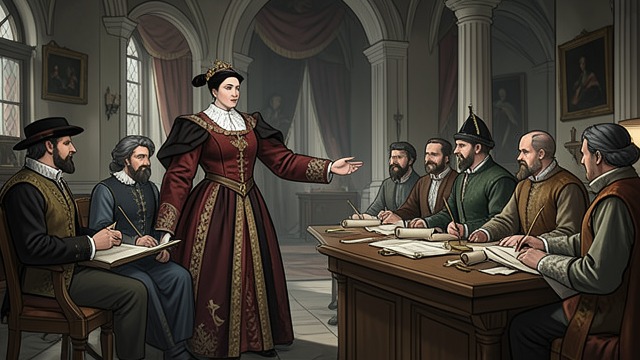
Power Without a Separate Crown
The work of access
Katherine guides Henry’s decisions, shapes court administration, and helps prepare policy. She gains influence without openly challenging the king’s authority.
A conditional sovereignty
Her power depends on Henry’s trust and on her usefulness to the dynasty. The arrangement grants real agency while keeping its limits visible.
A Queen Leads an Army
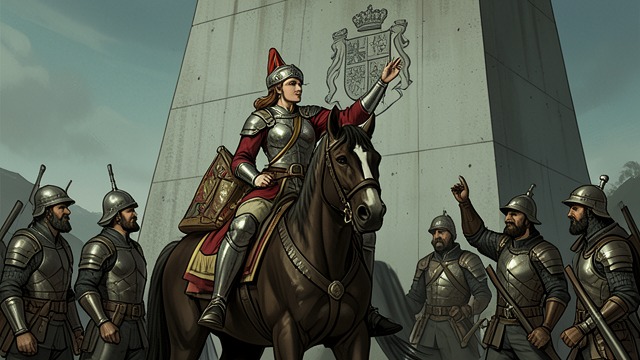
Authority Beyond Custom
Public command
Katherine wears armor, addresses the troops, and rides under the English Royal Standard. Her conduct challenges the idea that military command is exclusively male.
Authority earned
Her victory at Flodden makes her power difficult to dismiss as influence by marriage alone. She becomes a political actor through competence and risk.
1491, during the siege of Granada
1501, before her wedding
1502, during her conversation with Catalina
1509–1511, during Henry’s early reign
September 1513, during the Scottish invasion
