
The Rise and Limits of Courtly Romance
The Constant PrincessThis thread traces the novel’s use of romance ideals, from Catalina’s expectations to the political danger of treating real war and marriage as stories.
increasing Bearing strength in each event
 decreasing
Bearing strength in each eventdecreasingA Romance Bride
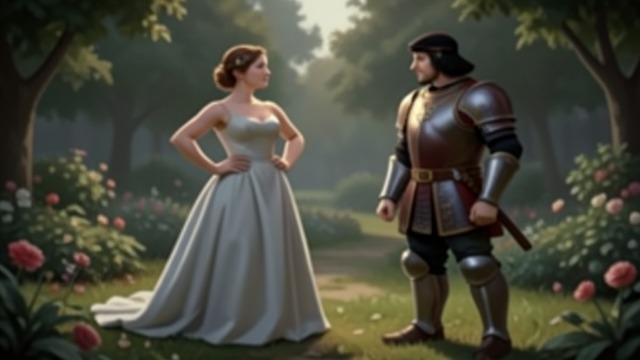
The Troubadour Ideal
A husband imagined
Catalina expects Arthur to resemble a knight from romance, able to woo her with wit and devotion. Books shape the emotional standard she brings to marriage.
Reality interrupts
Arthur’s shyness and inexperience do not match the imagined performance. She must learn that love may require patience rather than a perfect story.
Camelot as a Political Plan

An Ideal of Just Rule
A shared dream
Arthur and Catalina invoke Camelot as they imagine a kingdom with fair laws, good councils, schools, and defenses. The romance ideal inspires concrete policy.
The danger of fantasy
Their plans are earnest but remain untested. Arthur’s death leaves the ideal alive in Katherine’s mind but without its intended partner.
A Court Plays at War
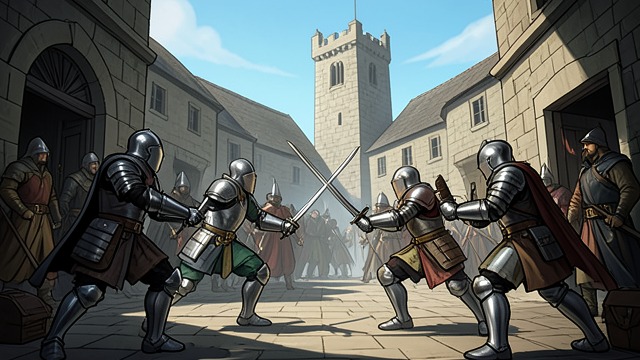
Tournament and Campaign
Chivalric performance
Henry and his companions treat jousts, costumes, and military expeditions as opportunities for glory. The court’s romantic self-image obscures the danger of real violence.
Katherine’s realism
Katherine understands that supply, terrain, and discipline decide campaigns. She tries to turn the court’s energy toward practical preparation.
Edward Howard’s Fatal Romance
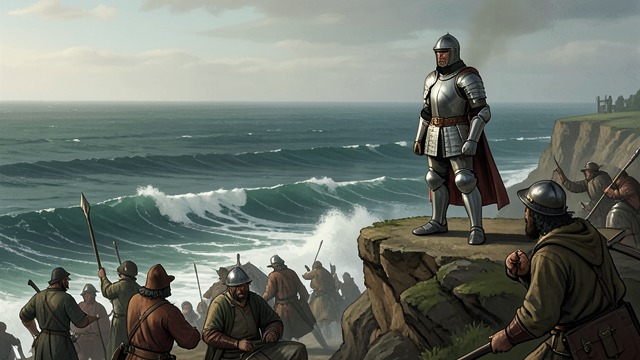
The Hero Pays the Price
A knightly gesture
Edward Howard attacks the French fleet rather than waiting, eager to win a glorious victory. His courage resembles a romance hero’s confidence in his own fate.
Reality of battle
His men abandon him, and he dies surrounded. Katherine sees that honor and bravery cannot protect a commander from misjudgment or the failures of others.
The Queen Beyond the Story

Judgment Replaces Legend
Victory without spectacle
Katherine wins a major battle but refuses the expected romance of total revenge. She understands that destruction may create a future war rather than a final triumph.
A mature ideal
Her choice makes peace, not heroic conquest, the harder achievement. The queen becomes more than the figure in a courtly story.
Autumn 1501, before Catalina’s wedding
Early 1502, at Ludlow Castle
1509–1512, during Henry’s early reign
Spring 1513, during the attack on Brest
September 1513, after Flodden
