Catalina’s homesickness and sense of displacement
The Constant PrincessCatalina’s homesickness and sense of displacement emerge in the spring of 1502 as the emotional cost of becoming Princess of Wales: her marriage has given her a life with Arthur, Prince of Wales, but also made England her permanent home and placed distance between her and her family. She longs for Spain, for her parents, and especially for her mother, while trying to obey the discipline expected of a royal daughter. The letters she writes but destroys, and the poem she shares with Arthur, give form to a grief she cannot turn into a journey home.
Weather, Distance, and the Meaning of Home
The spring begins with a sennight of snow in February, followed by a thaw that turns it to slush and more rain. Catalina contrasts England’s cold, wet weather with rain in Spain, where water falls on hot earth, releases a rich smell, and nourishes plants. Here, she sees standing pools and dark ice; the rain brings no familiar perfume. The contrast makes homesickness physical. She cannot walk in the garden, ride out on a horse, or travel into town by mule, and the weather closes off even the modest movement available to her.
The landscape also sharpens her sense that the two countries are not interchangeable homes. She misses Spain with an ache, and telling Arthur about the Alhambra makes her wish he could see it and meet her parents. Her longing is not simply to return to familiar surroundings: she wants her family to know the happiness she has found with her husband. At the same time, she wonders whether Henry VII would permit his precious heir to leave England. She recognizes the hope as a dream, constrained by the obligations attached to Arthur’s position.
A Royal Future Without a Way Back
Catalina is proud to be Princess of Wales and expects one day to be Queen of England, but she admits that she had not fully understood what those roles would demand. She knew she would marry the prince; she had not grasped that England would become her home forever, or that she might never again see her mother, father, or childhood home. The realization turns a distant political arrangement into a present personal loss.
She had expected to hear from her mother often. Instead, communication comes rarely, and Isabella of Castile sends instructions through the ambassador rather than writing frequently as a mother to her daughter. Catalina compares this distance with the experiences of her sisters: Isabel of Aragon returned home after widowhood before marrying again and leaving once more, while Juana of Castile writes that she will visit home with her husband. Catalina feels the unfairness keenly. At only sixteen, she says she is not ready to live without her mother’s advice and looks for her each day, only to remember that she is absent.
The women around her in England cannot replace that bond in her eyes. She regards Elizabeth of York as unable to command her own time and therefore unable to act as a mother or adviser. Margaret Beaufort, whom Catalina sees as ruling the household, seems to her hardhearted and unsympathetic; Catalina even suspects that Margaret dislikes her, while acknowledging she does not know why. These judgments describe Catalina’s loneliness and perception of her surroundings, not an impartial account of the women themselves. She imagines that her mother must miss her and hopes a request to the king might bring permission to visit before the winter grows colder. Fear that she will become ill accompanies that hope.
The Letters She Destroys
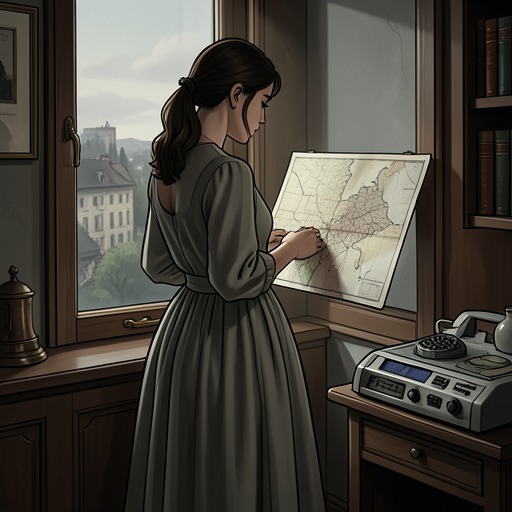
The desire to go home does not remain an unspoken possibility. Seated at a table by a window on a gray February afternoon, Catalina takes up a letter asking her mother whether she may visit Spain. She tears it gently, halves the pieces again, and feeds them to the fire. It is not the first such letter she has written, but, like the others, it will not be sent. Her restraint is deliberate: she will not betray her mother’s training by fleeing the gray skies, the unfamiliar language, and the people whose joys and sorrows she cannot yet understand.
The scene gives her silence a political dimension. The Spanish ambassador would have opened and read the letter, destroyed it, and reported its contents to the King of England. Catalina does not know this, but the narrator explains that her marriage has bound the emerging powers of Spain and England in an alliance against France. A homesick princess asking to see her mother could not be allowed to unsettle that arrangement. Her isolation is therefore more than a consequence of distance: even a private appeal might be intercepted and judged by the interests of kingdoms.
The Poem and Arthur’s Consolation
Catalina gives her longing another form when Arthur asks her to tell him a story. She chooses a Moor’s poem about a man born in the deserts of Arabia who comes to Spain and misses his home. Its image of a palm tree growing far from the land of palms allows her to describe exile through likeness: the tree has taken root in foreign soil, as the speaker is separated from family and friends. Arthur observes that the poem is unlike English poetry; Catalina replies that its people love words and prefer to say a true thing simply. The poem’s plainness lets homesickness be spoken without turning it into a direct request to leave.
Arthur recognizes her tears, takes her hand, and kisses her fingertips. He tells her that she misses home but will grow accustomed to life in England, to her many days there. Catalina answers quickly that she is happy with him, then names what remains painful: her mother, whom she misses and worries about. She explains that she was the youngest and that her mother kept her close as long as she could.
Her account widens into a family history of bereavement. Her mother had lost Prince Juan, her only male heir; after his death, the future he might have ruled and the queen his wife might have become were lost with him. Miguel, the two-year-old son of Isabel of Aragon, died as well. María of Aragon had gone to Portugal to marry and died far from her family, never to return. Catalina understands that, after these losses and separations, she had been her mother’s last child to leave home. That history deepens her worry about how her mother will manage without her, even as Catalina knows she cannot simply go back.
Homesickness thus remains unresolved: love for Arthur makes England bearable, but it does not erase longing for her family or restore the freedom to visit them. Rain, the burned letters, and the transplanted palm tree register different aspects of the same displacement. Catalina tries to live up to the identity she has accepted, while the political alliance around her turns an ordinary wish for her mother’s presence into a wish she cannot safely send.