Death of Elizabeth of York
The Constant PrincessThe death of Elizabeth of York, reported at Durham House together with the death of her newborn son, leaves Catalina of Aragon bereaved and politically exposed. Catalina had hoped Elizabeth would support her future marriage to Harry Tudor; her loss makes the court’s coming under Margaret Beaufort’s influence feel like a direct threat to Catalina’s place in England and to the alliance her parents expect her to preserve.
The news at Durham House
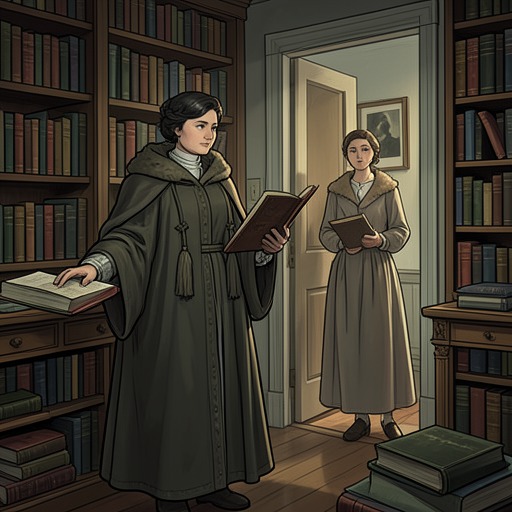
The announcement arrives abruptly in the quiet household. Catalina has been sewing when a royal groom enters and kneels before her ladies. He reports that a son, a prince, has been born to Elizabeth of York and has died, and that the queen has died as well. Doña Elvira struggles to take in the news; Catalina answers with the expected prayers for the queen’s soul and for Henry VII of England.
Her formal response gives way to private mourning. Catalina prays for Elizabeth as a woman of gentleness and grace, then considers the life she believes the queen may have endured. Recalling Arthur’s account of the scandal surrounding Richard III, Catalina imagines that Elizabeth might once have wanted to marry him, only to be directed toward Henry VII after the victory at Bosworth. This is Catalina’s interpretation, not a confirmed account of Elizabeth’s wishes. In it, she recognizes a pattern familiar to herself: a woman born to be queen may have to accept whichever husband can secure the throne.
A lost ally and a threatened future
Elizabeth’s death matters to Catalina not only as a personal loss. Catalina is waiting through her year of mourning for a new betrothal and has trusted that Elizabeth will help her marry Harry. She expects that marriage to offer refuge and believes she can be a good wife even without romantic feeling. Elizabeth’s quiet presence had seemed a possible source of support in negotiations that otherwise leave Catalina dependent on the decisions of two royal families.
The news therefore sharpens fears already troubling Catalina. She worries that Henry VII might send her back to Spain, that Harry might be promised to a French bride, or that the court might simply leave her in England as a neglected hostage. These possibilities threaten both her own future and the diplomatic purpose of her marriage: her parents need her to sustain the alliance between England and Spain and their opposition to France.
Margaret Beaufort’s ascendancy
Catalina expects the balance of influence at court to change immediately. In her view, Margaret Beaufort will now rule the court: formidable, devoted to her family’s interests, and affectionate toward Henry VII and his son, Harry Tudor, rather than inclined to help Catalina. Catalina fears that Margaret will regard her as only one possible bride for Harry and may favor a French match instead. Elizabeth’s absence thus exposes how little security Catalina possesses while her marriage remains unsettled.
This anxiety is rooted in the material as well as dynastic terms of Catalina’s position. Earlier, she had raised the dowry dispute with Margaret Pole, explaining that Henry VII was displeased over the money. The unresolved settlement included her dowry, her household plate, and the jointure owed to her as Dowager Princess of Wales: a third of the revenues of Wales, Cornwall, and Chester. Catalina doubts that Henry will pay what the contract requires, and she knows that her future depends on negotiations in which she has limited control. Elizabeth’s death removes a hoped-for court ally without resolving any of these claims.
From bereaved princess to ruler
The novel’s later events give the loss a wider significance without making it the sole cause of Catalina’s rise. After Henry VII’s death, Catalina establishes herself at court through action. When Margaret Beaufort dies, Catalina consults the Royal Book and organizes the funeral, using the late queen mother’s own written instructions but reducing their scale. The dignified ceremony demonstrates her command of English court customs and wins respect from people who had previously neglected her.
On 24 June 1509, Catalina is crowned Queen Katherine of England beside Henry VIII. In the years that follow, she consults members of the court and the Privy Council, works toward extending the law across the kingdom, and helps plan coastal defenses, a naval survey, and army musters. When Henry VIII sails for France, he appoints her regent, governor of the realm, and captain general of the forces for home defense. Against this later authority, the news at Durham House marks an earlier condition: Catalina’s political future still depends on others, and the death of a queen she trusted leaves her confronting that vulnerability alone.