Dover
The Constant PrincessDover is the embarkation setting for Henry VIII’s expedition to France and the place where Katherine of Aragon formally receives responsibility for governing England in his absence. Its role in the narrative joins the movement of troops and ships to a public change in political authority: the king prepares to cross the Channel, while the queen is entrusted with the realm and its defense.
Setting and Royal Progress
Henry VIII and Katherine of Aragon rode slowly from Greenwich to Dover for the king’s departure. Towns along the route welcomed them and mustered their men. The royal couple rode matching white horses; Katherine wore a long blue gown, and their badges—the pomegranate and the rose—were carried beside them. Soldiers marched behind, bowmen went before, and people gathered along the road to watch the procession.
The journey presented the royal pair as participants in a military enterprise, not merely as travelers. In the mornings they wore armor: Katherine a breastplate and helmet, Henry full armor. The procession’s public display connected the king’s planned campaign with the troops assembling to serve it, and brought the royal couple to Dover amid visible preparations for embarkation.
Embarkation Preparations
The arrangements for departure were carefully coordinated by Katherine of Aragon and Thomas Wolsey. Four hundred ships were ready to carry the troops to France, with Henry’s own ship prepared at the dock. The scale and order of the preparations contrasted with the delays and last-minute shortages that might otherwise have attended an army’s departure. Dover thus appears as the point where preparations in the realm gathered into a fleet ready to sail.
The Transfer of Authority
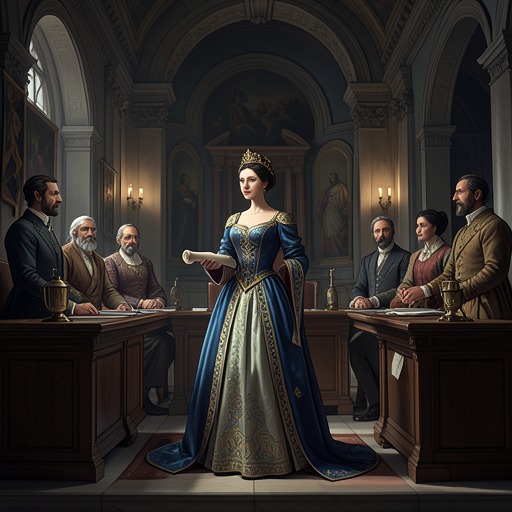
On the strand at Dover, Henry VIII publicly handed Katherine of Aragon the Great Seal of State and invested her as regent in his place, governor of the realm, and captain general of the English forces for home defense. The ceremony made her authority more than an informal influence at court: she was charged with governing and directing the kingdom while the king was away.
Katherine received the appointment solemnly and wished Henry VIII Godspeed as his ship was towed from the harbor and its sails caught the wind. Her private satisfaction at being left with the powers she had sought contrasts with the public gravity of the investiture. Dover’s narrative significance rests in that conjunction: it is both the departure point for war abroad and the setting where Katherine’s rule at home is formally established.