English Royal Standard
The Constant PrincessThe English Royal Standard becomes a visible instrument of Katherine of Aragon’s authority when she prepares to defend England against a Scottish invasion in Henry VIII’s absence. Flown above her army, it tells the soldiers that the king is represented on the battlefield by the queen who governs in his place.
Royal insignia and military presence
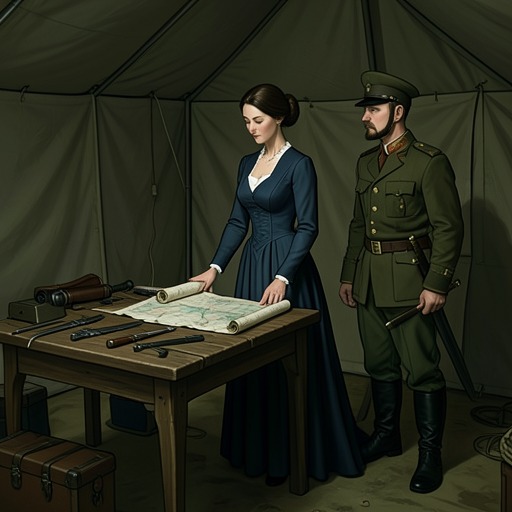
As the Scottish army advances south and England’s leading commanders are overseas, Katherine orders the royal standards and banners brought from the great wardrobe. She understands their public meaning: carried at the head of her army, the standards signify that the King of England is on the battlefield. Her conclusion is direct—she will be the person beneath them.
A contested right to carry the standard
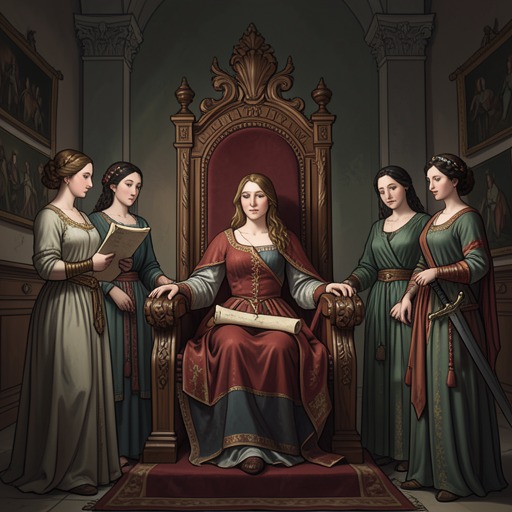
The banner’s use raises a question of gender and authority. One of Katherine’s ladies objects that the king, not a queen, should ride under the royal standard, and challenges whether a queen can take it into battle. Katherine answers that Henry is fighting the French while she will fight the Scots; a queen can ride under the king’s standard if she believes she can win. The standard thus does more than identify a royal force: its presence makes her exercise of military command legible, while also exposing how unusual that command appears to those around her.
Recognition on the march
Katherine rides a white horse at the head of the army with the standard above her. Its position helps the soldiers see her and recognize her later in battle; twice each day she rides along the line to encourage those marching at the rear. The banner links the abstract authority of the crown to the visible commander leading the troops.
The banner as a claim to rule
Katherine’s use of the standard is grounded in her appointment as regent, governor of the realm, and captain general of the forces for home defence before Henry sails for France. In the Scottish campaign, it gives public form to that delegated power: she is not merely sending orders from court but presenting herself as the royal authority at the army’s head. After the victory, the report delivered to her confirms that the troops she raised, trained, and armed have carried out her plan. The evidence does not describe the standard’s fate, but its role in the campaign is clear: it makes the absent king’s authority visible through the queen who commands in his stead.