English expedition to Fuenterrabia (1512)
The Constant PrincessThe English expedition to Fuenterrabia (1512) began as an ambitious joint campaign against France and ended in frustration, illness, and a return home in disgrace. Katherine of Aragon had organized the fleet and expected the English force to win territory alongside Ferdinand II of Aragon; instead, her father kept it waiting in Spain, using its presence to divert French attention while he advanced into Navarre.
Objectives and Preparation
In spring 1512, the fleet sailed to join Ferdinand II of Aragon’s campaign against France. Its departure was presented as a show of English strength: ships carried the banners of many of the kingdom’s great houses, and the force was described as the best-equipped and most splendidly arrayed to leave England in years. Katherine supervised the extensive provisioning, the stocking of armories, and the soldiers’ equipment. Her childhood observation of her mother’s work during her father’s campaigns had taught her that victory depended on reliable supply.
The English force was meant to assist an invasion of southern France. Katherine believed the alliance would defend the Pope, defeat the French, and recover lands in France for English ownership. Ferdinand predicted a quick victory and rich gains, persuading Katherine and Henry VIII despite the Privy Council peace faction’s concern that England might be drawn into a prolonged war.
Waiting in Fuenterrabia
During the summer, the English army waited in Fuenterrabia for the Spanish to join it. The soldiers ate badly and endured the heat while awaiting orders. Katherine understood that the midsummer conditions could make an idle army sick. She kept her concerns from Henry VIII and the council, but wrote to Ferdinand to ask about his plans and questioned his ambassador about when the English were to march. Ferdinand, away with his own army, did not reply; the ambassador had no answer either.
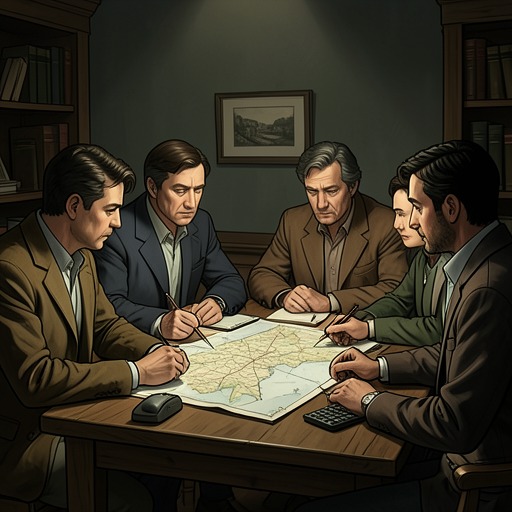
As the delay continued, Katherine came to see the English army’s inactivity as deliberate. Her knowledge of Ferdinand’s habits as a commander led her to doubt that he would leave troops idle without purpose. Reports described English forces exercising near the border and sighting the French without being ordered to engage. Katherine concluded that Ferdinand was keeping them in place as a counterweight: the French had to guard against the English force, while Ferdinand marched into the unprotected kingdom of Navarre. The expedition’s apparent failure to act was thus part of a strategy that Katherine had not been told about.
Mutiny and the Return
When Ferdinand eventually called on his allies to campaign through the winter, the English troops refused. They mutinied against their commanders and demanded to return home. By December, the army was back in England in disarray. Its commander had received neither clear orders nor reinforcements from Ferdinand; the troops were hungry and exhausted, and two thousand men had been lost to illness.
The contrast with the fleet’s triumphant departure made the return especially humiliating. Henry VIII was enraged and distressed by the army’s condition and by letters from Ferdinand complaining about English conduct. He had expected the expedition to enhance his standing, but instead felt that he had lost face in Spain and with France. Katherine had anticipated that something had gone wrong from the moment the English were left undeployed. When she comforted Henry, she recognized that the alliance’s failure had also exposed her father’s concealment of his plan.
Consequences and Significance
The expedition revealed the divide between the campaign’s public purpose and Ferdinand’s actual use of the English force. England had sent ships and soldiers expecting a joint invasion and a share in its gains; at Fuenterrabia, its army instead served as an inactive diversion, while the soldiers bore the costs of delay. The episode turned Katherine’s confidence in working as her father’s partner into a recognition that, in his European strategy, she and the English army could be treated as pieces to be positioned without consultation.
The return also damaged Henry VIII’s confidence in the campaign and left him looking to Katherine for understanding. The expedition therefore ended without the promised English advance into France, and with the alliance marked by mistrust, military disorder, and the human cost of an army left waiting.