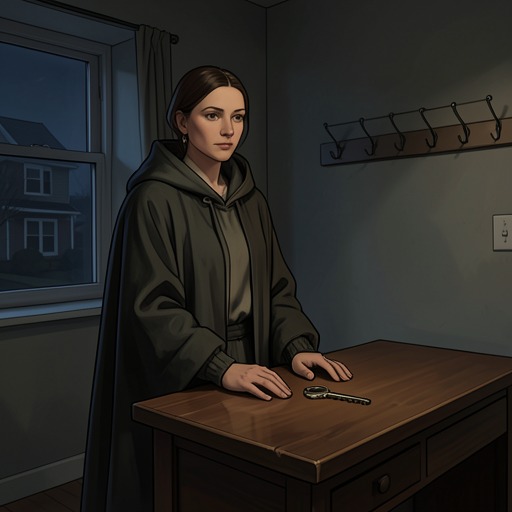
Execution of Edward Plantagenet to Eliminate a Claimant to the Throne
The Constant PrincessThe execution of Edward Plantagenet, Duke of Warwick, cleared the way for Catalina of Aragon’s journey to England and marriage to Arthur, Prince of Wales, but it also made her dynastic future inseparable from the death of an innocent man. As Catalina prepares for her wedding, she remembers Warwick not as an abstract rival removed from a succession struggle but as a young prince whose death, in her view, was demanded for her benefit. The event sets political security against justice and leaves a private moral debt beneath the public celebration of a royal marriage.
The claimant and the marriage bargain
Warwick was twenty-four, a prince of royal blood and, Catalina reflects, a son of the Kings of England with a stronger claim to the throne than her father-in-law, Henry VII of England. She insists that he had committed no crime and done nothing wrong. His existence nonetheless made him a possible alternative to the reigning king, and a danger to the security that Catalina’s parents sought in an English alliance.
The condition was made explicit before Catalina left Spain. Her father told Henry VII of England that he would not send her while Warwick was alive. When the ship was ordered to carry her to England, Warwick was already dead. Catalina therefore understands the sequence not as a coincidence of court politics but as a direct exchange: the prince’s removal preceded her departure and made the marriage possible. She imagines herself carrying the consequence of that bargain, although she did not order the execution.
Imprisonment and execution
Warwick was taken to the Tower of London, which could signify royal lodging as well as imprisonment. Catalina recalls that he was said to be simple-minded and did not understand that he was being held as a prisoner; he believed he had been housed there with honor. That misunderstanding shaped how he responded to the man placed in a neighboring room, a pretender who had tried to pass himself off as a royal prince.
When the pretender proposed an escape, Warwick treated the suggestion as an ingenious plan and spoke about it where the guards could hear. The authorities then had grounds to accuse him of treason. Catalina presents the episode as a trap made possible by his innocence and lack of understanding: he was easily caught, and his death met little public protest. The account makes clear that the supposed offense served the political purpose of eliminating a claimant, rather than reflecting a prior crime by Warwick.
Political security and the question of justice
The kingdom, Catalina reasons, wanted peace and the safety of a king without challengers. People would overlook the death of a claimant or two, and she was expected to accept the same bargain, especially because the killing had been carried out for her advantage. Her parents had secured the marriage route by insisting that Warwick not remain alive to threaten the succession. The public logic of stability thus turns a person’s death into a condition of dynastic security.
For Catalina, that logic is made more troubling by the standards her parents had pursued in Spain. Isabella of Castile and Ferdinand II of Aragon had sought to make justice apply throughout their realms, including in small villages, and to prevent even powerful lords from taking a peasant’s life at whim. Catalina sees a contradiction between that commitment and their request to Henry VII of England: they demanded that he wait to send her until Warwick was dead, and he acted accordingly. The contrast is not simply between two kingdoms; it is between a principle of lawful judgment and the exception made when the victim’s removal served a royal marriage.
Catalina’s remembrance and the event’s legacy
When Catalina learned of Warwick’s death, she said nothing. As an Infanta of Spain and her mother’s daughter, she believed she must not expose every thought or grief. Alone later in the gardens of the Alhambra Palace, she walked beside a long canal and prayed to be forgiven for the death of an innocent man. She imagined that ordinary pleasures—the shade of trees and sunlight through their leaves—would henceforth recall that Warwick would see the sun no more so that she could live in wealth and luxury. The memory gives the political transaction a lasting personal form: her comfort and rank are shadowed by the price paid for them.
As her wedding approaches, Catalina also questions whether her mother had driven the pursuit of God’s will too far. The marriage, she fears, has begun in innocent blood, making happiness seem morally compromised even before the union is tested. Her concern is not that she personally arranged Warwick’s death, but that she will benefit from it and cannot separate her future from the circumstances that secured it. The execution therefore precedes the wedding as an unspoken inheritance: the alliance promises status and security, while Catalina carries the belief that its foundation may condemn the happiness it was meant to create.