Henry VIII
The Constant PrincessHenry VIII first appears as a ten-year-old second son, not yet the king whose ambition will shape the later story. His childhood encounter with Katherine of Aragon, his marriage to her brother Arthur, Prince of Wales, and his eventual accession establish a contrast between royal promise and tested authority. As an adult king he can imagine himself leading armies, but Katherine’s record of governing reveals that the practical work of rule often falls to her.
Identity and Early Character
When Katherine’s traveling party reached Kingston-upon-Thames, Henry, then Duke of York, had been appointed to accompany her to Lambeth Palace. She left her litter to greet him despite her duenna’s warning against meeting young men before her wedding. Henry jumped from his horse, bowed, and welcomed her warmly as a sister. He was eager to speak with her before escorting her into London for the wedding, and asked her to call him Harry.
At their first meeting, Katherine saw a boy markedly unlike his serious, pale older brother. Henry had red-gold hair, a round, youthful face, and a bright, friendly manner. His ease and enthusiasm recur in the wedding celebrations: wearing a white taffeta suit, he led Katherine toward the church along a raised, red-clothed path, where Prince Arthur waited at the altar. The procession gave Henry a conspicuous place in the ceremony, and he appeared to enjoy the attention of the watching crowd.
His energy was especially visible at the wedding festivities. When the king called for Henry and his sister Margaret Tudor to dance, Henry joined the galliard eagerly, threw aside his jacket, and danced in his shirtsleeves. The Spanish grandees were startled; the English court responded with amusement and applause. Arthur, by contrast, avoided watching his brother. The episode marks an early difference between the brothers: Henry is exuberant in public, while Arthur is reserved and troubled by the display.
From Prince to King
Katherine later recalled Henry as a boy who could be won over with kind words and gifts, including the prospect of a Barbary horse. She also remembered Arthur’s judgment that their younger brother had been spoiled by indulgence and might grow into a spoiled and dangerous man. This is Katherine’s retrospective account, shaped by her knowledge of both brothers and by the later political consequences of Henry’s character.
After Henry VII’s death, Henry became king. In the coronation ceremony of 24 June 1509, he was crowned before Katherine, who was then anointed and received the royal regalia. The ceremony confirmed their different but joined public positions: Henry held the crown, while Katherine’s anointing established her as queen. Yet the court’s uncertainty over the arrangements for the royal funeral of Margaret Beaufort, Henry’s grandmother, showed how little experience he had of managing major royal ceremonies. Katherine summoned Edward Stafford, Duke of Buckingham, and Margaret Pole, consulted the Royal Book, and organized the funeral. Its controlled scale and dignity made her authority visible even before her coronation.
The demands of dynastic succession soon brought the royal couple into a more intimate trial. During Katherine’s pregnancy in January 1510, she suffered a loss. Henry came repeatedly to the door, while Katherine, unable to face him or the court, sent him away with assurances. The episode places his concern beside the distance imposed by grief: the king could wait outside, but could not share the experience she was enduring.
Marriage and Political Partnership
Katherine’s later account of their marriage presents Henry as both personally familiar and politically manageable. At the marital hearing, she said she had known him from the age of ten, had studied him as a youth, and had understood how his vanity could be appealed to. She described herself as the prize he desired and said she had allowed him to believe he had won her. She also said that, after her victory over Scotland, she let him receive the credit. These are Katherine’s claims about how she maintained her position and influenced her husband, not an independent account of Henry’s intentions.
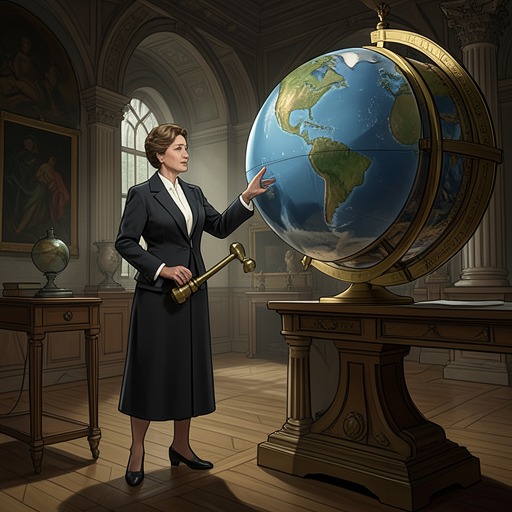
Their exchanges over Scotland show a partnership in which she could act through him while preserving his public role. When Henry was troubled by James IV of Scotland’s complaint that he had appealed to the Pope, Katherine calmly told him he could deny it; the appeal had been hers. Henry was distressed at being accused of informing, and she guided him toward a response. He later reminded her that he could raise an army and become the hammer of the Scots. Katherine answered that there was no longer any need for him to do so.
Henry’s martial ambition was not merely rhetorical. As preparations began for a campaign in France, he declared that he would go to the field himself, partly so Katherine’s father could not criticize the English army’s command. Katherine considered the danger of sending an inexperienced king abroad when the dynasty had no surviving heir, but agreed that he should go. She judged that a campaign under her father’s direction would be safer than a confrontation with the Scots, and promised Henry the best equipment and guard.
Rule, Regency, and Legacy
The preparations for Henry’s departure were extensive: four hundred ships waited to carry the army to France, alongside his royal guard, armor, and trained horses. At Dover, Henry formally entrusted Katherine with the Great Seal of State and appointed her regent, governor of the realm, and captain general of the forces assigned to home defense. His departure therefore made her authority official, rather than merely an influence exercised within the marriage.
Katherine used that authority to prepare for Scotland’s invasion. She inspected five hundred troops on horseback, making sure each man saw that she had looked at him, then removed her helmet so the soldiers could see her face. Her appeal to them presented the defense of their homes as a shared cause. This scene sharpens the contrast between Henry’s desire to lead a foreign campaign and Katherine’s direct responsibility for the kingdom’s defense while he was away.
In her final recollection of Henry, Katherine describes a man she had watched from boyhood: indulgent, vain, and responsive to the rewards she understood how to offer. She says that she gave him credit for her Scottish victory and that she would remain faithful to the promise she had made to Arthur, Prince of Wales. Her portrait does not reduce Henry to a mere figurehead: he chooses to campaign, asserts his capacity to raise an army, and formally appoints his regent. But the narrative repeatedly sets those claims beside Katherine’s political judgment and labor. Henry’s kingship is real; so is the extent to which its survival and practical exercise depend on her.